

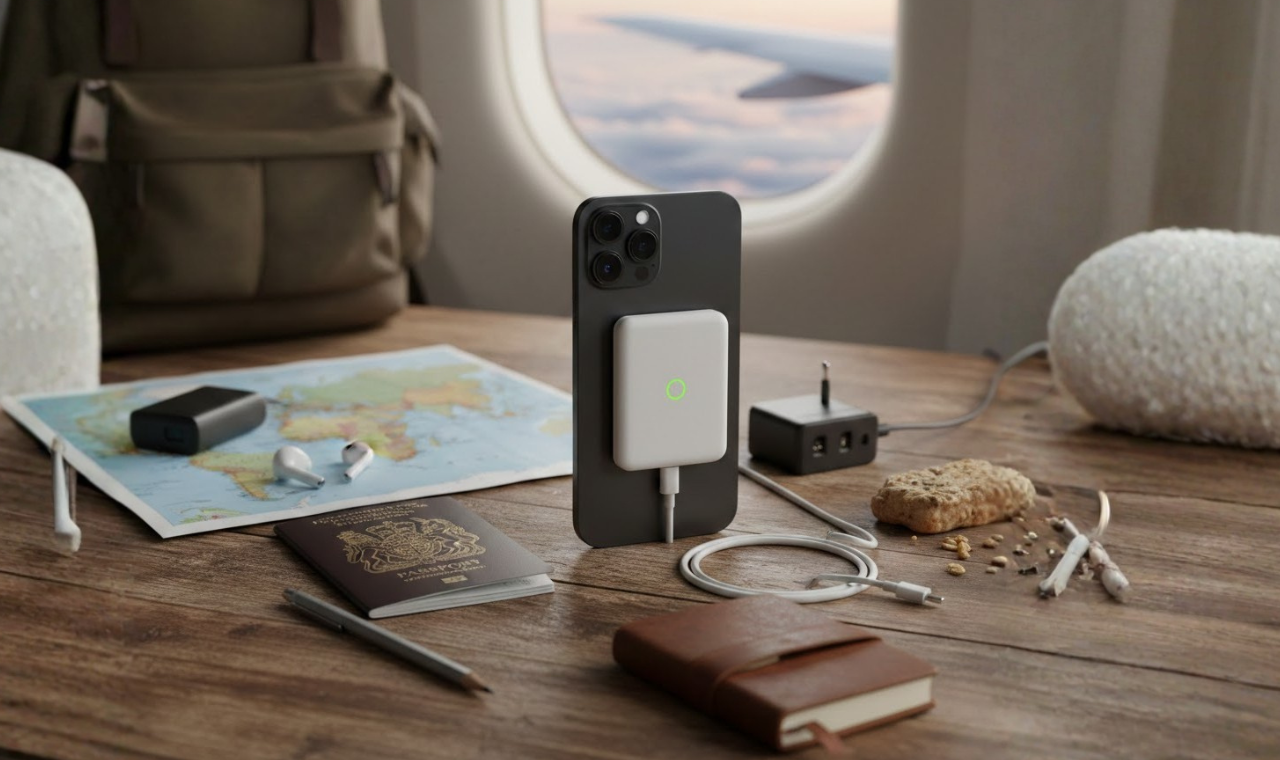
Running out of battery at the wrong moment is more than annoying—it can derail meetings, navigation, or customer communication. The stress rises when cables tangle, outlets are scarce, and charging feels slow. A magesafe power bank solves this by snapping into place and delivering reliable wireless power wherever you are. The right choice removes friction from travel and daily routines, keeps devices ready, and simplifies charging across teams and customers.
What Is a MagSafe Power Bank and How Does It Work?
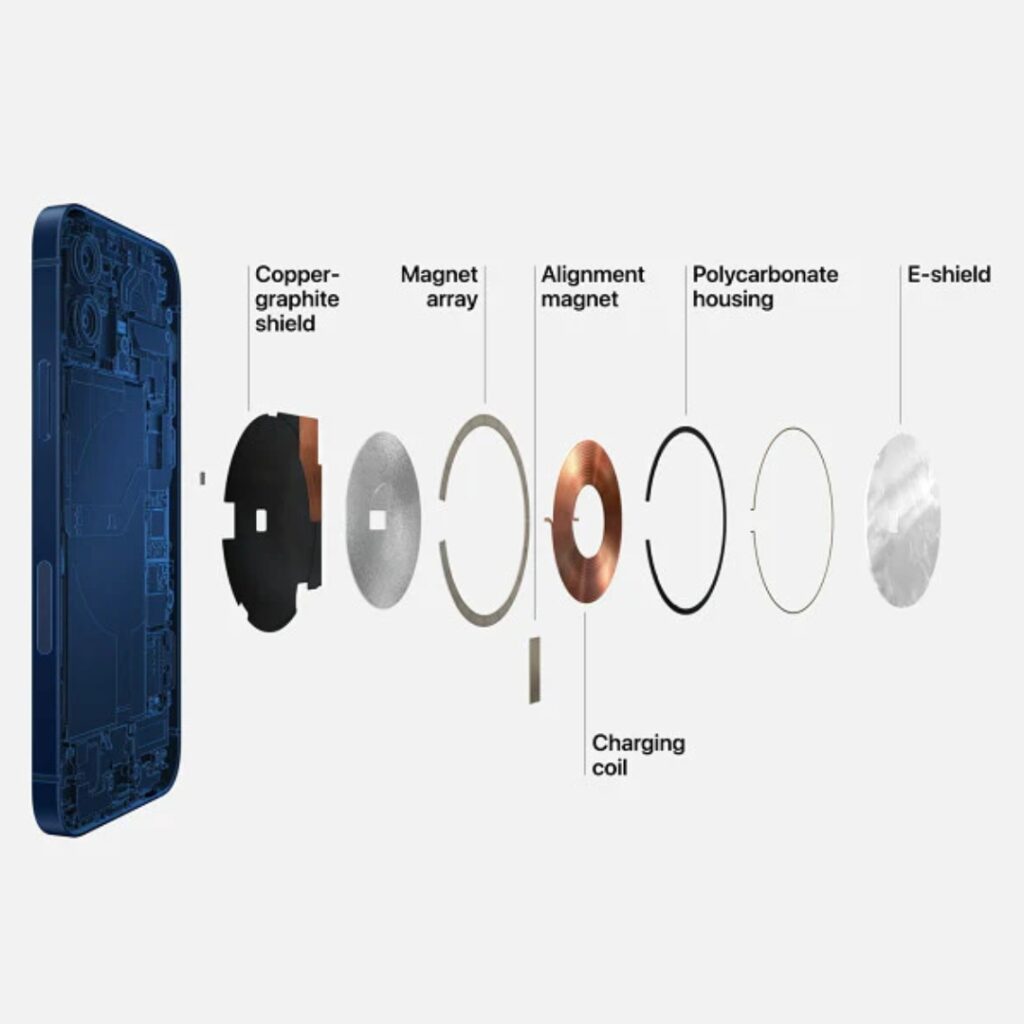
A magesafe power bank is a compact external battery that attaches magnetically to compatible smartphones and delivers wireless power through aligned coils. The magnetic lock keeps the charger centered, which improves charging stability and reduces energy loss.
1. How magnetic alignment improves charging
-
Consistent coil alignment reduces heat and wasted energy
-
Hands-free charging while texting or navigating
-
Safer connection than loose cable plugs in crowded spaces
Most options also support wired output, making them a flexible power portable charger for phones, earbuds, and small accessories.
2. Is MagSafe the same as Qi?
MagSafe builds on Qi wireless charging standards with magnetic alignment. Many products support both MagSafe-style attachment and Qi-compatible devices, functioning as a wireless power bank for broader device lists.
Why Do You Need a MagSafe Power Bank for Travel?
Travel magnifies battery anxiety in ways everyday life does not. Flight delays, gate changes, ride-hailing apps, digital boarding passes, mobile payments, and navigation all depend on a charged phone. At the same time, access to power outlets in airports, trains, and taxis is unpredictable and often competitive. A magesafe power bank removes this uncertainty by delivering instant, cable-free charging wherever you are.
Unlike traditional power banks that require digging for cables or finding a stable surface, a power bank charger wireless design attaches directly to your phone. This makes charging seamless while moving through terminals, standing in lines, or navigating unfamiliar cities.
Common travel pain points solved
A. One-hand charging while holding luggage
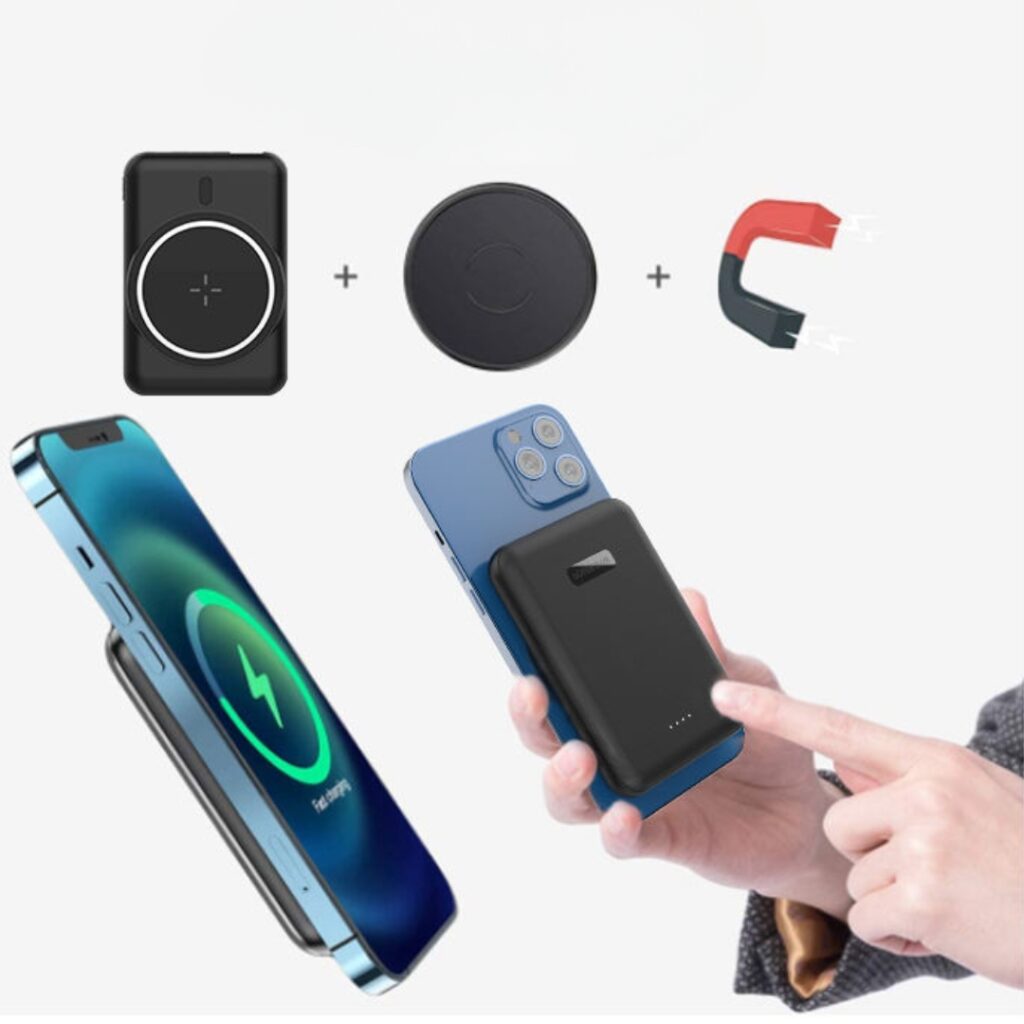
Travelers often juggle carry-ons, backpacks, and documents. A wireless bank charger snaps securely onto the phone, allowing one-hand use for calls, messages, maps, or boarding passes while charging continues in the background.
B. No cables to forget, tangle, or replace
Cables are easy to lose and quick to wear out during frequent travel. A magesafe powerbank eliminates cable dependency for daily charging needs, reducing accessories to manage and minimizing points of failure.
C. Pocket-friendly form factor for quick access
Modern travel favors light packing. A slim wireless power bank fits easily into pockets, passport holders, or small bags. There’s no need to unpack or set devices down in crowded spaces.
A well-designed power bank with wireless charging is not just a convenience for travel it becomes a core utility. It helps travelers stay connected, reduces friction during transit, and keeps work and communication moving without interruption.
Choosing the Right MagSafe Power Bank: Key Factors That Matter
1. Capacity: How much power is enough?
Capacity is measured in mAh. The best range depends on usage patterns.
| User Type | Recommended Capacity | Why It Works |
|---|---|---|
| Daily commute | 5,000–7,500 mAh | Slim, light, one full phone top-up |
| Frequent traveler | 10,000 mAh | Multiple charges, day-long coverage |
| Power user | 10,000–15,000 mAh | Phone + accessories |
A higher-capacity power bank with wireless charging balances endurance with size.
2. Output speed and efficiency
Look for:
-
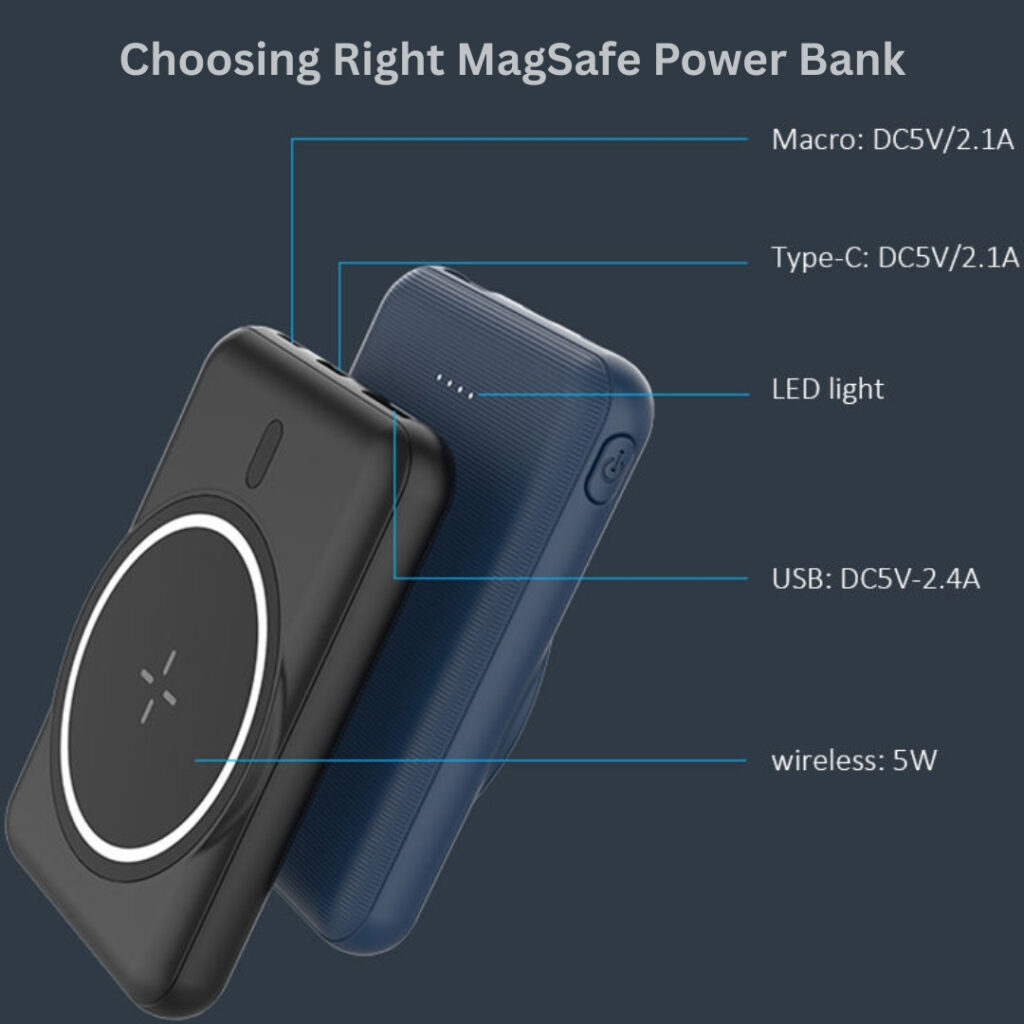
15W wireless output (where supported)
-
USB-C PD wired output for faster top-ups
-
Smart power management to reduce heat
3. Safety and certifications
Safety builds trust and reduces returns. Prioritize:
-
Overcharge and temperature protection
-
Short-circuit prevention
-
Compliance with CE, FCC, and RoHS
Authoritative guidance on wireless charging safety is available from the Wireless Power Consortium (Qi) Wireless Power Consortium (DoFollow external reference).
4. Form factor and materials
-
Slim profiles fit pockets and passport holders
-
Non-slip coatings keep devices steady
-
Fire-retardant shells improve durability
5. Compatibility across devices
A strong magesafe powerbank should:
-
Attach securely to MagSafe-compatible phones
-
Charge Qi-enabled devices as a wireless power bank
-
Offer wired fallback for universal use
How to Use a MagSafe Power Bank Safely and Efficiently
A magesafe power bank is designed for convenience, but correct usage plays a major role in charging efficiency, battery lifespan, and device safety. Following a few best practices helps users get consistent performance whether charging on the move or storing the unit between trips.
1. Best practices
A. Remove thick or metal cases
Thick protective cases, wallet cases, or metal plates can weaken magnetic alignment and reduce charging efficiency. For best results, use a MagSafe-compatible case or remove the case entirely so the wireless power bank can align properly with the charging coil.
B. Avoid charging in extreme heat or direct sunlight
Wireless charging naturally generates more heat than wired charging. Using a power bank charger wireless in high-temperature environments—such as cars in direct sun or outdoor summer conditions—can trigger thermal protection and slow charging. Keeping devices in shaded, ventilated areas improves safety and performance.
C. Allow airflow during charging
Do not cover the phone or wireless bank charger with clothing or bags while charging. Proper airflow helps dissipate heat and protects internal battery cells.
D. Store at 30–60% charge for long-term storage
If the power portable charger will not be used for weeks or months, storing it at a partial charge helps preserve battery health. Fully charging or fully draining the battery before storage can shorten its lifespan over time.
2. When should you choose wired charging instead?
While wireless charging is convenient, there are situations where wired charging is the better option.
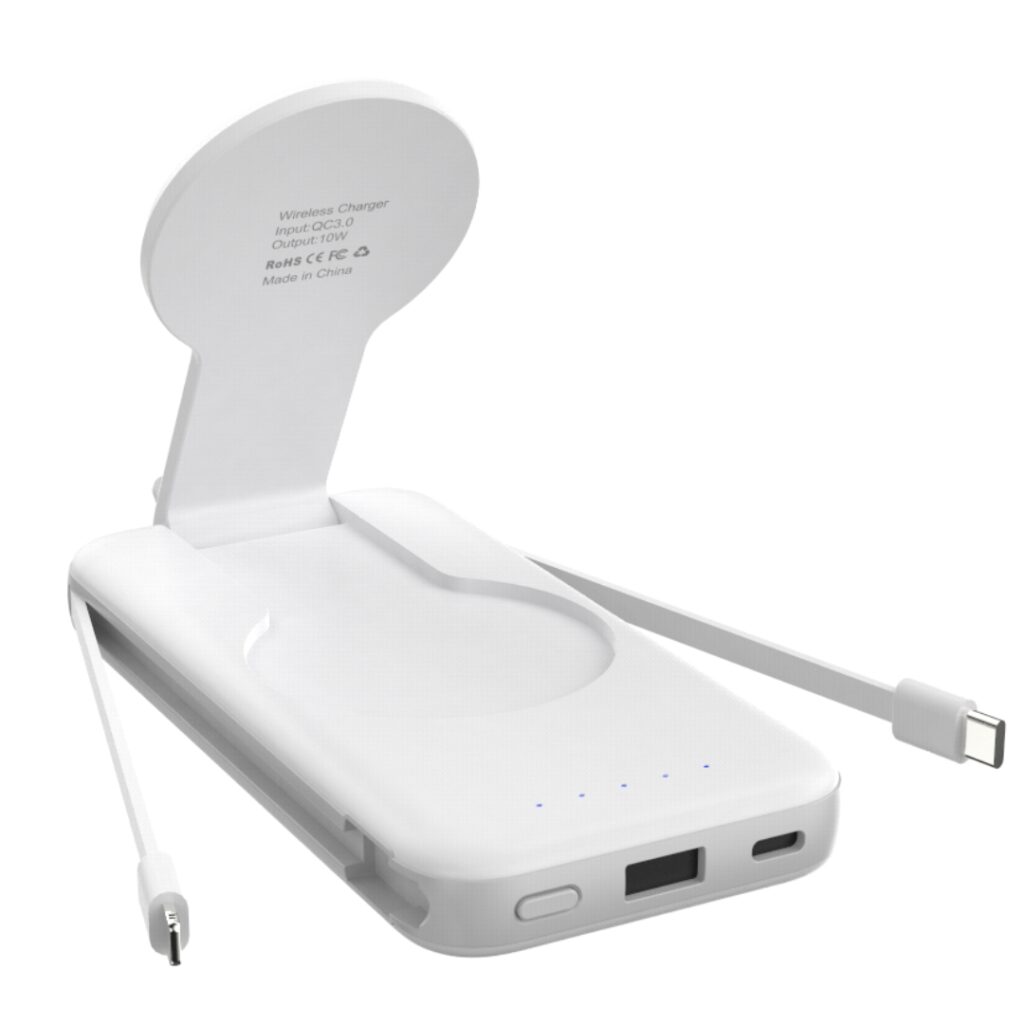
A. When you need maximum charging speed
Wired charging is typically faster and more efficient. During short layovers, tight schedules, or emergency situations, plugging in a cable can deliver more power in less time than wireless charging.
B. When charging multiple devices
Using wired output ports allows users to charge multiple devices at once. Many buyers prefer a hybrid wireless bank charger that supports both magnetic wireless charging and USB output for flexibility.
C. When minimizing heat buildup
Wired charging generates less heat than wireless charging. For long charging sessions or high ambient temperatures, switching to a cable can help maintain safer operating conditions.
Comparing MagSafe Power Bank Types for Buyers
Different users and organizations have different charging needs. Understanding how each magesafe power bank type performs across capacity, portability, and compatibility helps buyers choose the right solution for daily use, travel, or mixed device environments.
Comparison Table: MagSafe Power Bank Types
| Type | Best For | Capacity Range | Portability | Charging Options | Pros | Cons |
|---|---|---|---|---|---|---|
| Slim Magnetic | Daily use, commuting | 5,000–7,500 mAh | Ultra-portable | Wireless only or limited wired | Lightweight, pocketable, minimal bulk, ideal for one-hand use | Lower capacity, fewer recharges |
| High-Capacity Magnetic | Travel, long workdays | 10,000–15,000 mAh | Medium | Wireless + wired | Supports multiple phone charges, reliable for long trips, stable magnetic hold | Slightly thicker, heavier |
| Hybrid Wireless/Wired | Mixed device fleets | 7,500–10,000+ mAh | Medium | Wireless + USB-A/USB-C | Universal compatibility, charges phones and accessories, flexible use cases | More ports add size and weight |
Choosing the right magesafe power bank type depends on how often devices are charged, how long users stay away from outlets, and how many device types need support. A clear understanding of these differences helps buyers match product design to real-world usage rather than relying on capacity alone.
What Makes a Reliable Manufacturer Matter?
When sourcing a magesafe power bank or any wireless charging product, the manufacturer behind it matters as much as the specifications on paper. Consistency in quality, safety testing, and supply chain reliability is what separates long-term partners from short-term sellers. For buyers managing repeat orders, private labeling, or large-scale distribution, reliability directly affects customer satisfaction, compliance risk, and total cost.
With around a decade of experience in mobile accessories and consumer electronics, Shenzhen Hedeli Technology Co., Ltd. focuses on controlled manufacturing processes, stable component sourcing, and scalable production. This experience reduces uncertainty and helps buyers maintain consistent product standards across markets and order volumes.
You can explore available wireless power bank models designed for different capacities, form factors, and use cases.
Why sourcing from an experienced factory helps
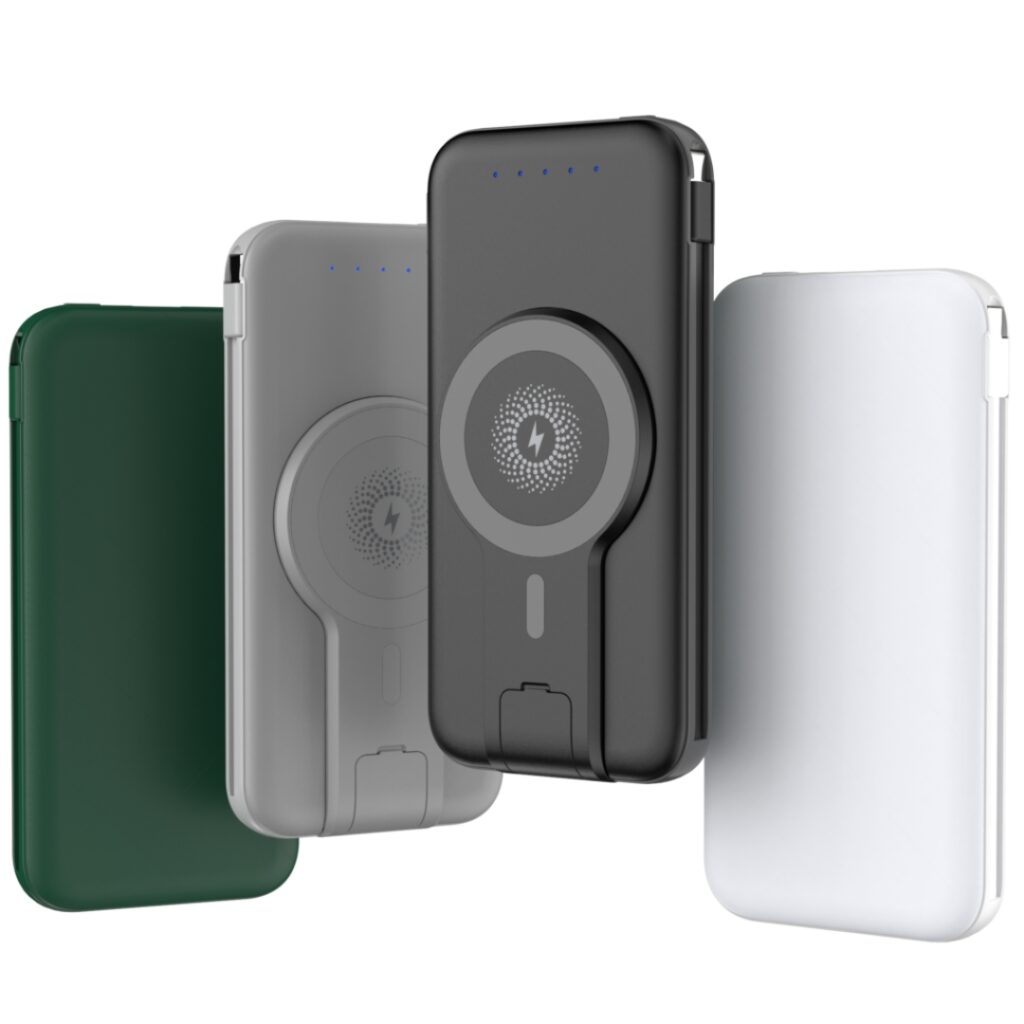
A. Stable materials and battery cells
Experienced manufacturers maintain long-term relationships with vetted battery cell suppliers. This ensures consistent energy density, safety performance, and lifespan across every wireless power bank produced. Stable materials also reduce failure rates and post-sale issues.
B. Repeatable performance across batches
For wholesale and branded programs, repeatability matters. A reliable factory follows standardized assembly, testing, and aging procedures so each production batch performs the same as the last. This consistency is critical when selling power banks across different regions or sales channels.
C. Stronger safety and compliance control
Wireless charging products require strict protection against overheating, overcurrent, and short circuits. Established manufacturers integrate multiple safety layers and test products against international standards before shipment, lowering regulatory and liability risks for buyers.
D. Faster customization for branding and packaging
An experienced production team can support logo printing, housing color changes, packaging design, and documentation updates without disrupting timelines. This flexibility is especially valuable for distributors and brand owners launching or refreshing a power bank with wireless charging lineup.
E. Scalable production and dependable lead times
As demand grows, inexperienced suppliers often struggle to scale. A mature factory can adjust output while maintaining quality, helping buyers meet seasonal demand or expand into new markets without supply interruptions.
To learn more about the manufacturer, production capabilities, and broader product range, visit the official website
Choosing a reliable manufacturer is not just about today’s order, it’s about building a stable supply chain that supports growth, protects your brand, and delivers consistent value to end users.
Real-World Use Cases: Daily Life to Long-Haul Trips
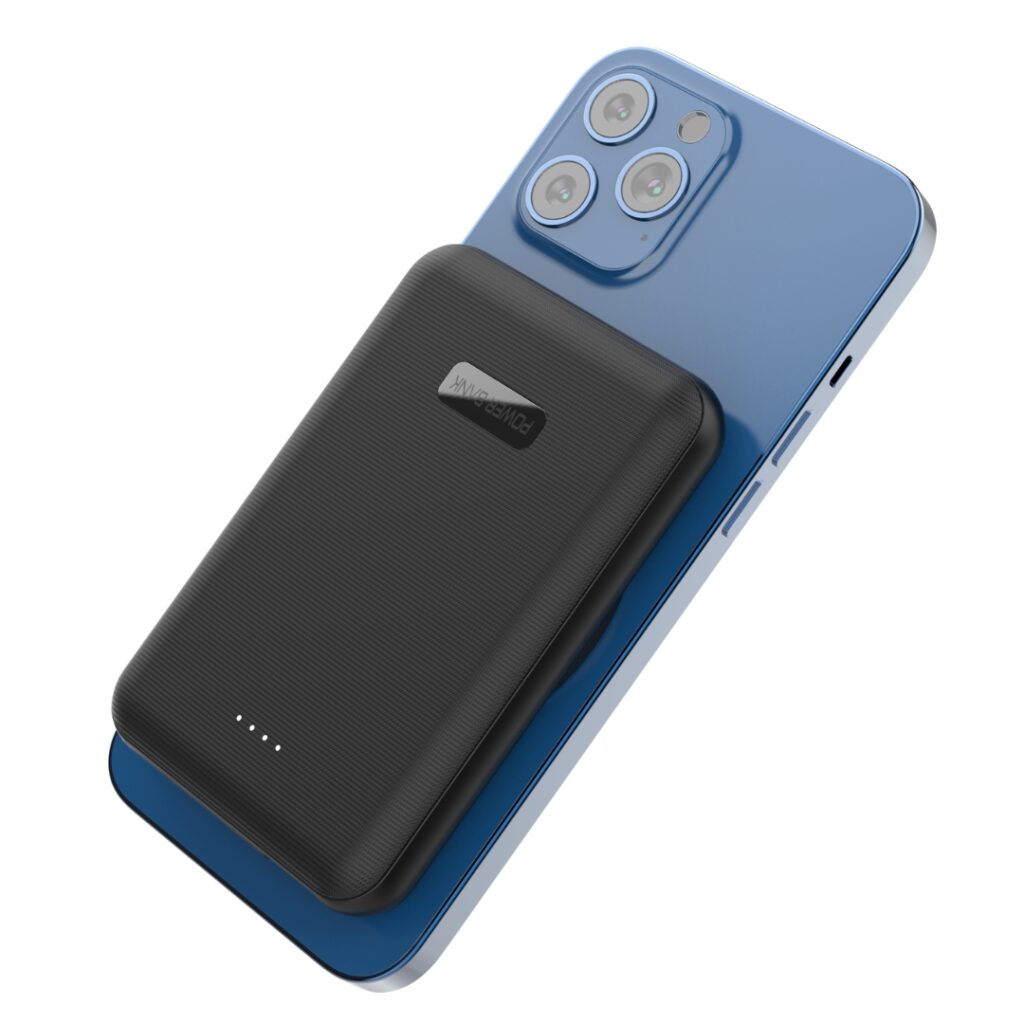
A magesafe power bank proves its value most clearly in real-world situations where access to power is limited and mobility matters. From routine workdays to international travel and large-scale events, wireless magnetic charging supports continuous connectivity without slowing people down.
A. Daily Workdays and Mobile Teams
Modern workdays often involve back-to-back meetings, site visits, and constant communication. Sales teams, consultants, and field staff rely heavily on smartphones for calls, messaging, presentations, and CRM updates. A power portable charger ensures devices stay powered without interrupting workflows.
Magnetic wireless charging allows phones to remain usable while charging. Users can answer calls, send messages, or check schedules with one hand while the wireless power bank stays securely attached. This is especially useful when moving between meetings or working on the go, where setting a phone down to charge is not practical.
B. International Travel and Long-Haul Trips
International travel places extra strain on device batteries. Time zone changes, roaming apps, navigation, translation tools, and frequent screen use drain power faster than usual. Access to charging outlets during long-haul flights, airport transfers, or layovers is often limited.
A magesafe power bank reduces downtime by providing immediate charging between flights, during transit, or while waiting at gates. Because no cable is required, travelers can charge while walking through terminals or navigating unfamiliar cities. For business travelers, this reliability helps maintain communication and productivity across borders.
C. Events, Exhibitions, and Trade Shows
At conferences, exhibitions, and trade shows, staff spend long hours on their feet using phones or tablets for lead capture, product demos, scanning badges, and customer communication. Power outlets are often shared, poorly located, or unavailable on the show floor.
A wireless bank charger allows staff to keep devices charged throughout the day without leaving their station. Magnetic attachment enables quick top-ups between interactions, ensuring devices are always ready. This improves response times, supports smoother customer engagement, and reduces the risk of missed opportunities due to low battery.
How to Evaluate a MagSafe Power Bank for Bulk Orders
When purchasing a magesafe power bank in volume, evaluation goes far beyond capacity and appearance. Bulk orders introduce risks around consistency, returns, compliance, and long-term support. A structured review process helps buyers choose products that perform reliably at scale and protect brand reputation.
1. What procurement managers check first
A. Battery cell grade and supplier transparency
Battery cells are the core of any wireless power bank. Procurement managers look for clarity on cell grade (A-grade vs. recycled or mixed cells) and supplier traceability. Transparent sourcing reduces safety risks and ensures consistent performance across shipments.
B. Failure rate and quality control processes
Low failure rates matter more in bulk orders than in small purchases. Buyers often request information on factory testing procedures, aging tests, and historical defect rates. A dependable power bank charger wireless should show stable performance across large production runs.
C. Warranty terms and after-sales support
Clear warranty coverage signals manufacturer confidence. Procurement teams evaluate warranty length, replacement policies, and responsiveness to quality issues, especially when products are distributed across multiple regions.
D. Packaging options for retail or gifting
Packaging affects logistics, shelf appeal, and unboxing experience. Buyers assess whether the manufacturer can support branded boxes, multilingual manuals, compliance labeling, and protective packaging suitable for e-commerce or corporate gifting programs.
2. Questions product managers ask
A. Can the power bank charger wireless meet target thickness and weight?
Product managers balance capacity with usability. A power bank with wireless charging must meet thickness and weight targets to remain pocket-friendly while still delivering adequate power.
B. Is firmware optimized for stable wireless output?
Wireless charging stability depends on firmware tuning. Product teams look for smooth power regulation, minimal heat generation, and reliable charging even during movement—key traits for a wireless bank charger used in travel and daily carry.
C. Are magnets strong enough without affecting device sensors?
Magnet strength must strike a balance. A magesafe powerbank should attach securely without interfering with phone sensors, cameras, or wireless signals. Product managers often request magnetic strength specifications or real-device testing results.
D. Does the design support future device compatibility?
Product teams also consider whether the design can adapt to future phone models, updated wireless standards, or higher power requirements without major redesigns.
Frequently Asked Questions (FAQs)
1. Is a magesafe power bank safe for long-term daily use?
Yes. When built with certified cells and proper protection, it is safe for daily charging. Always verify certifications and heat management.
2. Can one device work as both a wireless power bank and wired charger?
Many models do both. This hybrid design supports more devices and reduces inventory complexity.
3. How does a wireless bank charger affect charging speed?
Wireless is slightly slower than wired, but magnetic alignment improves efficiency compared with standard Qi pads.
4. What capacity is best for travel-focused buyers?
Most travelers choose 10,000 mAh to balance size and endurance, especially for long days without outlets.
5. Are magesafe powerbank products suitable for custom branding?
Yes. Experienced manufacturers can offer logo printing, color matching, and packaging customization.
Choosing the right magesafe power bank comes down to understanding real-world usage, not just technical specifications. Capacity, safety, form factor, charging stability, and compatibility all play a role in how well the product performs during daily work, travel, and high-demand situations. When these factors align, a wireless magnetic power bank becomes a reliable tool that reduces downtime, simplifies charging, and supports productivity wherever users go.
For buyers and decision-makers, long-term value also depends on sourcing from a dependable manufacturer with proven quality control and scalable production. A well-made power bank with wireless charging, backed by consistent materials and thoughtful design, delivers better performance over time and lowers risk across bulk orders—making it a smart investment for both everyday users and growing brands.