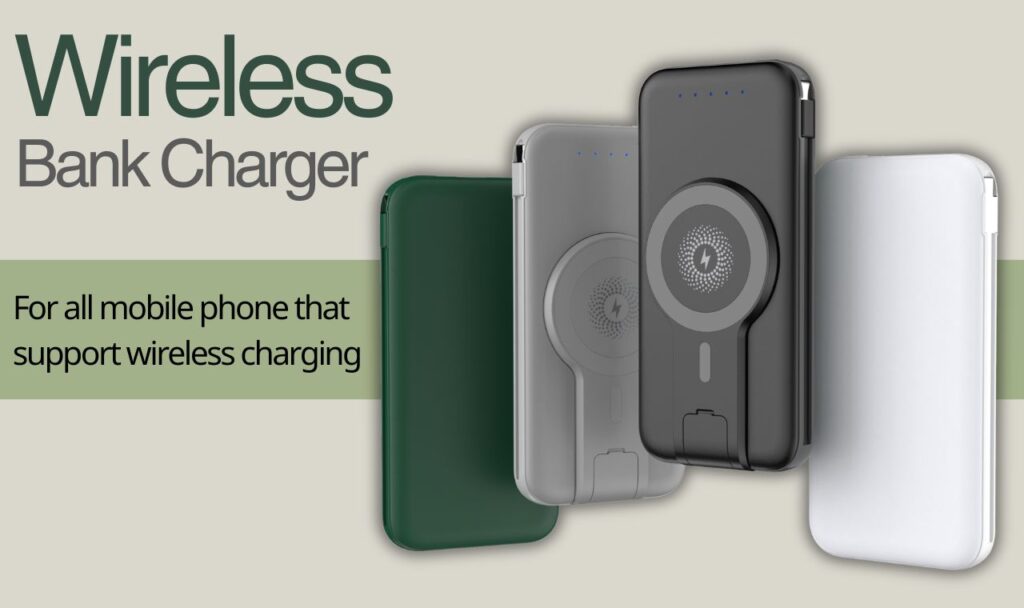
Affordable Power Bank With Wireless for 2026 — Sourcing Guide for Importers and Distributors
Your customers demand wireless charging convenience, but sourcing quality power bank with wireless capabilities at competitive prices feels impossible. Generic suppliers flood your inbox with inconsistent specs while proven manufacturers hide behind distributor markups. This sourcing guide cuts through the noise and shows importers exactly what to look for when building a profitable wireless power bank product line for 2026.
Why Wireless Power Banks Dominate 2026 Market Forecasts
The portable charging market shifted permanently in late 2024. Consumers stopped tolerating cables for everyday charging sessions. Sales data from major electronics retailers shows wireless-enabled power banks outselling traditional models 3:1 in the fourth quarter.
Three forces drive this transformation.
Smartphone adoption of wireless charging reached 78% of new models released in 2024. Apple, Samsung, Google, and Chinese manufacturers now ship most devices with Qi-compatible charging coils. When customers carry phones designed for wireless charging, they expect their portable chargers to match.
MagSafe standardization expanded beyond Apple’s ecosystem. Third-party accessory makers adopted magnetic alignment systems that work across Android and iOS devices. This creates universal compatibility that simplifies inventory management for retailers.
Price compression eliminated the premium barrier. Manufacturing improvements dropped the cost difference between wired and wireless power banks from $8-12 per unit in 2022 to just $2-4 today. This margin shrinkage makes wireless features standard rather than luxury upgrades.
Understanding Power Bank Charger Wireless Technology Standards
Before sourcing products, you need clarity on the technical specifications that separate functional devices from problematic ones.
Qi wireless charging protocol serves as the global standard. Version 1.3 delivers up to 15W power output for compatible devices. Cheaper units cap at 5W, which frustrates customers accustomed to faster charging speeds. Verify your supplier’s power bank supports at least 10W wireless output.
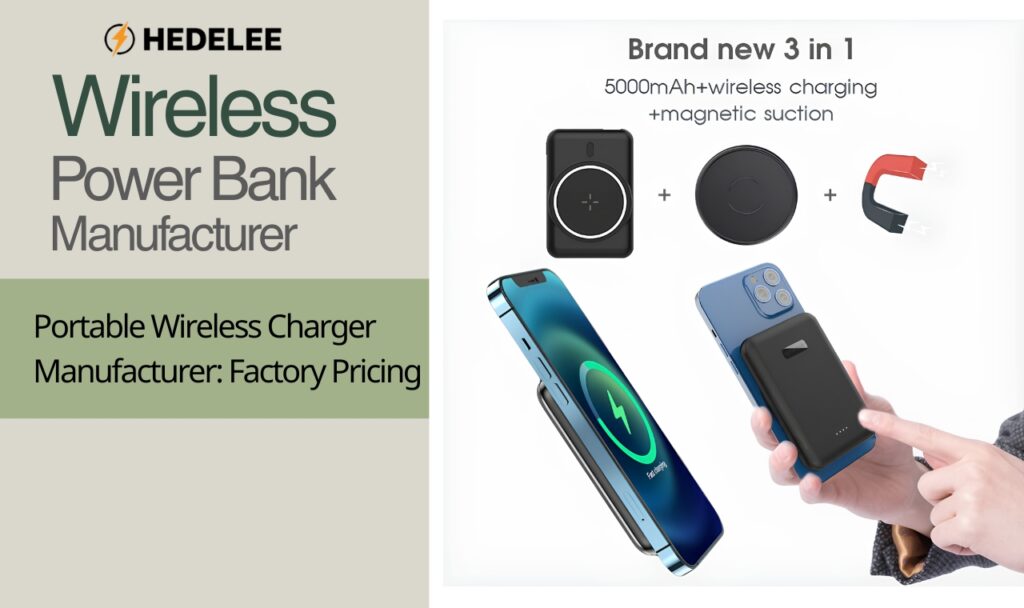
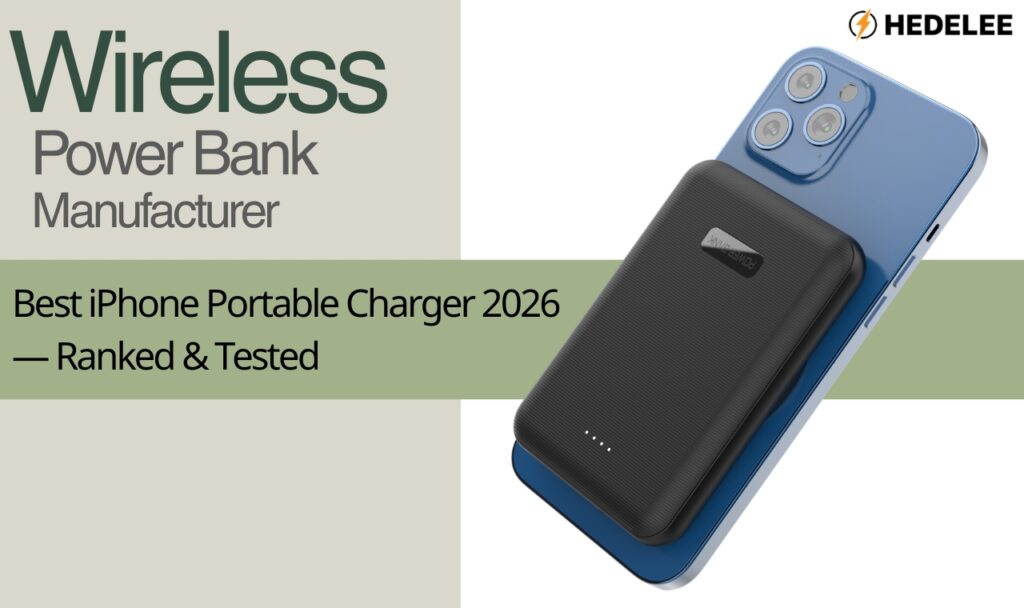
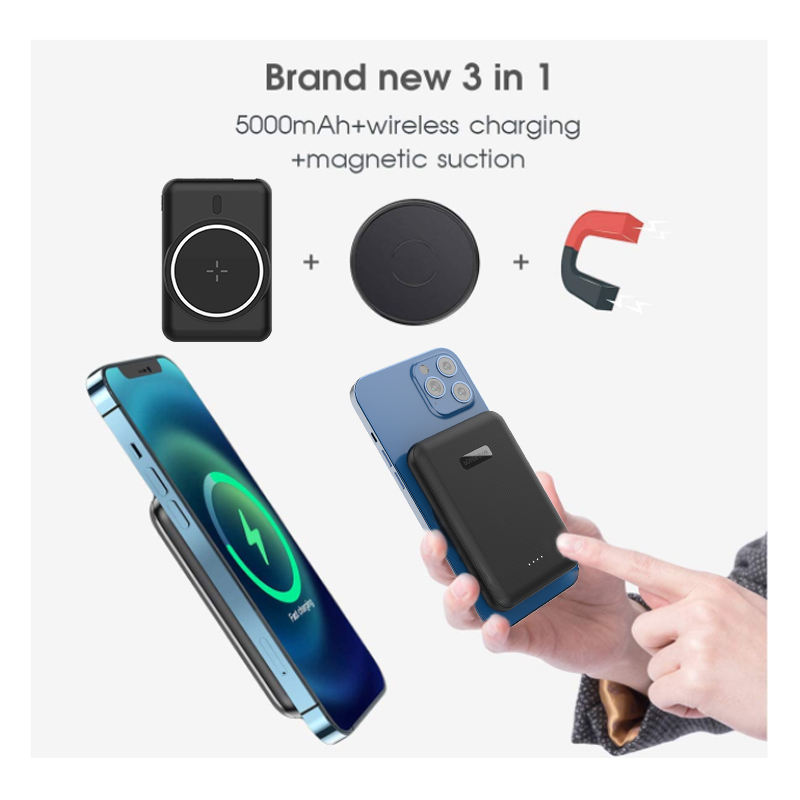
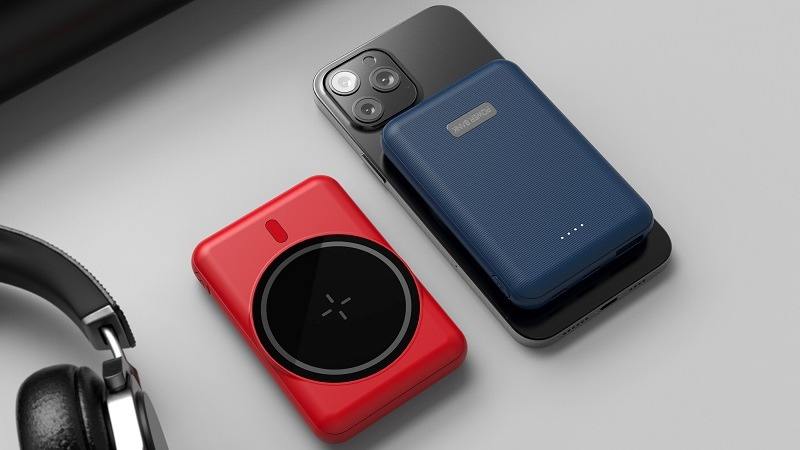
Magnetic alignment systems prevent the positioning problems that plagued early wireless chargers. The magsafe power bank approach uses circular magnet arrays to snap phones into perfect alignment. This ensures consistent power transfer without customers fiddling to find the sweet spot.
Foreign object detection (FOD) protects against safety hazards. Quality wireless charging circuits detect metal objects like keys or coins and shut down power delivery automatically. Budget manufacturers skip this feature to save $0.40 per unit, creating liability risks you can’t afford.
Heat management architecture determines real-world usability. Wireless charging generates more heat than cable connections. Look for suppliers using aluminum heat spreaders and thermal management films. Temperature spikes above 45°C during charging indicate poor engineering that leads to customer returns.
Market Demand Analysis for Wireless Power Bank Products
Understanding where demand concentrates helps you make smart inventory decisions.
Regional Adoption Patterns
| Region | Wireless Adoption Rate | Price Sensitivity | Preferred Capacity |
|---|---|---|---|
| North America | 82% | Medium | 10,000-20,000mAh |
| Western Europe | 76% | Low | 5,000-15,000mAh |
| East Asia | 88% | High | 15,000-30,000mAh |
| Middle East | 64% | Medium-Low | 20,000-30,000mAh |
| Latin America | 58% | High | 10,000-20,000mAh |
North American buyers prioritize convenience and willing to pay moderate premiums for magnetic alignment features. European customers focus on compact designs that fit travel regulations. Asian markets demand maximum capacity at aggressive price points.
Product Category Performance
Slim profile models (under 15mm thickness) command 35% market share despite limited capacity. Professionals carrying laptops value pocketable emergency charging over all-day power. Target the 5,000-10,000mAh range with wireless outputs of 10-15W.
High capacity units (20,000mAh+) serve travelers and outdoor enthusiasts. These perform best when combined with solar charging panels or multi-device capabilities. Price sensitivity runs higher in this segment, so manufacturing cost control becomes critical.
MagSafe-compatible designs grew 340% year-over-year in 2024. Apple’s influence drives accessory trends even among Android users. Magnetic ring integration adds $1.20-2.80 to production costs but justifies 25-40% retail price increases.
How to Evaluate Power Bank With Wireless Manufacturers
Finding reliable suppliers requires systematic evaluation across six dimensions.
Production Capacity and Scalability
Ask potential partners about current production volume and available capacity. Manufacturers running at 85%+ utilization struggle to handle rush orders or seasonal demand spikes. You want suppliers with room to scale up 40-60% if your product gains traction.
Request facility photos showing actual production lines, not just samples. Legitimate manufacturers proudly share their assembly equipment, testing stations, and quality control setups. Suppliers who refuse factory visits often outsource production to unknown subcontractors.
Quality Control Systems
Demand detailed explanations of their testing protocols. Minimum acceptable standards include:
- Drop testing from 1.2 meters on all six sides
- 500+ charge cycle verification before degradation
- Wireless charging efficiency measurements at multiple temperatures
- Electromagnetic interference (EMI) testing to ensure regulatory compliance
- Short circuit and overcharge protection validation
Quality manufacturers test 100% of production units, not just random samples. Budget suppliers skip individual testing to save 8-12 minutes per unit, creating inconsistent performance that damages your reputation.
Certification Documentation
Every wireless power bank entering developed markets needs proper certifications. Requirements vary by destination:
United States: FCC approval for wireless transmission, UL or ETL listing for electrical safety, California Proposition 65 compliance for materials
European Union: CE marking with RED directive compliance, RoHS material restrictions, WEEE recycling requirements
United Kingdom: UKCA marking post-Brexit, BS electrical safety standards
China: CCC certification for domestic sales, GB safety standards
Suppliers claiming “CE certification pending” or offering to add logos without documentation are red flags. Legitimate certifications take 45-90 days and cost $8,000-25,000 depending on product complexity. Factor these expenses into your sourcing timeline.
Customization Capabilities
Standard products rarely match your exact specifications. Evaluate suppliers based on their willingness to modify:
- Battery capacity configurations (5,000/10,000/20,000mAh options)
- Wireless output power (10W/15W/20W variants)
- Color and material choices (ABS plastic, aluminum alloy, eco-friendly options)
- Branding locations and methods (laser engraving, UV printing, embossing)
- Packaging design and material quality
The best manufacturing partners offer engineering support to optimize designs for your target markets. They’ll advise on battery cell selection, suggest component upgrades that improve margins, and identify features customers actually value versus marketing gimmicks.
Pricing Structure Transparency
Request complete bill of materials (BOM) breakdowns showing component costs. Transparent suppliers itemize:
- Battery cells (varies $3.20-8.50 depending on brand and capacity)
- Wireless charging module ($2.10-4.80 for quality components)
- Circuit protection board ($0.85-2.40)
- Housing and materials ($1.60-4.20)
- Packaging ($0.40-1.50)
- Labor and overhead ($1.80-3.60)
This visibility helps you understand where costs concentrate and identify savings opportunities through spec adjustments. Suppliers refusing to share BOMs likely hide excessive markups or use substandard components.
Intellectual Property Protections
If you’re developing custom designs, verify your supplier respects IP agreements. Request:
- Non-disclosure agreements before sharing specifications
- Exclusive manufacturing commitments for your designs
- Tooling ownership terms (you should own mold tooling you pay for)
- Protection against selling identical products to competitors
Chinese manufacturers improved dramatically on IP respect, but verification prevents problems. Include penalty clauses for unauthorized production runs and require regular audit rights.
Key Specifications for Sourcing Power Portable Charger Units
Getting the specifications right prevents costly mistakes and returns.
Battery Capacity Versus Physical Size
Customers want maximum power in minimum space, but physics imposes limits. Lithium polymer cells deliver approximately 400-450Wh per liter for quality brands. A 10,000mAh power bank at 3.7V nominal voltage contains 37Wh of energy.
Calculate physical dimensions based on this energy density. Anything claiming 20,000mAh capacity in a package smaller than 140mm x 70mm x 20mm likely exaggerates ratings or uses dangerous cells. Request battery cell specifications including manufacturer name (Samsung, LG, Panasonic, ATL, EVE) and exact model numbers.
Wireless Charging Power Output
Marketing materials often list peak output that devices rarely sustain. Look for continuous output ratings and efficiency percentages.
A 15W wireless output requires approximately 20W input power due to transmission losses. The power bank’s internal battery must deliver this continuously without overheating. Cheap wireless coils and inefficient circuits drop to 7-8W actual output despite 15W claims.
Test samples under load for 60+ minutes while monitoring temperature. Units exceeding 45°C surface temperature create uncomfortable user experiences even if they function safely.
Port Configuration Options
Modern users carry multiple devices. The best power bank with wireless designs include:
- Wireless charging pad (10-15W Qi compatible)
- USB-C port with Power Delivery (18-30W output)
- USB-A port for legacy devices (12-18W output)
- USB-C input for recharging the power bank itself (18-30W)
This combination serves most customer scenarios without excessive ports that add cost and failure points. Avoid designs with five or six ports—they’re marketing gimmicks that confuse users and complicate troubleshooting.
Pass-Through Charging Capability
This feature allows the power bank to charge connected devices while being recharged itself. It adds minimal cost ($0.30-0.60 per unit) but significantly improves user experience for desk workers who want one-cable solutions.
Verify the implementation actually works reliably. Some budget suppliers claim pass-through charging but prioritize recharging the internal battery, leaving connected devices uncharged. Test this scenario extensively before committing to large orders.
Indicator System Design
Customers want to know remaining charge levels at a glance. LED indicator systems range from basic to sophisticated:
Four-LED designs show charge in 25% increments. Simple and cheap ($0.15-0.25 per unit) but lack precision for business users managing multiple devices.
Digital percentage displays provide exact remaining capacity. These cost $1.20-2.40 more but reduce customer anxiety about running out of power.
Smart LED arrays show different colors for wireless charging status, wired charging activity, and battery level simultaneously. Premium feature adding $0.90-1.80 to manufacturing costs.
Choose indicator systems matching your target price points. Budget offerings need simple four-LED setups. Premium products justify digital displays that reinforce quality perceptions.
Pricing Strategies for Different Market Segments
Your margins depend on understanding what different customer types will pay.
Entry-Level Consumer Market
Target retail price: $18-32 for 10,000mAh units
Customers in this segment prioritize function over brand. They compare prices across Amazon, Walmart, and discount electronics retailers. Competition runs fierce and margins stay thin.
Manufacturing cost should stay under $8.50 landed to allow for distribution markups, retailer margins, and promotional discounts. This requires:
- Standard battery cells from second-tier manufacturers
- Basic four-LED indicators
- Simple packaging without premium materials
- Higher minimum order quantities (2,000-5,000 units)
Focus on reliable performance at the lowest sustainable price. Skip features like digital displays, aluminum housings, or elaborate packaging.
Mid-Tier Retail Market
Target retail price: $35-58 for 10,000-15,000mAh units
This sweet spot offers room for differentiation through design, brand building, and selective premium features. Customers here research products and read reviews before purchasing.
Manufacturing costs of $12-18 landed allow for:
- Brand-name battery cells (Samsung, LG, EVE)
- Magnetic MagSafe-compatible alignment
- Aluminum or premium plastic housings
- Digital percentage displays
- Enhanced packaging with instructional materials
Margins support marketing investments and customer service resources that build repeat business.
Premium/Corporate Market
Target retail price: $65-120 for 15,000-20,000mAh units
Corporate buyers and brand-conscious consumers pay premiums for perceived quality, comprehensive features, and strong warranties.
Manufacturing costs up to $28-35 landed enable:
- Top-tier battery cells with extended cycle life
- 20W+ wireless charging capability
- Multiple device charging (3-4 outputs simultaneously)
- Premium materials (aluminum alloy, carbon fiber accents)
- Custom packaging with brand storytelling
- Extended warranties (24-36 months)
This segment tolerates higher prices but demands flawless execution. Any quality issues devastate reputation and trigger expensive warranty claims.
Market Segment Comparison
| Segment | Retail Price | Target Manufacturing Cost | Key Features | Minimum Order |
|---|---|---|---|---|
| Entry-Level | $18-32 | Under $8.50 | Basic wireless, 10K capacity, plastic housing | 2,000-5,000 |
| Mid-Tier | $35-58 | $12-18 | MagSafe compatible, 15K capacity, aluminum option | 1,000-2,000 |
| Premium | $65-120 | $28-35 | Fast wireless, 20K capacity, multi-device, premium materials | 500-1,000 |
Avoiding Common Sourcing Mistakes With Wireless Power Banks
Experience shows where importers consistently stumble.
Overestimating Battery Capacity Claims
Manufacturers frequently exaggerate mAh ratings to appear competitive. A simple formula exposes inflated claims:
Actual capacity = (Rated mAh × 3.7V × Efficiency) / Device voltage
For a 10,000mAh power bank charging a phone at 5V:
- Maximum deliverable charge = (10,000 × 3.7 × 0.85) / 5 = 6,290mAh
The 85% efficiency accounts for voltage conversion losses, heat dissipation, and circuit overhead. Any power bank claiming to fully charge a 6,000mAh phone battery more than once from a 10,000mAh rating likely inflates specifications.
Request third-party lab testing reports showing actual capacity measurements. Legitimate manufacturers test to IEC or GB standards and provide documentation.
Ignoring Shipping Regulations for Lithium Batteries
Airlines classify lithium batteries as dangerous goods requiring special handling. Shipping costs and complexity increase significantly if you don’t plan properly.
Air freight regulations limit lithium battery shipments to 100Wh per device. A 20,000mAh power bank at 3.7V = 74Wh, which clears regulations. Larger capacities require cargo-only aircraft and specialized packaging.
Ocean freight remains more economical for large volumes but adds 30-45 days to delivery timelines. Container shipping allows higher battery quantities with proper documentation:
- UN38.3 transport testing certificate
- Material Safety Data Sheet (MSDS)
- Proper hazard labeling on cartons
- Certified packaging meeting IATA regulations
Factor these requirements into landed cost calculations. Budget $2.20-4.50 per unit extra for compliant battery shipping versus standard goods.
Underestimating Warranty Reserve Requirements
Wireless charging adds failure points compared to simple wired power banks. Budget 2-4% of revenue for warranty reserves based on product quality tier.
Common failure modes include:
- Wireless charging coil degradation (affects 1-2% of units)
- Magnetic ring delamination in MagSafe designs (0.5-1.5%)
- Circuit board failures from heat stress (0.8-1.8%)
- Battery swelling from overcharge protection failures (0.3-0.8%)
Premium manufacturers with robust quality control see failure rates under 1.5%. Budget suppliers often exceed 4-6%, destroying profitability through replacement costs and damaged reputation.
Test incoming shipments thoroughly before distribution. Catching defects in your warehouse costs far less than managing field returns.
Neglecting Accessory Ecosystem Planning
Customers buying power bank with wireless often need complementary products:
- Magnetic phone cases for non-MagSafe devices ($4-12 retail)
- Wall adapters with sufficient output for fast recharging ($8-18 retail)
- Car adapters for mobile recharging ($10-22 retail)
- Carrying cases or pouches ($5-15 retail)
Sourcing these items from the same manufacturer often yields better pricing and consistent quality standards. Bundle opportunities increase average order values and differentiate your offering from competitors selling standalone power banks.
Solar Power Bank Integration Opportunities
Combining wireless charging with solar capabilities creates premium product lines serving outdoor and emergency preparedness markets.
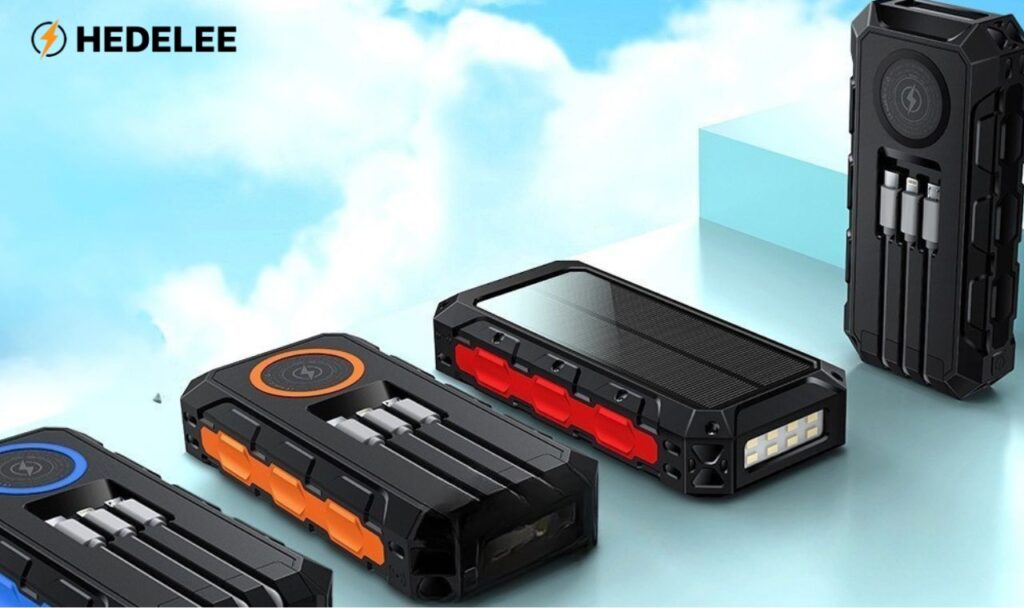
The solar charger power bank wireless design adds photovoltaic panels that recharge internal batteries using sunlight. This appeals to:
- Camping and hiking enthusiasts
- Emergency preparedness customers
- Eco-conscious consumers reducing grid dependence
- Users in regions with unreliable electrical infrastructure
Realistic solar charging rates range from 200-400mAh per hour in direct sunlight for compact panels. A 20,000mAh battery requires 50-100 hours of sun exposure for complete charging. Set customer expectations appropriately—solar functions as backup charging, not primary power source.
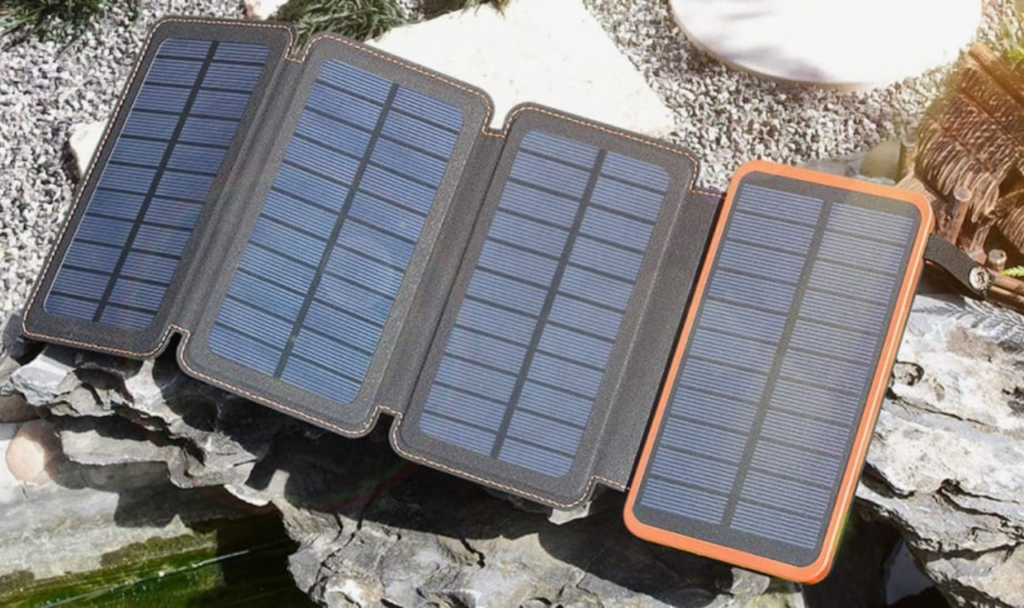
Premium solar models like the fast charging 20000 mah foldable outdoor portable solar charger incorporate foldable panels that increase surface area for faster charging rates. Manufacturing costs increase $8-15 per unit for quality solar implementations, but retail prices support $35-50 premiums over standard wireless power banks.
Verify solar panel quality through efficiency ratings. Budget panels convert just 12-15% of sunlight to electricity. Premium monocrystalline cells reach 20-23% efficiency, providing meaningful recharge capability during extended outdoor activities.

Understanding MagSafe Power Bank Technology
MagSafe technology transformed wireless charging through precise magnetic alignment that eliminates positioning frustration.
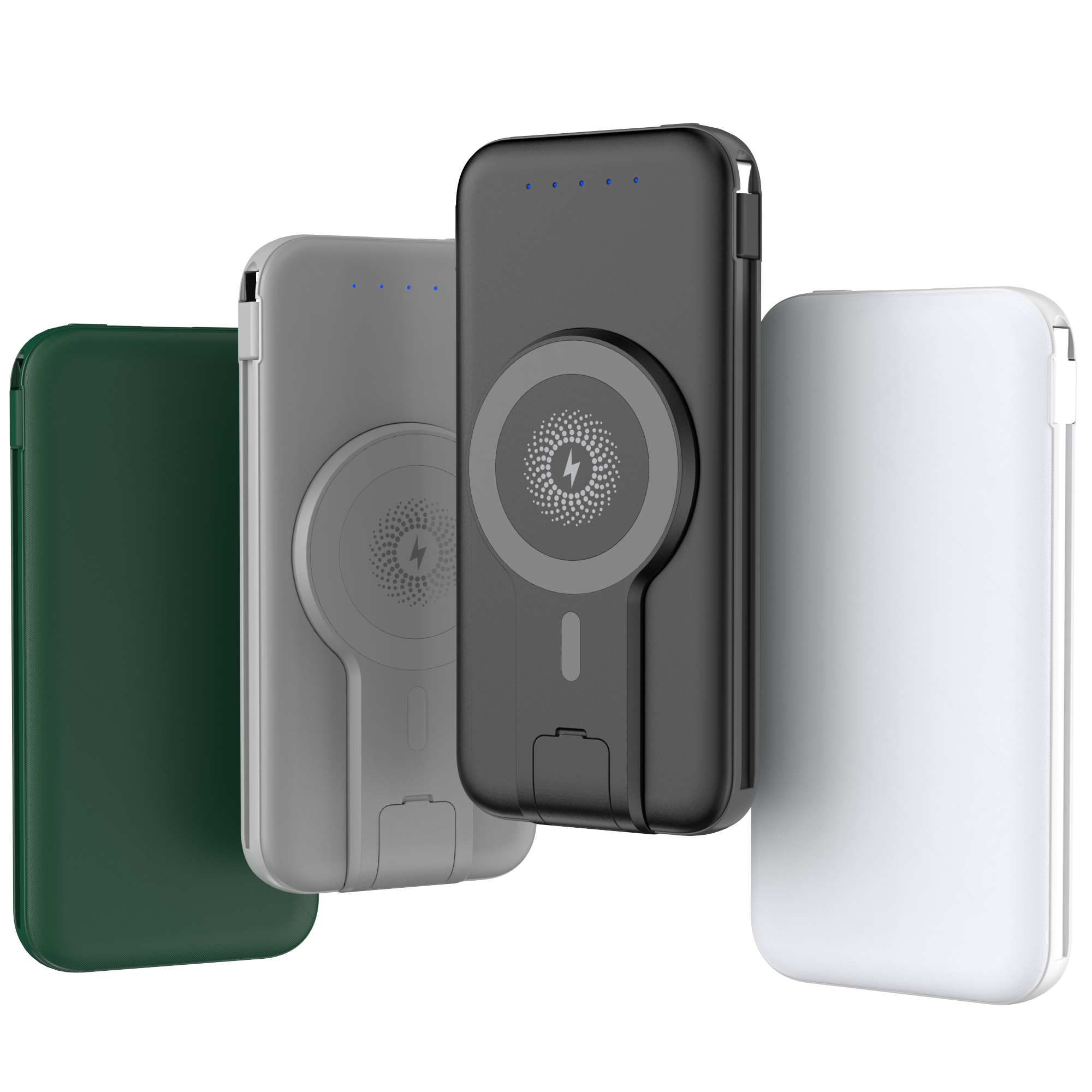
Apple’s MagSafe specification uses a ring of magnets around the wireless charging coil. This creates automatic alignment between phone and charger, ensuring optimal power transfer efficiency. The magnetic connection holds devices securely even during movement.
Third-party magsafe power bank manufacturers license MagSafe compatibility or develop work-alike magnetic systems. Licensing from Apple requires certification processes and per-unit royalty payments, adding $2.80-4.20 to manufacturing costs.
Alternative magnetic systems avoid licensing fees by using different magnet arrangements that still provide alignment benefits. These work with magnetic phone cases but may not attach directly to MagSafe-compatible phones.
When sourcing MagSafe-compatible products, verify:
- Magnet strength specifications (minimum 800 grams holding force)
- Alignment precision (coils must center within ±2mm)
- Compatibility testing with current iPhone and Android phones using magnetic cases
- Interference prevention (magnets shouldn’t disrupt phone compasses or NFC)
The premium pricing MagSafe compatibility commands justifies the additional investment for fashion-forward and Apple-ecosystem customers.
Navigating Intellectual Property Concerns
The wireless charging space contains numerous patents and design protections you must respect.
Qi wireless charging technology is an open standard managed by the Wireless Power Consortium. Using Qi-certified components protects against infringement claims. Verify your manufacturer uses licensed Qi charging modules rather than knock-off circuits that risk legal problems.
MagSafe trademarks and patents belong to Apple. Products using “MagSafe” branding without authorization invite cease-and-desist letters. Use descriptive terms like “magnetic wireless charging” or “compatible with MagSafe devices” instead.
Design patents protect distinctive product shapes and aesthetic elements. Avoid copying recognizable designs from established brands. Original designs eliminate IP risks while supporting premium positioning.
Work with manufacturers who understand IP compliance and maintain proper licensing. Request copies of their Qi certification and component sourcing documentation showing legitimate supply chains.
Building Profitable Wireless Power Bank Product Lines
Successful importers develop coordinated product families rather than scattered SKUs.
Three-Tier Product Strategy
Value tier (30% of inventory investment):
- 10,000mAh capacity
- 10W wireless output
- Single USB-A and USB-C port
- Plastic housing in 2-3 colors
- Target retail: $22-32
Core tier (50% of inventory investment):
- 15,000mAh capacity
- 15W wireless output with magnetic alignment
- USB-C PD and USB-A ports
- Aluminum or premium plastic housing
- Digital display
- Target retail: $42-58
Premium tier (20% of inventory investment):
- 20,000mAh capacity
- 20W wireless output with MagSafe compatibility
- Multiple device charging capability
- Premium materials and build quality
- Extended warranty
- Target retail: $75-95
This distribution balances volume sales through value products while building margin through premium offerings. Core tier products drive most revenue and profit.
Seasonal Demand Planning
Wireless power bank sales peak during specific periods:
Q4 (Oct-Dec): Holiday gift buying drives 35-40% of annual volume. Order inventory 90-120 days ahead to ensure arrival by early October.
Q2 (Apr-Jun): Graduation gifts and summer travel preparation creates secondary peak of 20-25% annual volume. Position inventory by mid-March.
Back-to-school (Aug-Sep): Students and parents buying electronics generates 15-18% of volume. Summer orders should arrive by late July.
Q1 & Q3: Off-peak periods at 10-12% of annual volume each. Use these quarters for new product testing and inventory clearance of slow movers.
Align manufacturing orders with these cycles to minimize carrying costs while ensuring adequate stock during peak demand.
Quality Control Protocols for Wireless Power Bank Imports
Preventing defects requires systematic inspection at multiple stages.
Pre-Production Verification
Before authorizing production runs, inspect:
- Raw material certifications (battery cell specifications, plastic pellet safety data)
- Component samples (wireless charging modules, circuit boards)
- Packaging prototypes (structural integrity, print quality)
- Testing equipment calibration (voltage meters, load testers)
This catches problems before thousands of units contain identical flaws.
During Production Inspection
Visit factories during production runs or hire third-party quality inspectors to verify:
- Assembly process adherence to specifications
- Random sample testing (minimum 2-3% of production)
- Measurement verification (dimensions, weight, output power)
- Packaging quality and labeling accuracy
Catching issues mid-production allows corrections before completion rather than scrapping finished goods.
Pre-Shipment Inspection
Final verification before goods leave the factory includes:
- Full sample testing across all SKUs and color variants
- Drop testing and abuse scenarios
- Charge/discharge cycle verification
- Packaging inspection for damage protection
- Carton labeling and documentation accuracy
Require manufacturers to notify you 5-7 days before shipment completion so inspections happen while corrections remain possible.
First Article Inspection
For new products or modified designs, conduct comprehensive testing on initial production samples:
- Full electrical safety testing
- Wireless charging efficiency measurements at various positions
- Temperature monitoring during extended charging sessions
- Drop testing from multiple heights and angles
- Packaging performance during simulated shipping
This investment ($800-2,500 depending on scope) prevents costly recalls and reputation damage from systematic defects.
Logistics and Import Considerations
Getting products from factory to warehouse involves complex coordination.
Incoterms Selection
Choose delivery terms matching your logistics capabilities:
EXW (Ex Works): You arrange all transportation from factory gate. Maximum control and potential cost savings, but requires expertise and local partners.
FOB (Free on Board): Supplier delivers to departure port. You handle ocean/air freight and destination logistics. Most common choice balancing cost and complexity.
CIF (Cost, Insurance, Freight): Supplier arranges ocean shipping to your destination port. You handle import customs and final delivery. Simple but reduces negotiating leverage on freight costs.
DDP (Delivered Duty Paid): Supplier handles everything to your warehouse door. Convenient but most expensive option with least transparency on component costs.
Most importers select FOB terms, giving control over freight forwarders and shipping schedules while avoiding the complexity of Chinese domestic logistics.
Customs Classification and Duties
Wireless power banks typically classify under HS code 8507.60.00 (lithium-ion batteries) or 8504.40.95 (static converters/chargers). Exact classification affects duty rates:
United States: 3.4-7.5% depending on specific features and country of origin
European Union: 2.7-4.7% with various exemptions for specific configurations
United Kingdom: 2.5-4.2% post-Brexit under UKGT
Canada: 6.5-8% with CUSMA considerations for certain origins
Work with customs brokers to determine exact classifications and optimize duty payments through proper documentation.
Import Documentation Requirements
Clearing customs requires complete paperwork:
- Commercial invoice showing accurate values
- Packing list detailing carton contents
- Bill of lading (ocean) or airway bill (air freight)
- Certificate of origin (if claiming preferential rates)
- Product testing reports (safety certifications)
- Import license (if required for lithium batteries in your jurisdiction)
Missing or inaccurate documents trigger customs holds that cost $150-400 per day in storage fees. Verify document accuracy before shipment departure.
Marketing and Distribution Strategies
Moving inventory requires understanding how customers discover and purchase wireless power banks.
Online Marketplace Positioning
Amazon: Accounts for 40-50% of consumer electronics sales in North America. Success requires:
- Professional product photography (6-8 lifestyle images)
- Detailed feature descriptions addressing common questions
- A+ content showcasing specifications and benefits
- Competitive pricing within $3-5 of market leaders
- Inventory management preventing stockouts
eBay: Strong for value-conscious buyers seeking deals. Lower barriers to entry but price competition runs intense.
Specialized electronics retailers: Sites like Newegg and B&H Photo attract tech-savvy customers willing to pay for quality. Premium products perform better here than mass-market offerings.
Retail Channel Opportunities
Consumer electronics stores: Best Buy, Fry’s, and regional chains allocate shelf space to proven brands. Requires margin structure supporting 40-50% retail markups plus cooperative marketing investments.
Travel retail: Airport shops and hotel convenience stores charge premium prices for emergency charging solutions. Smaller unit volumes but excellent margins offset lower sales.
Corporate channels: Promotional product distributors serve companies buying branded power banks for employee gifts, conference giveaways, and customer appreciation. Minimum customization orders of 500-1,000 units typical.
Direct-to-Consumer Options
Building your own ecommerce presence through Shopify, WooCommerce, or similar platforms provides maximum margin control but requires:
- Digital marketing expertise (Facebook Ads, Google Shopping, SEO)
- Customer service infrastructure
- Fulfillment operations or 3PL partnerships
- Returns processing capabilities
Start with marketplace sales to validate product-market fit before investing in independent ecommerce infrastructure.
Future Trends Shaping Wireless Power Bank Development
Staying ahead requires understanding emerging technologies and shifting customer expectations.
Higher Power Wireless Charging
The Qi2 standard releasing in 2025 supports up to 30W wireless charging. This enables laptop charging and dramatically faster phone charging. Early adoption creates differentiation opportunities before competitors catch up.
Manufacturing costs increase $6-12 per unit for 30W capability due to larger coils, enhanced heat management, and more sophisticated control circuits. Target premium market segments that value cutting-edge features.
Reverse Wireless Charging
Newer smartphones charge other devices wirelessly. Power banks with reverse wireless capability let users share power with friends’ phones or charge wireless earbuds. This adds minimal cost ($1.20-2.40) while creating marketing differentiation.
USB-C Universal Adoption
Lightning ports disappear as Apple transitions entirely to USB-C. Standardizing on USB-C across all ports simplifies manufacturing, reduces customer confusion, and improves compatibility. Plan product lines around USB-C as primary interface.
Sustainable Materials and Circular Economy
Environmental regulations tighten globally. Products using recycled plastics, sustainable packaging, and repair-friendly designs appeal to eco-conscious consumers and may qualify for regulatory advantages.
Recycled ABS plastic costs $0.60-1.20 more per unit but enables “made from recycled materials” marketing claims that resonate with certain demographics. Evaluate whether your target markets justify these premiums.
AI-Powered Charging Optimization
Advanced circuit boards analyze device charging patterns and optimize power delivery for battery health. This adds $2.40-4.80 to manufacturing costs but supports premium positioning through extended device battery lifespan claims.
Working With Chinese Manufacturers: Practical Tips
Most wireless power bank production concentrates in Guangdong and Zhejiang provinces. Success requires cultural and practical understanding.
Communication Best Practices
Be explicit about specifications. Chinese manufacturers interpret ambiguous requirements differently than you expect. Provide detailed drawings, exact measurements, and reference samples.
Confirm understanding. Don’t assume “yes” means comprehension. Request production samples and measurements back proving they understood your requirements.
Build relationships. Chinese business culture values long-term partnerships. Invest time in factory visits and relationship building rather than treating suppliers as interchangeable vendors.
Payment Terms Negotiation
Standard payment structures follow this pattern:
- 30% deposit upon order confirmation
- 60% before shipment departure
- 10% within 30 days of delivery
New relationships often require higher deposits (40-50%) until trust develops. Larger order values justify letter of credit arrangements protecting both parties.
Never pay 100% before receiving goods unless working with verified suppliers through trusted trading platforms. Scams remain common in electronics sourcing.
Managing Production Timelines
Realistic timelines for wireless power bank production:
- Tooling and sample development: 25-35 days
- Sample approval and revision: 10-15 days
- Mass production: 25-35 days
- Quality inspection: 3-5 days
- Ocean shipping to North America: 30-45 days
Total time from initial order to warehouse arrival: 93-135 days under normal conditions. Rush production costs 15-25% premiums and reduces quality control time.
Chinese New Year (late January/early February) adds 15-20 days to all timelines. Avoid production schedules requiring factory work during this period.
Launching Your Power Bank With Wireless Product Line
You’ve researched specifications, identified suppliers, and understand market dynamics. Now execute systematically.
Start Small and Test Market Response
Initial orders of 500-1,000 units minimize risk while providing sufficient inventory to gather customer feedback. This investment typically runs $8,000-25,000 depending on product tier and specifications.
Test through multiple channels simultaneously:
- Amazon listing with PPC advertising ($500-1,500 budget)
- Direct outreach to 5-10 retail partners
- Trade show booth if timing permits ($3,000-8,000 all-in)
Monitor which channels generate traction and double down on success while cutting unsuccessful approaches.
Gather and Act on Customer Feedback
First-generation products rarely get everything right. Create feedback collection systems:
- Post-purchase email surveys (offer 15% discount on next order for responses)
- Amazon review monitoring and analysis
- Direct customer service interaction documentation
Common feedback patterns indicating necessary improvements:
- Multiple complaints about charging speed → Upgrade wireless output power
- Heat concerns → Improve thermal management
- Confusion about features → Simplify product design or improve instructions
- Durability issues → Enhance materials or assembly quality
Plan second-generation improvements based on verified customer priorities rather than assumptions.
Scale Strategically Based on Proven Demand
Once you’ve validated product-market fit through initial sales, expand inventory gradually:
- Month 1-3: Sell through test inventory (500-1,000 units)
- Month 4-6: Reorder 2-3x initial volume based on sales velocity
- Month 7-12: Expand to 5-10x initial volume with additional SKUs
- Year 2: Introduce complementary products and premium tiers
This measured approach prevents inventory disasters while building working capital through proven sales rather than speculation.
Partner With Proven Wireless Power Bank Manufacturing Expertise
Building a profitable power bank with wireless business requires more than finding the cheapest supplier. You need manufacturing partners who understand international standards, respect quality requirements, and deliver consistent performance across production runs.
Our factory specializes in wireless charging solutions combining portability, eco-friendly solar integration, and reliable performance. We manufacture complete wireless power bank product lines from compact 5,000mAh units to high-capacity 30,000mAh systems.
Every product undergoes rigorous testing including 500+ charge cycles, drop testing from 1.5 meters, and wireless efficiency verification. We hold complete certification documentation (CE, FCC, RoHS, UN38.3) ready for immediate delivery with your orders.
Our engineering team works directly with importers to customize specifications matching target markets. Whether you need magnetic MagSafe compatibility, solar integration, or multi-device charging capabilities, we optimize designs for manufacturability and cost efficiency.
Request detailed quotations including complete BOM breakdowns, production timelines, and sample availability. We respond to serious inquiries within 24 hours with technical specifications and pricing tailored to your volume requirements.
Contact us today to discuss your wireless power bank sourcing needs. We’ll provide transparent pricing, realistic timelines, and the manufacturing expertise that turns your product vision into profitable reality.
Frequently Asked Questions
Q: What’s the typical minimum order quantity for custom wireless power banks?
A: 500-1,000 units for custom branding and specifications. Standard products start at 100-200 units with limited customization options.
Q: How much more do wireless-capable power banks cost versus wired-only models?
A: Manufacturing costs increase $2.40-5.80 per unit. Basic 10W wireless adds $2.40-3.20, while MagSafe compatibility adds another $1.20-2.80.
Q: What certifications are required for importing wireless power banks?
A: US requires FCC and UL/ETL. EU requires CE marking with RED directive and RoHS. All markets need UN38.3 for lithium battery transport. Budget $8,000-15,000 and 60-90 days.
Q: How can I verify claimed battery capacity is accurate?
A: Request third-party lab testing reports per IEC 61960 standards. A genuine 10,000mAh unit delivers approximately 6,290mAh to devices due to conversion losses.