

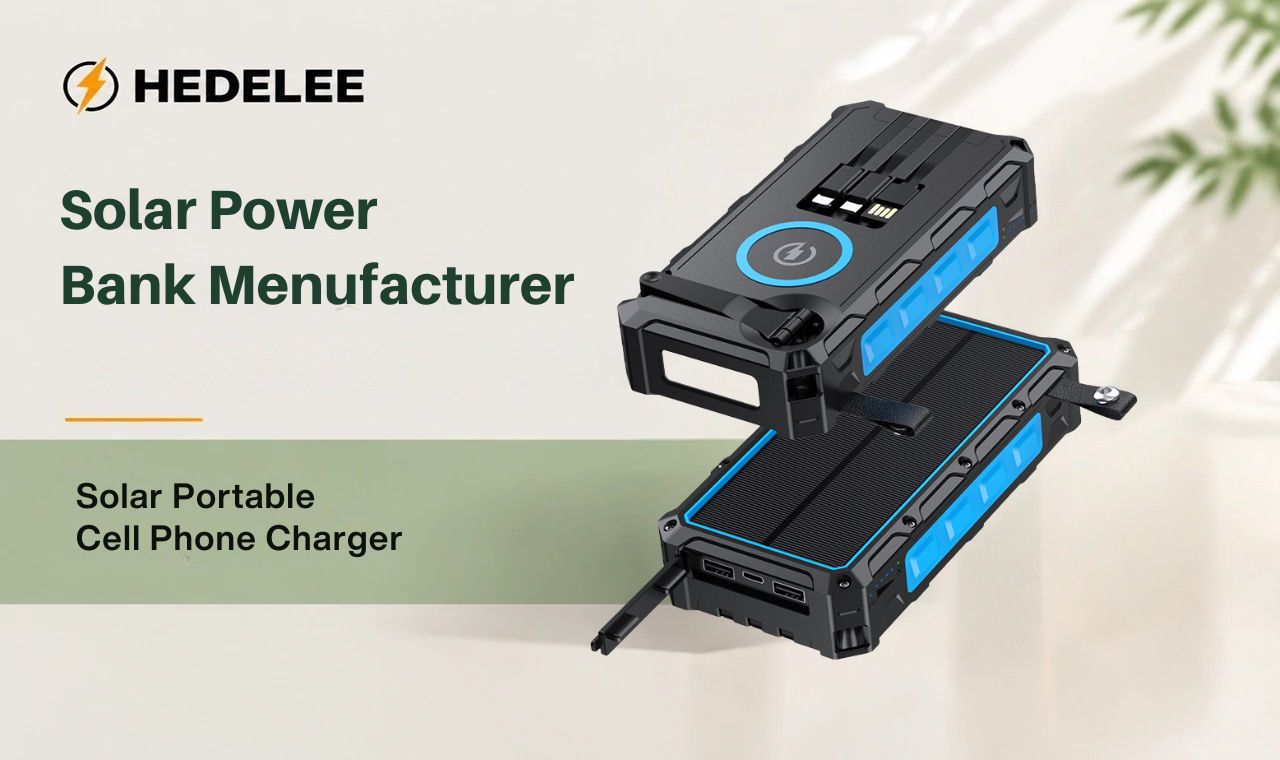
A storm knocks out the power lines on your street. Your phone shows 11% battery. The nearest working outlet could be two days away. A solar portable cell phone charger turns daylight into stored power, giving you a way to call family, follow emergency alerts, and keep work running when the grid cannot. For buyers who stock emergency gear—retailers, distributors, procurement teams, and product managers—this simple device has become one of the most consistently demanded items in the portable power category.
Demand for emergency-ready charging is steady and growing. The U.S. government’s own preparedness site, Ready.gov, lists a cell phone with chargers and a backup battery among the core items in every basic emergency kit, and its family checklists go further by naming a solar charger as a recommended item. That official endorsement shapes what consumers expect to find on store shelves, and it explains why wholesale orders for solar-charging power banks keep rising year after year.
Below, we walk through how these devices work, which specifications separate a dependable unit from a disappointing one, and how sourcing teams can evaluate suppliers with confidence.
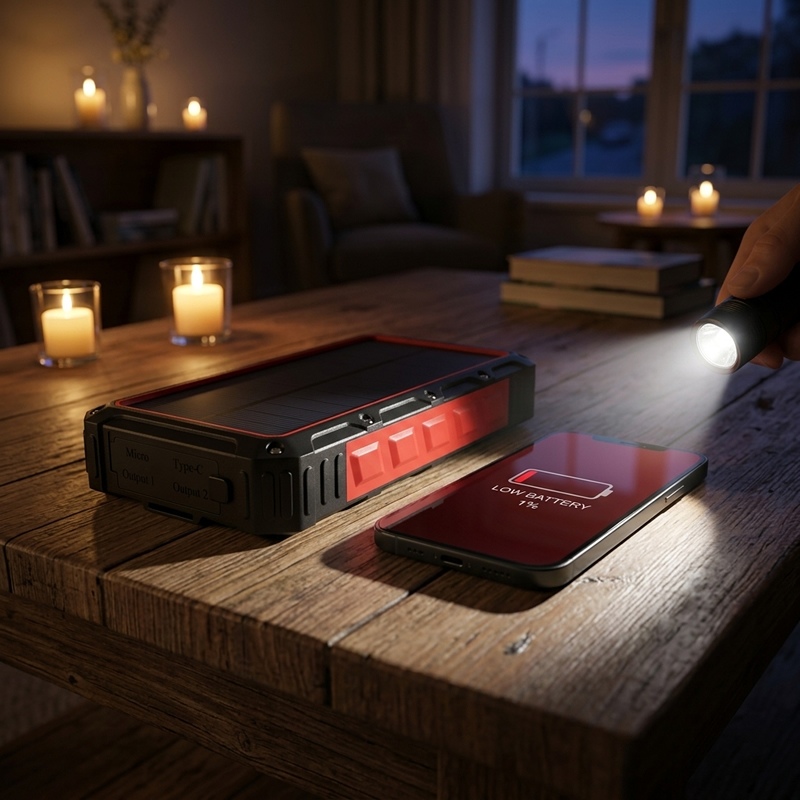
How a Solar Portable Cell Phone Charger Works During an Emergency
A solar portable cell phone charger combines two functions in one housing. First, an internal lithium battery stores energy, exactly like a standard power bank. Second, a photovoltaic panel on the device’s surface converts sunlight into electricity that refills that stored energy when no wall outlet exists.
The order of operations matters. In daily use, the owner charges the bank from a wall outlet or USB source, which takes a few hours and fills the battery to capacity. The solar panel serves as the emergency trickle source: when the grid is down, the panel slowly feeds the battery so the bank is never fully “empty.” This hybrid design explains why the solar category has outgrown its camping-only image and moved into household emergency kits and disaster-relief distribution programs.
Panels on pocket-size units typically deliver a modest input—enough to add charge over a sunny afternoon rather than in minutes. Larger foldable solar panels cover more surface area and refill faster. For emergency planning, the takeaway for your customers is honest and simple: charge the bank before the storm, then use sunlight to extend runtime day after day.
For anyone comparing a solar phone charger with a plain battery pack, the difference shows up on day three of an outage, when a conventional power bank is spent and a solar unit is still refilling itself on a windowsill or car dashboard.
When the Grid Goes Down: Why Phones Fail First
Phones have become the main lifeline during disasters—alerts, maps, payments, and family check-ins all run through one small battery. Yet several pressures drain that battery fast during an outage:
Signal hunting. With towers damaged or overloaded, phones boost radio power searching for a connection, which can cut battery life sharply.
Heavy usage. People refresh news, send messages, and use GPS far more than usual.
Cold weather. Low temperatures reduce lithium battery capacity at the worst possible moment.
Home broadband loss. The FCC and FEMA emergency communications guidance points out that broadband phone service fails during outages without a backup power source, and it specifically recommends keeping a solar charger on hand alongside extra batteries.
That last point deserves attention from anyone planning inventory. When federal agencies tell the public to buy solar chargers, retailers who carry them are positioned directly in the path of that demand. Importers and distributors who secure supply before storm season—rather than reacting during one—consistently report smoother sell-through on these SKUs.
Solar Powered Power Bank vs Standard Power Bank: A Quick Comparison
Buyers new to the category often ask whether a solar powered power bank justifies its higher unit cost over a plain power bank. The answer depends on the use case your customers face. This table lays out the core differences:
For emergency assortments, most sourcing teams stock both: standard banks for everyday buyers, and solar models as the outage-ready option. If your customer base includes outdoor retailers or disaster-preparedness programs, solar models tend to carry stronger margins and lower price sensitivity, because buyers in those channels compare features rather than sticker prices.
How to Choose a Solar Portable Cell Phone Charger for Emergency Power
Not every unit marketed for emergencies performs like one. When evaluating a solar portable cell phone charger for your own kit—or building an assortment for resale—work through these five checkpoints.
1. Battery capacity matched to real phone needs
A modern smartphone battery sits around 3,500–5,000mAh. A 20,000mAh power bank for solar charging therefore delivers roughly three to four full phone charges from its stored energy, even before sunlight adds anything. For multi-day outages or group use, 25,000–42,000mAh models stretch that comfortably. One detail worth teaching your customers: rated capacity and delivered capacity differ modestly because of conversion losses, so realistic expectations are about 70–80% of the figure printed on the housing.
2. Output speed and port mix
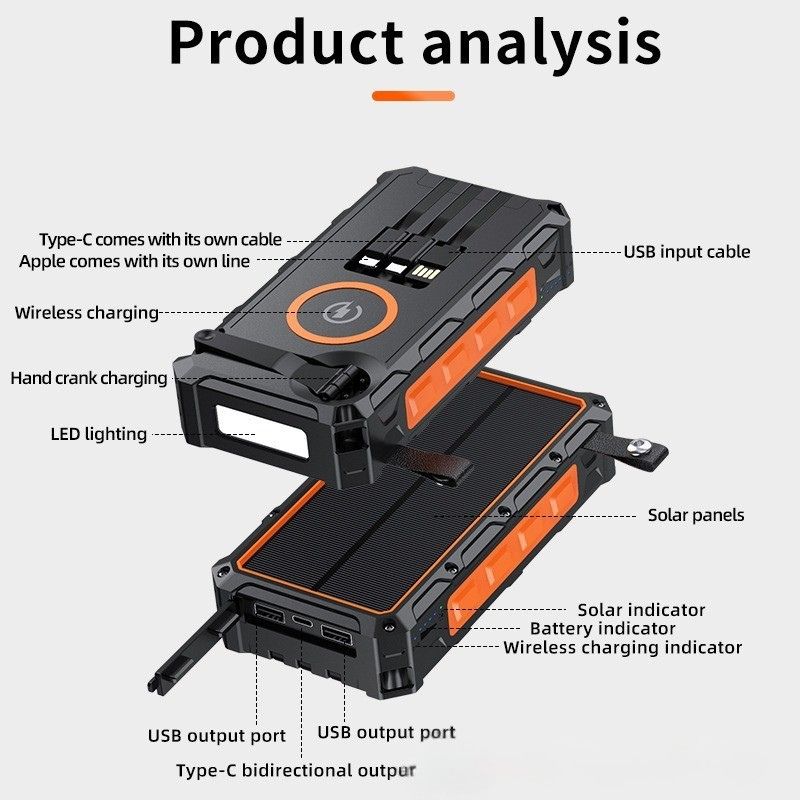
Look for at least one fast-charging output—USB-C with higher amperage is now the expectation—and enough ports to serve several devices at once. Built-in cable designs remove the “I packed the bank but forgot the cable” failure that shows up constantly in reviews of emergency gear. If your market leans Apple-heavy, confirm the unit functions as a solar powered iPhone charger with appropriate output protocols, since iPhones draw efficiently only on supported standards.
3. Solar panel size and placement
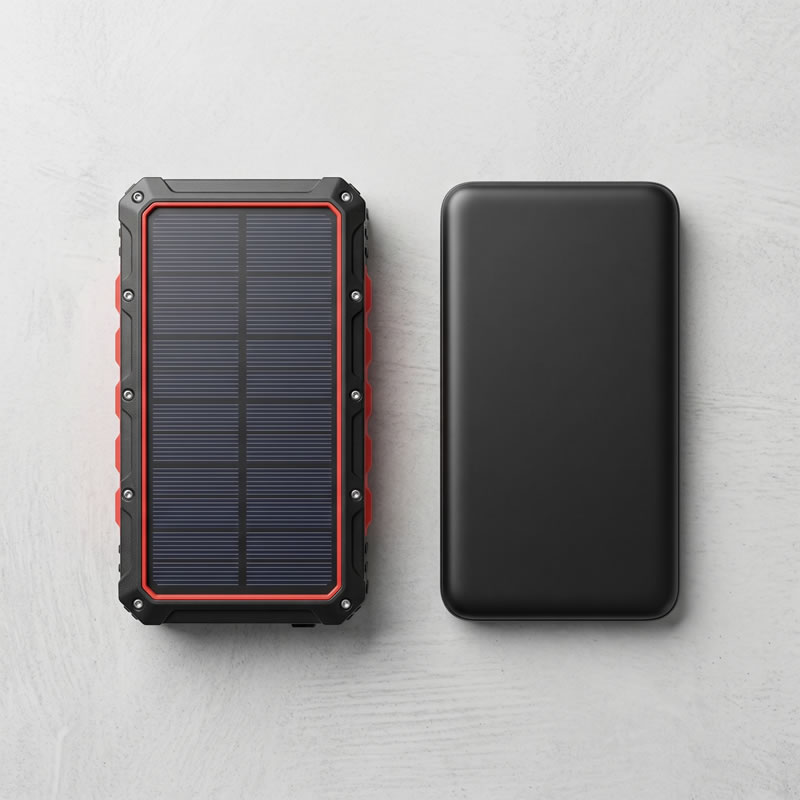
A solar power bank battery charger with a small panel adds charge slowly; that is physics, not a defect. What you want is an honest specification: clear input wattage from the panel, plus foldable multiple-panel designs for customers who need faster solar recovery. Honest specs reduce returns and protect your review scores.
4. Durability ratings
Emergencies involve rain, dust, drops, and glove-box storage at extreme temperatures. An IPX4 or IP65 water-resistance rating, a shock-absorbing shell, and a stated operating temperature range separate emergency-grade units from indoor-only products. For outdoor retail channels, a waterproof solar power bank for outdoor use is the baseline expectation, not an upgrade.
5. Useful extras
Practical additions that show genuine field value rather than shelf appeal: built-in LED flashlights (very relevant during blackouts), wireless charging pads for cable-free top-ups, and lanyard anchor points for hanging the unit on a pack or tent. A solar charger power bank with flashlight is a natural two-in-one item for emergency kits.
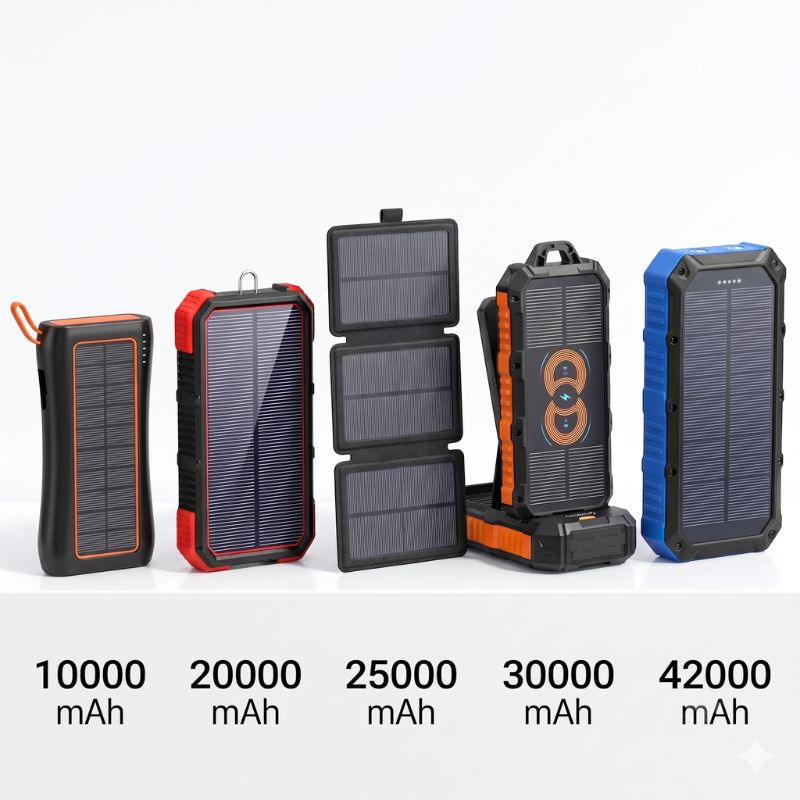
Capacity Options: Matching Solar Phone Charger Models to Use Cases
Capacity selection drives most purchase decisions in this category, so it helps to think in scenarios. The overview below reflects models across the solar power bank category our factory produces, and it maps each capacity tier to the buyers and end users it fits.
For buyers building a first assortment, a three-tier spread—10,000mAh, 20,000mAh, and one 30,000mAh-plus model—covers personal, family, and group customers with a compact SKU count. Our full solar power bank product range shows the complete lineup, including dual-USB waterproof units like the HDL-519 series and multi-cable designs such as the IPX4-rated HDL-529.
One sourcing note worth sharing: any solar mobile phone charger positioned for emergency channels should carry documentation your customers may ask for—battery transport certifications (UN38.3/MSDS), plus CE and RoHS conformity for European destinations. Requiring these at quotation stage saves weeks compared to requesting them after sampling.
Real Emergency Scenarios: Where These Chargers Earn Their Keep
Abstract feature lists become concrete once you picture the settings where a solar power bank battery charger is the only working power source. Three scenarios appear again and again in feedback from the importers and distributors we supply:
Hurricane and typhoon seasons. Coastal retailers in affected regions treat solar chargers as seasonal traffic drivers. Households buy them alongside water, batteries, and radios, and stockouts during the days before a forecast landfall are common. Distributors serving these regions often place replenishment orders before season start.
Wildfire evacuations and rolling shutoffs. Regions with preventive grid shutoffs create repeat demand rather than one-time spikes. Customers who live through one shutoff buy for the next. That pattern supports standing inventory rather than event-driven purchasing.
Outdoor recreation and remote fieldwork. Hiking guides, survey crews, and long-distance truckers buy through outdoor and professional channels, valuing drop resistance and multi-device charging over price. A solar cell phone charger that survives a week on the trail builds the kind of word-of-mouth that generic electronics rarely enjoy.
Across all three, the product earns loyalty because it solves a felt problem the moment it is needed—customers remember the device that kept their phone alive when nothing else could.
Sourcing from the Manufacturer: What Wholesale Buyers Can Expect
Specifications tell half of a sourcing decision; the supplier relationship tells the other half. Shenzhen Hedeli Technology Co., Ltd. has spent about ten years building mobile accessories and consumer electronics, with solar power banks as a core category. Our team of more than 100 employees runs headquarters in Shenzhen, an office and showroom in Guangzhou for in-person product review, and a Dongguan factory with monthly capacity of 50,000 units supplying importers, distributors, and wholesalers on schedule.
That structure translates into a few concrete advantages for procurement teams:
Factory-direct pricing and communication. You negotiate with the source, not a trading layer, so specification questions get answered by the engineers who build the product.
Stable lead times. A 50,000-unit monthly capacity means routine order fulfillment even before peak seasons tighten supply lines.
Customization options. Logo printing, housing colors, packaging, and cable configurations are available for private-label programs.
Documentation on request. Battery transport and conformity certificates are supplied with orders, which keeps customs clearance and platform listing compliance predictable.
For quotation requests, include your target capacity tiers, estimated volumes, destination market, and any customization requirements. That information lets our sales engineers respond with model recommendations and pricing within one working day.
Talk Directly to the Factory Behind Your Order
Emergency-season demand rewards buyers who lock in stock early. If you are mapping out an assortment for retailers, distributors, or preparedness programs, our team can match capacity tiers, durability ratings, and price points to each channel you serve. Because Shenzhen Hedeli is the original manufacturer, your inquiry goes straight to the people who design, assemble, and test every unit—no intermediaries, no relayed specs.
Share your target models or volumes with us, and we will send samples, documentation, and a factory-direct quotation so you can finalize your lineup before the season, not during it.
Frequently Asked Questions
1. What order quantities do you accept for solar power banks?
We accept flexible minimum order quantities that scale with the model and customization level. Send us your target quantities and we will confirm the MOQ for your chosen units along with tiered pricing.
2. Can we customize branding on the solar chargers?
Yes, we offer logo printing, housing colors, and custom packaging. Reach out with your artwork and packaging requirements, and our team will share mockups and customization quotations.
3. Do your products come with compliance certificates?
Yes, batteries are shipped with transport certifications such as UN38.3 and MSDS, and CE/RoHS conformity is available for European markets. Contact us to request documentation for your destination market.
4. How long does production and delivery usually take?
Lead times depend on order volume and customization, and our 50,000-unit monthly capacity keeps fulfillment predictable even in peak seasons. Share your timeline when inquiring so we can confirm a production schedule.
5. Can we request samples before placing a bulk order?
Yes, samples are available for evaluation before volume orders. Contact us to request samples of your shortlisted models along with detailed specifications.