

If your customers spend time outdoors, travel often, or face unstable grid power, they are probably asking about bank power solar products instead of only traditional plug‑in power banks. Solar charging speaks to energy independence, sustainability, and the need to keep phones online in places where wall sockets are rare.
At the same time, experienced buyers know that compact solar panels have limits: small surface area, slower charging in real‑world conditions, and dependence on weather. The real question for procurement and product teams is not whether solar sounds attractive, but where a solar power bank genuinely adds value to your assortment and when a conventional model is still the better fit.
Shenzhen Hedeli Technology Co., Ltd. (Hedelee) focuses on solar power bank development, with a factory in Dongguan supplying importers, distributors, and wholesalers at a monthly capacity of around 50,000 units. That production base allows the company to fine‑tune different solar power bank, solar powered power bank, and hybrid designs for outdoor and everyday use.
This guide walks through the real advantages and disadvantages of solar power banks, how they compare with traditional models, and how to select models that make commercial sense for your region and channel.
What is a solar power bank in practical terms?
A solar power bank is a portable battery pack that can be charged from a wall socket, USB port, or other external source, and that also integrates one or more photovoltaic (PV) panels to harvest energy from sunlight. In most modern designs, the solar panel is a backup input, while regular USB or Type‑C charging remains the primary way to fill the battery.
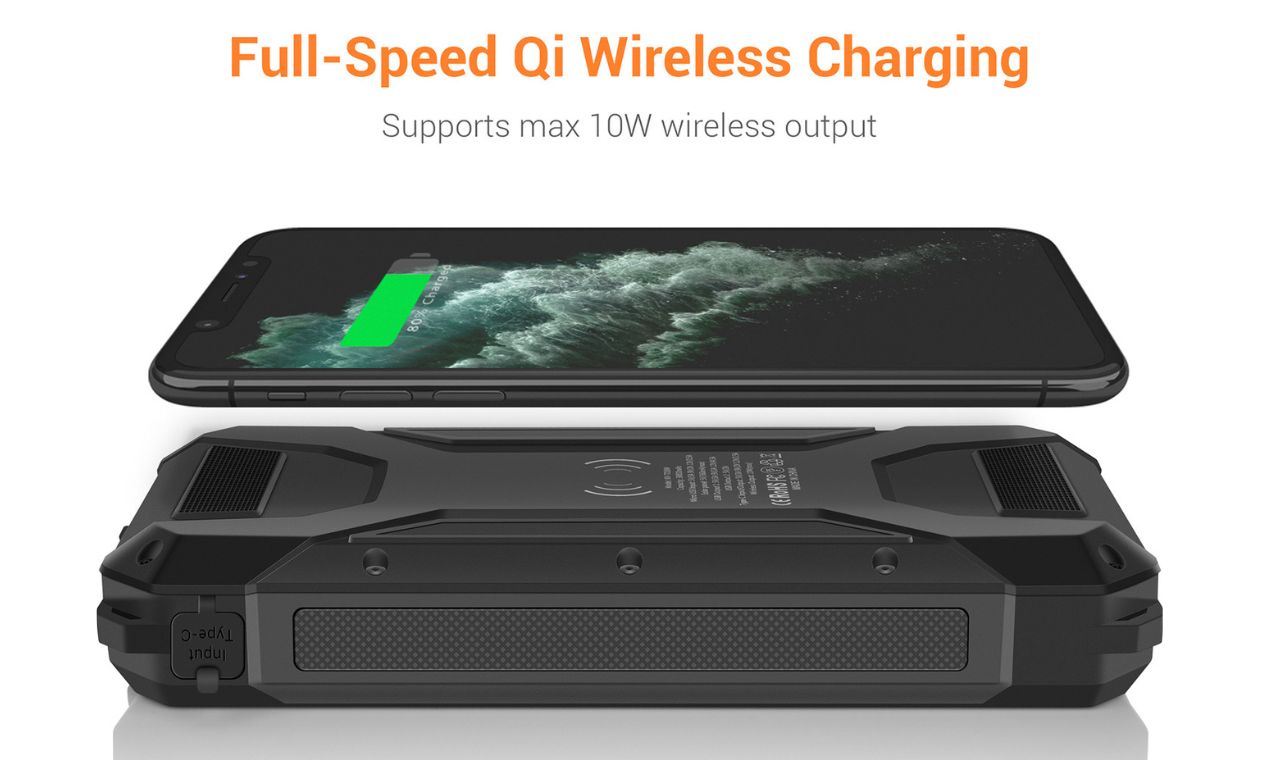
When buyers talk about a solar phone charger, solar cell phone charger, or solar mobile phone charger, they usually mean this battery‑plus‑panel combination, not a bare panel without storage. The internal lithium battery (often 10,000–42,000 mAh in Hedelee’s range) stores energy from both sources and then delivers it to phones, tablets, lamps, or other small devices via USB‑A, USB‑C, and increasingly Qi wireless outputs.
From a sourcing perspective, that means you are not choosing between a power bank and a solar panel. Instead, you are choosing whether to add solar capability to a product that still behaves like a standard power bank in everyday use.
How bank power solar devices compare with traditional power banks
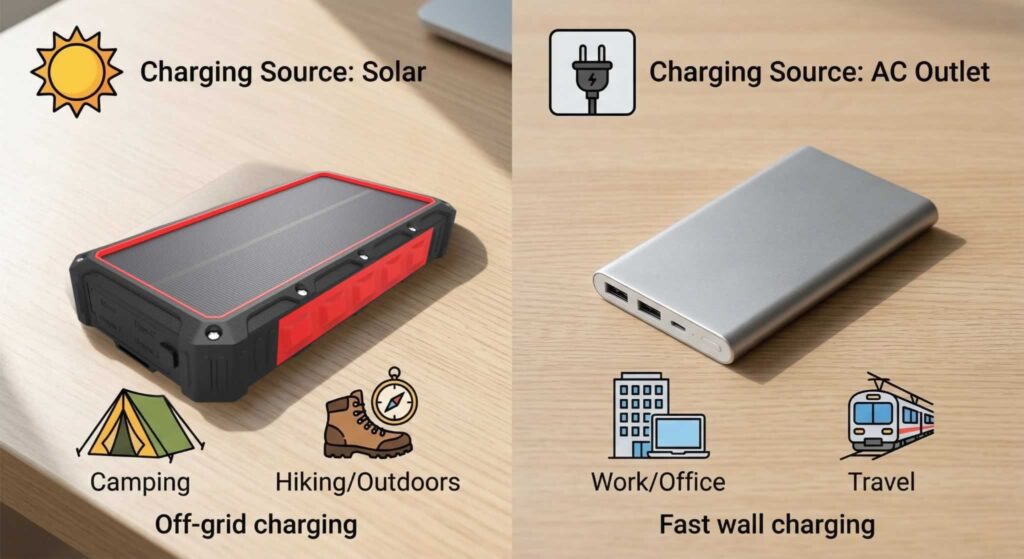
Several independent reviews and technical blogs highlight the same broad pattern: solar power banks trade speed and simplicity for energy independence and outdoor flexibility. The table below summarizes the main differences buyers tend to care about.
Solar power bank vs traditional power bank
For many buyers, the winning strategy is not “either/or”, but a portfolio where solar power bank battery charger models target specific outdoor and resilience‑focused segments, while classic power banks handle urban and everyday demand.
Key advantages of bank power solar devices
1. Backup charging without grid access
The strongest practical advantage of bank power solar devices is their ability to refill, even slowly, when there is no grid access. Portable solar chargers can still produce power under diffuse light, although efficiency may fall to 10–25% of rated output in heavy cloud cover.
For users in regions with unstable electricity or for those camping, hiking, or working on remote job sites, this makes a solar powered power bank attractive as a backup rather than the only source of energy. When you specify models with both high‑capacity batteries and reasonably sized panels, customers can pre‑charge from the wall, then extend runtime with solar during the day.
Hedelee’s portfolio includes outdoor‑oriented models like the outdoor solar power bank with large capacity of 10000 mAh and wireless fast charging, designed to deliver wall‑charged speed plus solar top‑ups in the field.
2. Strong fit with sustainability positioning
Eco‑conscious consumers increasingly look for chargers and accessories that reduce their dependence on fossil fuel‑based electricity. A solar power bank battery charger taps into that demand by visibly using sunlight as part of the energy source, even if wall charging still does a large part of the work.
While a single charger will not transform a user’s overall emissions profile, portfolio‑wide adoption of solar‑capable devices gives retailers and distributors a tangible sustainability story: less grid demand for routine topping up and more use of a renewable source where sunlight is abundant.
3. Versatile product positioning for outdoor and emergency use
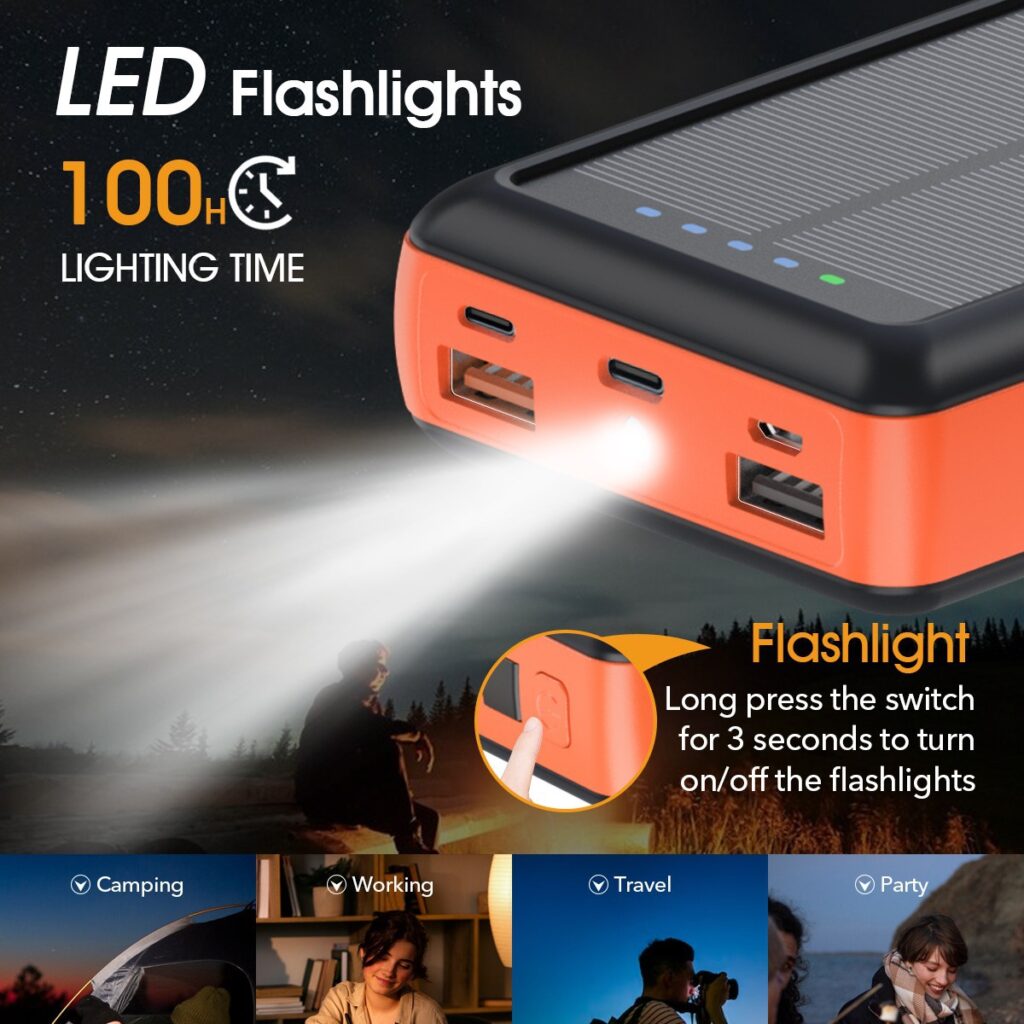
Solar power banks test well in categories like outdoor sports, camping, fishing, and survival kits because they combine multiple features beyond charging. These often include high‑lumen LED flashlights, SOS modes, carabiner loops, and ruggedized shells with IP‑rated water resistance.
Hedelee’s range includes models like the 20000 mAh solar power bank portable wireless charger with waterproof body and flashlight (HDL‑218) and the solar charger 25000 mAh portable power bank with dual USB ports and waterproof casing, which bundle lighting and emergency functions into one SKU.
That combination makes it easier for sales teams to position these as “outdoor all‑rounders” rather than just another battery pack competing purely on capacity and price.
4. Differentiation in a crowded accessories category
Traditional power banks compete heavily on capacity, port count, and price per Wh. Adding solar capability, wireless charging, built‑in cables, or foldable panels provides clear differentiation that is visible even in a thumbnail image.
Models like Hedelee’s foldable outdoor portable solar charger 20000 mAh power bank with LED lights show how a solar mobile phone charger can stand out on digital shelves. Foldable multi‑panel designs increase solar surface area while keeping packing size reasonable, which addresses one of the biggest performance complaints about single‑panel devices.
5. Expanded value in regions with unstable power
In markets where rolling blackouts or unreliable infrastructure are common, buyers report that solar‑capable chargers improve perceived value. Even if users still rely heavily on regular charging, the knowledge that a solar phone charger can add power during daytime outages improves adoption.
For distributors in Africa, South Asia, parts of Latin America, and remote rural zones elsewhere, bank power solar products can support both retail and institutional segments that need communication devices to stay active through grid interruptions.
Main disadvantages of bank power solar chargers
1. Slow solar charging and dependence on conditions
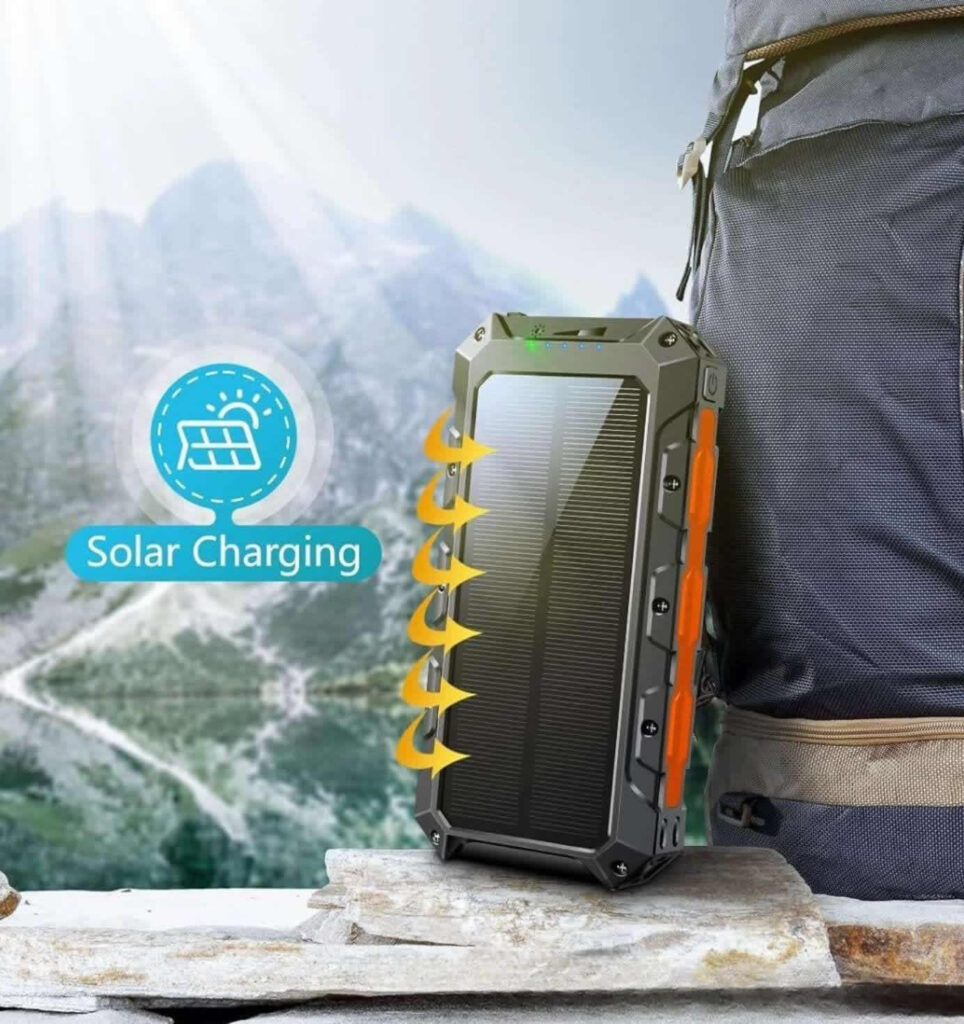
Performance on solar alone is the biggest limitation that technical reviews and field users mention. Compact panels have limited surface area, and real‑world tests show that portable solar phone chargers may deliver only a fraction of their rated power when clouds, sub‑optimal angle, or partial shade are present.
Studies and field data indicate that solar output can drop by 20–50% in typical overcast conditions and up to 65% under heavy cloud cover, stretching charging time by several multiples. That means a bank that fills in a few hours from wall power may take most of a day in ideal sun, and significantly longer in mixed weather. For buyers, this is less a defect and more a performance reality that needs to be explained clearly in product copy and packaging.
2. Larger size and higher unit cost
Because they integrate panels, reinforced housings, mounting loops, and often thicker sealing, solar power banks tend to be bulkier and sometimes heavier at the same nominal battery capacity than non‑solar equivalents. Additional components and more complex construction also push unit cost above similar‑capacity non‑solar models from the same supplier.
For channels that focus on ultra‑thin pocket power banks or highly price‑sensitive customer groups, these trade‑offs can limit volumes. A careful assortment strategy is needed: solar powered power bank SKUs may sit at a slightly higher price tier and target specific use cases instead of being your entry‑level offer.
3. Risk of misaligned user expectations
Many consumer complaints about solar power banks come from expectations that a small panel will charge as fast as a full‑size rooftop system or that a phone can be rapidly charged directly from weak sun. When reality does not match the perceived promise, return rates rise and satisfaction scores fall.
Clear product education, realistic claims (“solar top‑up” rather than “endless power”), and honest comparison charts help manage this risk. Linking from your product detail pages to informative resources and clear diagrams can also support informed choices.
4. Thermal stress if used incorrectly
If a bank power solar charger is left for hours under intense sun with minimal airflow, the battery can heat up significantly, which accelerates aging and can in extreme cases cause safety incidents. Leading manufacturers mitigate this through thermal design, protective circuitry, and by following relevant battery and portable power standards.
When sourcing, ask about compliance with lithium battery transport tests like UN38.3, and electrical safety and performance standards like UL or IEC norms that apply to portable power packs. For example, UL 2743 (Portable Power Packs) and IEC/UL 62133‑2 (portable sealed lithium cells and batteries) are commonly referenced in portable energy storage products that integrate USB outputs and internal lithium packs.
When does a solar powered power bank make sense in your range?
Not every product line needs solar, and not every customer will pay extra for it. Based on market feedback and outdoor usage reports, several patterns emerge where a solar powered power bank is likely to perform well.
Scenarios that favor solar‑capable models
In contrast, dense urban commuters who charge nightly at home or in the office often need a compact, light power bank more than they need solar input. For those customers, you may still list solar variants but expect lower attachment unless the sustainability story resonates strongly.
How to evaluate specifications for a solar power bank battery charger
For buyers and product managers, reviewing a solar power bank spec sheet involves more than just battery capacity. Several parameters determine whether a given model is a good fit for your channel and region.
1. Battery capacity and output mix
Capacity (mAh or Wh): Higher capacity (20,000–42,000 mAh) enables multiple smartphone charges or mixed device charging but increases weight and cost.
Outputs: Modern solar power bank battery charger designs increasingly combine USB‑A, USB‑C with Power Delivery, and sometimes Qi wireless pads. This mix affects perceived value and compatibility with newer phones and tablets.
Simultaneous output: Check whether the model supports several devices at once and how total output is shared.
Hedelee offers high‑capacity options like the 36,000 mAh wireless solar power bank with three cables (HDL‑531) and the 42,000 mAh solar power bank with built‑in 4 cables and dual LED flashlight (HDL‑628), which address power users and group charging needs.
2. Solar panel area and configuration
Panel size and count: Single small panels mainly support slow top‑ups, while larger or foldable arrays deliver more usable energy when properly oriented.
Panel type: Monocrystalline panels tend to show better efficiency per area than older technologies in low‑light conditions.
Protection: Toughened glass or coated PET improves durability, especially for camping and marine use, but affects cost and weight.
Foldable products like Hedelee’s fast‑charging 20,000 mAh foldable outdoor solar power bank help bridge the gap between compact storage and larger panel area in use, which can be a strong talking point for professional buyers.
3. Charging electronics and indicators
Look for:
Multiple input options: Micro‑USB plus Type‑C, or Type‑C only, with clear labeling of maximum input current.
Charge controllers: More advanced controllers and MPPT‑style designs can improve energy harvest in mixed weather, as shown by testing on solar battery systems.
Status indicators: LED bars or digital displays showing remaining capacity and charging status help reduce customer confusion and support remote deployment where users rely on the device under stress.
4. Durability, waterproofing, and environmental ratings
For outdoor and industrial channels, IP ratings and environmental performance are key points in negotiations and technical approvals.
Water and dust protection: IPX4 or higher is common for portable solar chargers, with some models offering stronger protection.
Shock resistance: Rubberized edges and reinforced housings help products survive drops and rough handling.
Certification and standards: Ask suppliers which UL, IEC, CE, and UN transport standards their solar power bank lines follow, as covered in portable ESS and solar panel safety overviews.
Hedelee’s waterproof designs, including the 20000 mAh waterproof solar panel power bank with fast charging, address channels where moisture and dust are everyday realities.
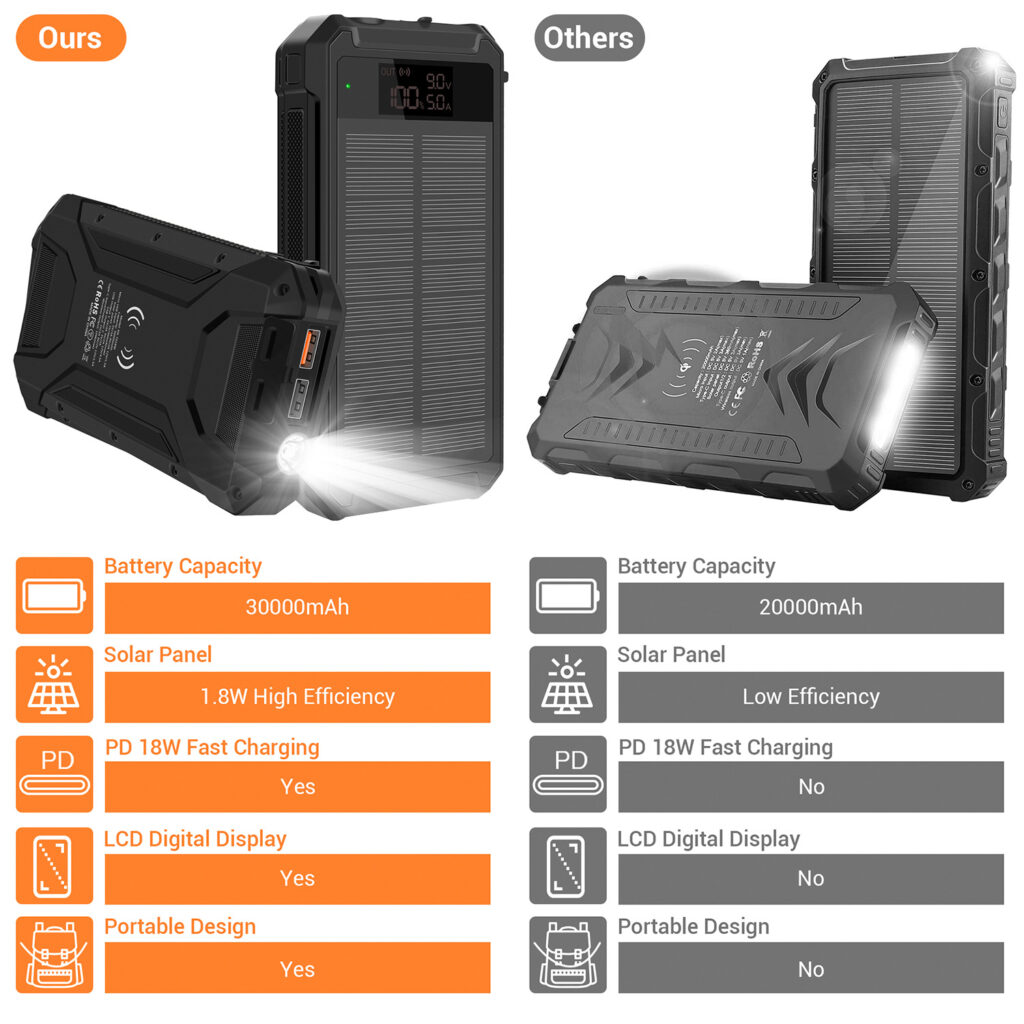
Bank power solar vs panel‑only solar phone charger solutions
Some outdoor specialists debate whether it is better to sell an all‑in‑one solar power bank or to promote separate panels plus traditional power banks. Each approach has trade‑offs.
All‑in‑one solar power bank
Single device to manage for end users.
Better everyday usability for non‑technical customers.
Usually smaller total panel area; solar mode is mainly for emergencies and slow top‑ups.
Separate panel plus traditional power bank
Larger panels (10–20 W or higher) can deliver more realistic solar charging rates if deployed for several hours.
More flexible: panel can charge multiple different batteries, but setup is more complex.
Requires more explanation at retail, and packaging is bulkier.
Most general‑market channels find that an integrated solar phone charger is easier to merchandise and explain, especially when it is also a stylish everyday power bank. Niche outdoor and professional users may accept more components in exchange for better solar performance.
Portfolio planning: how many solar SKUs do you really need?
Once you understand the pros and cons, the next step is deciding how bank power solar fits into your assortment strategy.
Start with 2–4 focused hero SKUs
For many distributors and wholesalers, a compact set of solar SKUs covers most demand:
One entry solar power bank around 10,000–15,000 mAh for everyday users.
One rugged mid‑range model around 20,000 mAh with strong flashlight and IP rating for outdoor channels.
One high‑capacity model (24,000–42,000 mAh) with built‑in cables and possibly wireless charging for power users and family or team kits.
Hedelee’s solar power bank category overview illustrates how these tiers can be structured: compact models for daily carry, mid‑size for outdoor, and very high‑capacity designs like the 24,000–36,000 mAh built‑in cable solar power banks for demanding users.
Align SKUs with regional energy realities
Regions with abundant sun and frequent outages will support more solar SKUs and higher capacities, while dense urban markets with reliable power tend to select just one or two solar models as halo products.
Discuss with your supplier which capacities and form factors are selling into markets similar to your own. A factory that ships globally, like Shenzhen Hedeli Technology Co., Ltd., can share practical feedback on which solar power bank designs are working for importers in comparable climates and retail structures.
Working with Shenzhen Hedeli Technology Co., Ltd. on solar mobile phone chargers
Hedelee has been active in mobile accessories and consumer electronics for around a decade, specializing in solar power bank design and manufacturing from its factory in Dongguan and headquarters in Shenzhen. That footprint, combined with a showroom in Guangzhou, supports close collaboration with importers, distributors, and wholesalers on tailored solar phone charger solutions.
With a monthly capacity of approximately 50,000 units focused on solar mobile phone charger lines and related products, the company is structured to scale from trial orders to regular container‑level programs. Customization options typically include:
Branding and logo integration on cases and panels.
Housing colors and materials within the same mechanical design.
Cable configurations (built‑in vs detachable; USB‑C emphasis).
Feature combinations like wireless charging, number of LEDs, or panel style.
Discussing compliance, testing, and documentation early is important when solar power banks are destined for regulated markets. Hedelee’s engineering team can share how specific SKUs align with standards around lithium batteries, portable power packs, and regional certification frameworks, referencing norms outlined in third‑party guides to UL, IEC, and CE solar panel and portable ESS certifications.
Frequently Asked Questions
What minimum order quantities apply for solar power banks?
Minimum order quantities depend on the specific bank power solar model, level of customization, and packaging requirements, but many buyers start with a few hundred units per SKU. Larger runs usually unlock better pricing and help stabilize production planning. Reach out with your target assortment and we can align on MOQ ranges that match your channel.
How can we customize a solar phone charger for our brand?
Most solar phone charger and solar power bank designs allow for logo printing, custom colors, and tailored packaging, and some models support changes to included cables or LED configurations. For deeper changes like new housings or panel layouts, engineering review is needed to confirm tooling and timeline. Contact us to discuss your brand concept and target volumes so we can propose feasible options.
What safety and compliance tests do your solar power banks meet?
Solar power banks integrate lithium batteries and electronics, so they are typically designed and tested in line with lithium transport standards like UN38.3 and relevant UL, IEC, and CE frameworks for portable power packs. Exact coverage varies by model and destination market, so your sales contact can provide reports and certificates for shortlisted SKUs. Reach out for detailed specifications and compliance documentation during your selection process.
How long is the lead time for new solar powered power bank orders?
Lead times depend on capacity planning, customization level, and order size, but many repeat solar powered power bank orders fall in the range of several weeks from deposit to shipment. New tooling, certification, or packaging designs may extend that. Sharing your forecast and launch dates early helps the factory schedule production and reserve capacity.
Can we order samples of specific solar mobile phone charger models?
Yes, sample orders are a standard step before larger commitments, especially for new solar mobile phone charger designs or customized versions. Samples allow your team to test real‑world solar performance, charging behavior, and fit with your market segment. Contact us to request samples from the Hedelee solar power bank range that align with your capacity and feature targets.