

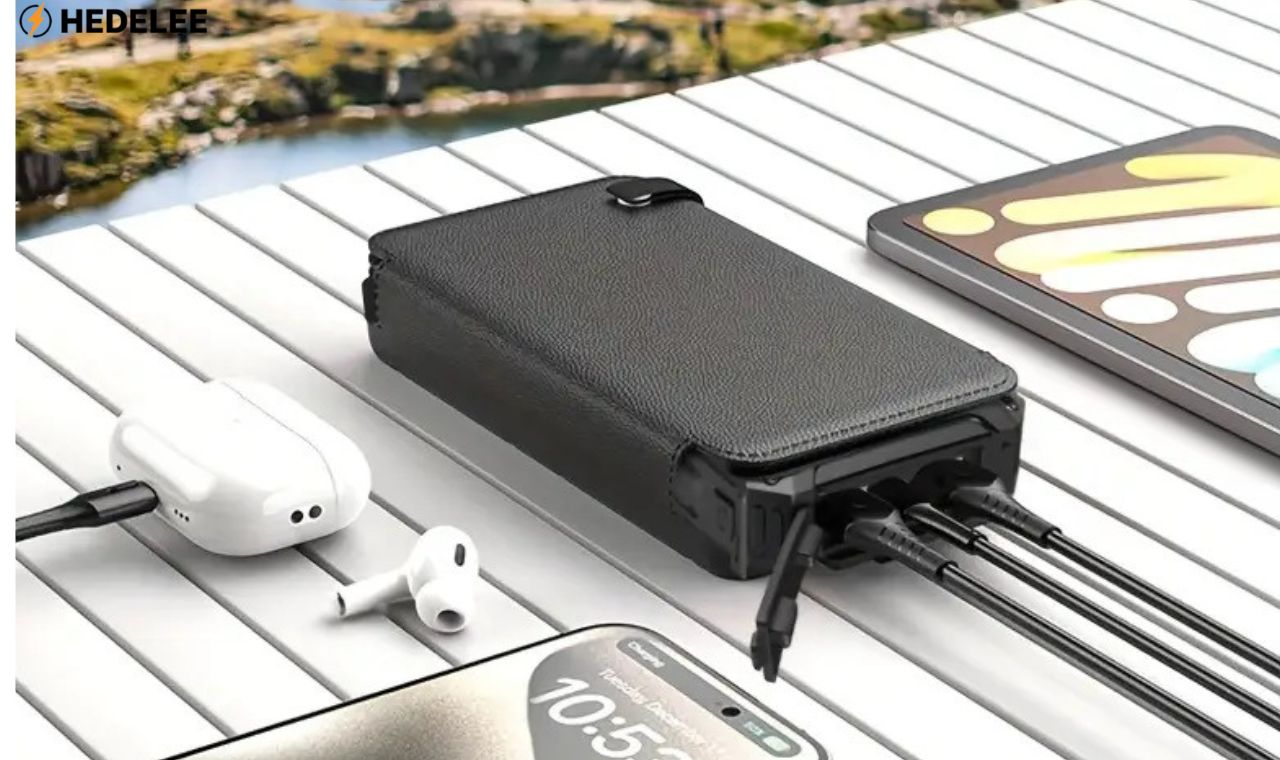
Phones dying on a job site. GPS running low during a field visit. A travel kit that customers return because the “solar” part didn’t meet expectations. These are common headaches when teams source portable charging for outdoor users, retail bundles, or emergency kits.
A portable solar power bank can help—but only when buyers set the right expectations, verify the right specs, and request the right documents from suppliers. This checklist-style guide breaks down what to check, what to avoid, and how to match models to real use cases so your procurement decisions hold up in the real world.
Why teams are choosing portable solar power banks
Portable power is no longer only for hikers. Many professional teams now include solar charging power banks in:
Employee travel kits (sales, service, inspections)
Outdoor retail assortments (camping, fishing, workwear)
Emergency preparedness bundles (NGO relief, facility kits)
Brand programs (customer gifts, seasonal promotions)
Fleet and logistics (drivers, couriers, last-mile support)
The main value is simple: you get a rechargeable battery pack that still works like a normal power bank, plus a solar panel that can add energy when outlets are limited.
Where procurement teams see the biggest payoff:
Lower “dead phone” incidents during outdoor work
Better customer satisfaction when expectations are clear (solar is support, not magic)
Stronger product positioning for outdoor-ready assortments (durability + backup power)
More flexible bundles (power bank + cables + flashlight features)
Also, search behavior matters. Buyers will see many phrases in listings and customer requests, including solar power bank, solar powered power bank, power bank for solar, and even awkward translations like bank power solar. Your job is to translate those words into measurable specs.
What a portable solar power bank can and can’t do
This is the section that prevents returns.
What it can do (when described correctly)
Act as a normal power bank for daily charging
Provide a backup energy source for outdoor or travel use
Add some charge via solar when sunlight is available
Support emergency needs when power is unstable
What it usually can’t do (in a small, all-in-one unit)
Fully recharge itself quickly using only the built-in panel
Replace a wall charger for heavy daily use
Charge fast in shade, cloudy weather, or indoors near a window
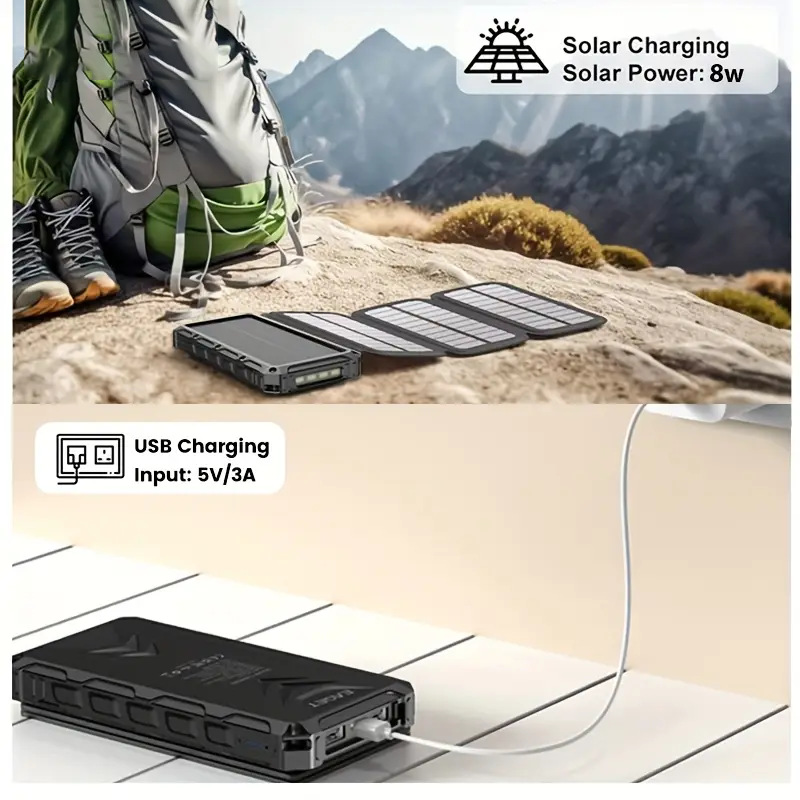
Solar panels produce power based on sunlight intensity (irradiance). Standard reference conditions commonly use 1,000 W/m² as a benchmark for PV performance measurement. That’s a lab-style baseline, not a promise of what you’ll get every hour outside. A small panel on a compact power bank has limited surface area, so the solar input is typically best described as maintenance charging and emergency topping up.
Buyer-friendly wording that reduces confusion
If you sell through wholesale channels or retail partners, consider wording like:
“Solar panel helps extend battery life outdoors”
“Best results in direct sunlight”
“USB charging is the primary method; solar is a backup option”
Quick comparison table: common solar charging setups
| Setup | Best for | Pros | Limits |
|---|---|---|---|
| All-in-one solar power bank | giveaways, day trips, emergency kits | compact, simple | slow solar input |
| Foldable panel + power bank | camping, longer outdoor use | higher solar input | more parts to manage |
| Power station + panel | base camps, tools, long trips | high output | heavier, higher cost |
Portable solar power bank specs buyers should verify
Specs are where a good purchase becomes a repeatable sourcing program.
1) Capacity: mAh is not enough—ask for Wh too
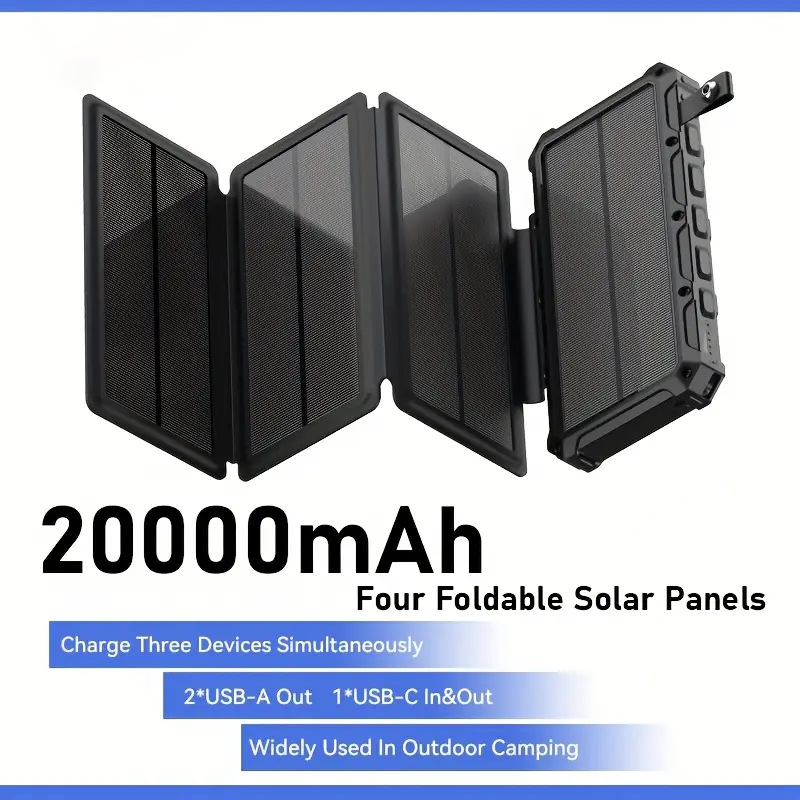
Many listings show mAh because it looks bigger. For professional evaluation, request Wh (watt-hours) and confirm the cell voltage used in the calculation. This helps compare models fairly.
What to request from suppliers:
Rated capacity (mAh) + energy (Wh)
Battery cell type (commonly lithium-ion or lithium polymer)
Conversion efficiency range (real-world output vs stored energy)
2) Output ports and real charging speed
For modern phones and accessories, teams often prefer:
USB-C output (and USB-C input)
Clear fast-charge support details (protocols, max watts)
If your product team wants “fast charging,” don’t accept vague wording. Ask:
Max output per port (example: 5V/3A, 9V/2A, etc.)
Total output when multiple devices charge at once
Any limits when wireless charging is enabled
3) Wireless charging: useful, but verify heat and speed
Wireless charging is convenient in outdoor kits, but it can be slower and less efficient. Ask for:
Wireless output wattage (example: 5W/10W/15W)
Thermal protection behavior (how it reduces power when warm)
4) Solar input: ask for panel rating and expected use case
Most compact units don’t list a strong solar watt rating. Request:
Solar panel type and approximate output rating in sunlight
Whether the panel charges the internal battery only, or can power devices directly
A realistic scenario statement for your product listing
5) Protection features that reduce failures
Look for protections like:
Overcharge / over-discharge protection
Short-circuit protection
Temperature protection
Water ingress design (if marketed as waterproof)
Mini checklist table for procurement sign-off
| Spec item | Ask supplier for | Why it matters |
|---|---|---|
| Capacity | mAh + Wh | fair comparison |
| USB-C | input + output watts | modern device fit |
| Multi-port load | total watts | fewer complaints |
| Solar details | panel rating + expected behavior | fewer returns |
| Protection | list + test approach | fewer failures |
Charging performance: wall input vs solar input
Most customer disappointment comes from one mismatch: expecting solar to behave like a wall charger.
How buyers should describe charging methods
A practical way to position it:
USB input = primary charging method (fastest and most reliable)
Solar input = supplemental charging method (best in direct sunlight)
That framing matches how most users actually rely on the product.
A realistic way to think about solar charging time
Solar charging depends on:
Sunlight strength and angle
Panel surface area
Heat (panels can lose efficiency when hot)
Whether the unit is being used while charging
So instead of promising “full charge by solar,” position solar as:
Extending run time over a multi-day trip
Keeping the battery from hitting zero in emergencies
Common buyer questions
Q: Is it a solar phone charger?
A: It can work as a solar phone charger, but the fastest way is still USB. Solar helps when you’re away from outlets.
Q: What about older search terms?
You may still see requests for solar cell phone charger or solar mobile phone charger. Treat them as the same intent: phone charging support with solar capability.
When a foldable panel model makes sense
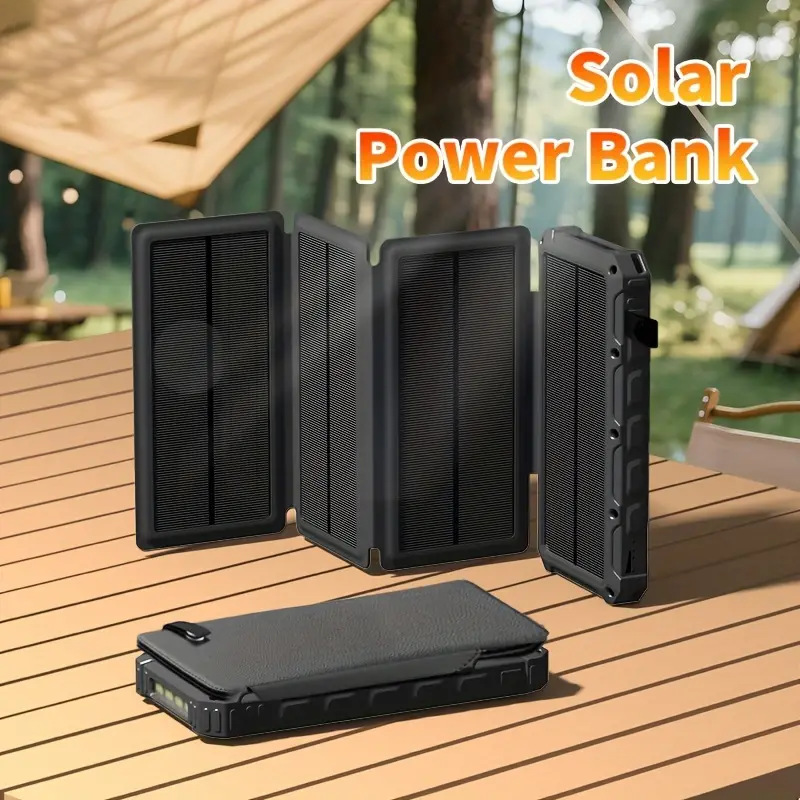
If your customers expect meaningful solar charging during a trip, consider foldable designs. These tend to offer more panel area than compact units.
If you want a range of models for different channels, you can organize your assortment through a category hub like solar power bank models to separate compact, mid, and high-capacity options.
Durability and outdoor features that reduce returns
Outdoor positioning only works if the product survives outdoor reality.
Features that usually matter most for end users
Port protection: tight covers for USB ports to reduce dust and splashes
Body grip: textured sides reduce drops
Shock resistance: corners and frame design matter more than marketing words
Water resistance: be clear about what “waterproof” means (rain vs submersion)
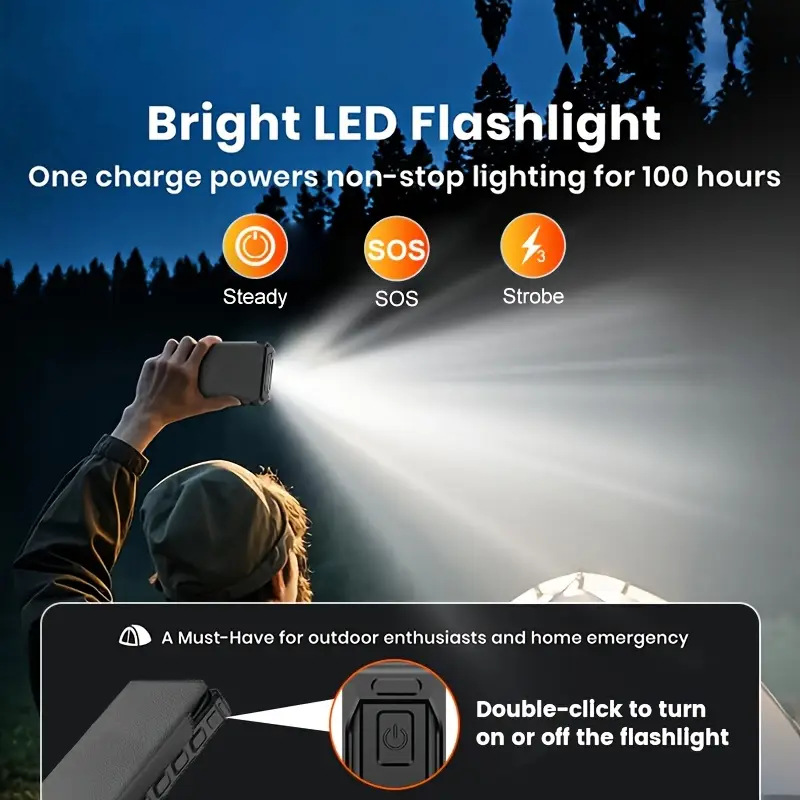
LED flashlight: useful for emergency kits and camping bundles
Built-in cables: reduces “forgot my cable” complaints (when designed well)
IP ratings: what procurement teams should request
If a model claims IP65/IPX4/etc., ask for:
The exact rating
The test report or certification scope
Clear wording for packaging (avoid over-promising)
Returns often come from small details
Examples:
Wireless pad too slippery (phone slides off)
Port cover tears after repeated opening
LED button too easy to press in a bag
Solar panel surface scratches easily
Ask suppliers how they test:
Button cycle tests
Port cover aging tests
Drop tests (with defined heights and surfaces)

Compliance and shipping documents for procurement
This is where professional buyers protect their supply chain.
UN 38.3 testing and test summaries
Lithium battery products transported internationally typically need UN 38.3-related documentation. The U.S. DOT PHMSA explains that lithium batteries must be subjected to design tests per UN Manual of Tests and Criteria 38.3, and it provides guidance on the lithium battery test summary requirement (including updates and effective dates).
A practical buyer request list:
UN 38.3 test report (or test summary package, depending on shipment type)
Lithium battery test summary document (when applicable)
MSDS (Material Safety Data Sheet)
Packaging and labeling guidance for the shipping mode (air/sea/ground)
Authoritative reference link for buyers: PHMSA lithium battery test summaries guidance.
Battery safety standards often requested by importers
Many importers also ask about IEC safety standards for lithium cells and batteries used in portable applications. IEC 62133-2 describes safety requirements and tests for portable sealed secondary lithium cells and batteries under intended use and reasonably foreseeable misuse.
Authoritative reference link: IEC 62133-2 standard overview.
Shipping safety practice: state of charge guidance
In aviation-focused guidance, IATA notes recommendations around shipping lithium-ion batteries at reduced state of charge to reduce risk.
(Your freight partner will advise what applies to your shipment type, but it’s useful for buyers to know what “good practice” looks like.)
What to put into your RFQ (copy/paste)
When sending an RFQ, include:
Target capacity range (Wh preferred)
Required outputs (USB-C, wireless, total watts)
Waterproof or water resistance target (if needed)
Document pack: UN 38.3 test summary, MSDS, carton marks
Compliance needs by market (example: CE/FCC/RoHS where applicable)
Matching models to real use cases
Most sourcing programs work better when you split models by use scenario, not by “biggest capacity wins.”
Common use-case buckets
Compact daily carry (travel, commuter kits, promotions)
Outdoor-ready mid capacity (camping, retail outdoor, emergency kits)
High capacity and multi-device (long trips, group use, extended outages)
Below are example picks from our current lineup. (All are available for OEM projects and bulk purchasing.)
Product options (linked for quick review)
| Use case | Example model | Why it fits |
|---|---|---|
| Compact + wireless | 10,000mAh outdoor solar power bank with wireless charging | easy bundle size, simple feature set |
| Outdoor mid capacity | 20,000mAh waterproof solar power bank with flashlight (HDL-218) | strong outdoor positioning, practical ports |
| Foldable solar style | Foldable outdoor portable solar charger power bank 20,000mAh | better solar capture potential in outdoor use |
| Higher capacity + cables | Solar power bank 24,000mAh / built-in cables (HDL529) | fewer missing-cable complaints |
| 30,000mAh + IP rating | Solar charger power bank 30,000mAh Qi wireless (HDL528) | higher reserve for longer trips |
| Extra-high capacity | Solar power bank 42,000mAh built-in 4 cables (HDL-628) | multi-device and longer backup time |
If you want more options by capacity and feature set, review the full solar power bank collection and shortlist models by your channel’s price band and end-user expectations.
How to align model choice with your channel
Promotional and gifting: keep it simple (USB-C + a clear LED indicator). Avoid over-promising solar.
Outdoor retail: prioritize durability, port covers, and flashlight features.
Emergency kits: favor higher capacity, multiple outputs, and built-in cables.
Supplier evaluation: capacity, QC, and customization
A portable power product is only as reliable as the supplier’s process.
What professional buyers should ask early
Factory capacity per month and peak season lead time
Incoming material checks (cells, PCB, casing)
In-process checks (soldering, port fit, waterproof covers)
Aging tests and sampling plan before shipment
Packaging drop test approach (for e-commerce or export cartons)
Customization that usually works well
Logo printing or laser marking
Color matching (with defined tolerance)
Gift box design and inserts
Built-in cable types (USB-C, Lightning, Micro USB where needed)
Language set for manuals and labels
Our manufacturing background (for sourcing clarity)
Shenzhen Hedeli Technology Co., Ltd. has been in mobile accessories and consumer electronics for about 10 years. We have more than 100 employees, with headquarters in Shenzhen and an office and showroom in Guangzhou. With monthly capacity around 50,000 units, our Dongguan factory supports importers, distributors, and wholesalers with steady supply and consistent production planning.
A practical RFQ checklist (short, but effective)
Ask for:
Sample lead time + sample cost policy
MOQ by model and by customization type
Production lead time at your target order quantity
Document pack (UN 38.3 test summary, MSDS, shipping marks)
Warranty terms and how claims are handled (what evidence is needed)
Ready to source with fewer surprises
A portable solar power bank performs well when it’s sourced for a real scenario: USB charging as the main method, solar as backup support, and durability features that match the channel. Once your team locks the spec checklist (Wh, USB-C watts, multi-port limits, and document pack), sourcing becomes repeatable instead of risky.
If you’d like, share your target market, order quantity, and preferred feature set (wireless, built-in cables, waterproof level). As the original manufacturer, we can recommend the closest matching models, prepare a clear specification sheet, and provide samples for evaluation—so you can move from shortlist to purchase with confidence.
Frequently Asked Questions
1. What is your typical minimum order quantity?
MOQ depends on the model and customization level, but we can propose options based on your target price and packaging. Reach out to request MOQ details by model.
2. Can we add our logo and custom packaging?
Yes—logo and packaging customization are common, including gift boxes and inserts. Contact us to request dielines and branding placement options.
3. Do you provide UN38.3 test summaries and MSDS?
Yes, we can provide the standard shipping document pack for lithium battery products. Reach out for the document list that matches your shipping method.
4. How long does sampling and production take?
Samples often take days to prepare depending on customization, and production lead time depends on quantity and component schedule. Reach out for a timeline based on your PO size.
5. Can we request a pre-shipment inspection standard?
Yes. We can align on an inspection plan, test items, and sampling level before production starts. Contact us to confirm your QC checklist.