

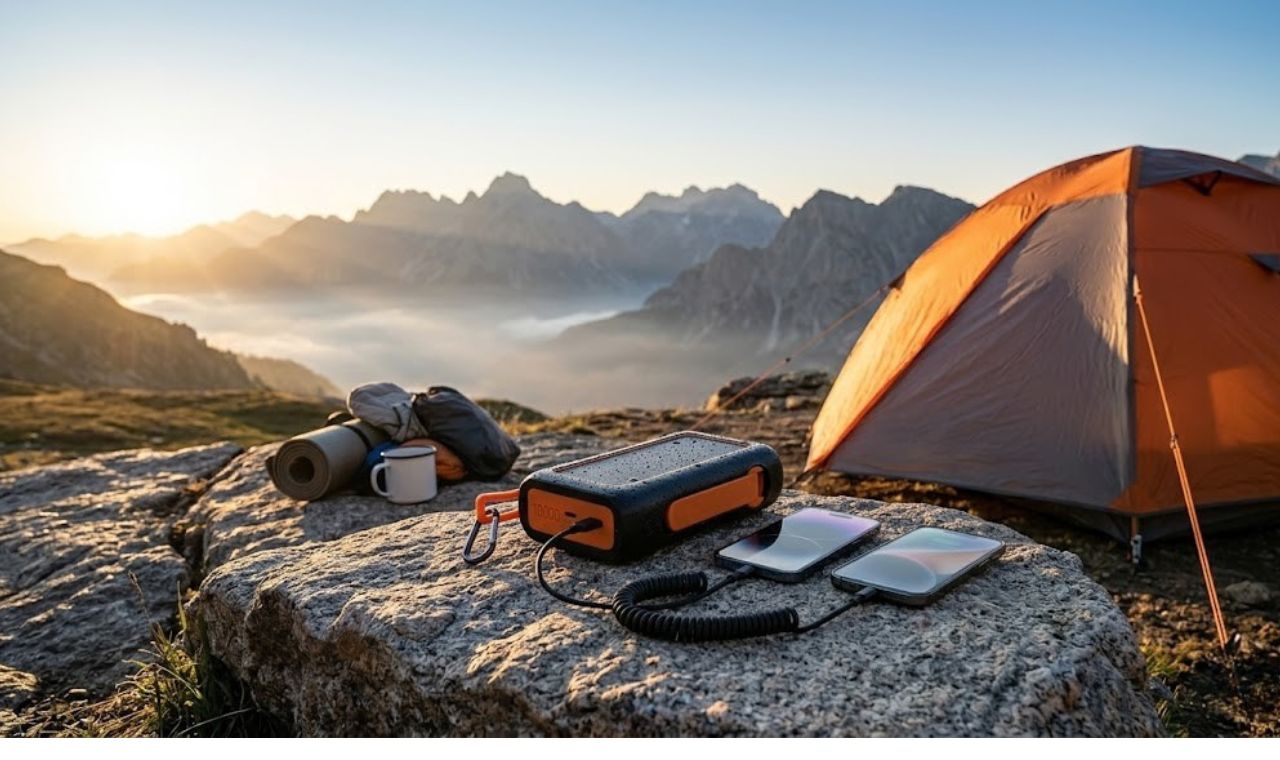
Phones, GPS devices, headlamps, action cameras, and even drones now travel with almost every outdoor team. What used to be “nice‑to‑have” quickly becomes essential when your group uses navigation apps, messaging, weather alerts, and digital checklists to keep trips on schedule and people safe.
For short weekend trips, a simple power bank might be enough. Once you move into 3–5 day camping or backpacking routes, or you support groups that stay off‑grid longer, standard power banks turn into dead weight once they are empty. This is where a well‑designed solar power bank for camping gives your buyers an extra layer of security and flexibility.
Buyers and procurement teams today are not just looking for another gadget. They want dependable capacity, tested safety, real outdoor durability, and a manufacturer that can keep supply stable across seasons. Shenzhen Hedeli Technology Co., Ltd. has been in mobile accessories and consumer electronics for about 10 years, focusing strongly on solar power banks from its factory in Dongguan and headquarters in Shenzhen, with an office and showroom in Guangzhou.
The guide below is written for professionals who need to decide which solar power bank configurations to bring into their assortment in 2026, and how to brief a manufacturer so the end users—campers, backpackers, and outdoor customers—get a product that performs in the field.
Why campers in 2026 rely on solar power banks
Outdoor users are moving from “one device per trip” to a small ecosystem: smartphone, smartwatch, GPS tracker, wireless earbuds, and often a headlamp or camp light with USB charging. A single 10,000 mAh power bank that felt generous a few years ago can now be exhausted in two days.
A solar power bank combines a built‑in solar panel with a rechargeable battery pack. The panel slowly tops up the battery during the day when it is clipped to a backpack or laid out at camp, while the internal battery delivers fast, stable charging to phones and other devices whenever needed. In practice, the solar panel is a free energy “top‑up”, and the battery is the real workhorse.
From an environmental and marketing angle, solar energy appeals to outdoor users who want to reduce disposable battery waste and cut reliance on grid power or fuel‑based generators. Solar powered gadgets support this by turning abundant sunlight into a quiet, clean power source that fits naturally with camping values.
For procurement and product managers, this shift creates a clear opportunity: offer campers a solar powered power bank that feels reliable on day one, but also keeps adding energy for as long as they stay outside, as long as there is sun.
What is a solar power bank and how does it work?
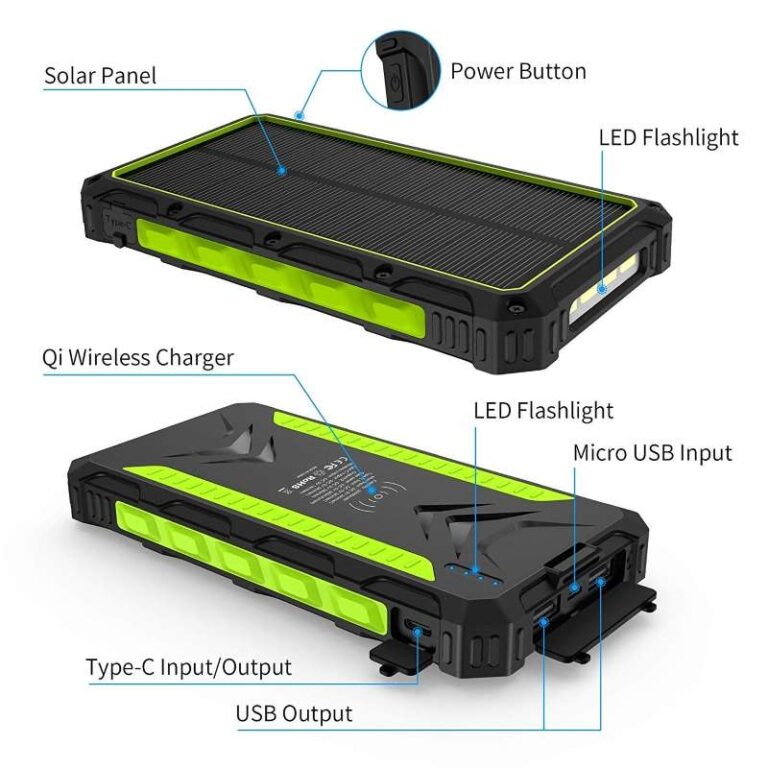
At the core, a solar power bank is a rechargeable battery pack paired with one or more solar panels. The photovoltaic (PV) panel converts sunlight into electricity, which then charges the internal battery. Users can later charge phones, tablets, or other devices from that stored energy via USB‑A, USB‑C, or wireless charging.
For camping and backpacking, there are two common approaches: panel‑only solar chargers that must be paired with a separate battery, and solar power banks with integrated batteries. For retailers and distributors, integrated designs are easier to explain and easier to merchandise because they are “one box, complete solution”.
Key components your tech or QA team should understand:
-
PV panels – Often mono‑ or poly‑crystalline, sized to match the battery capacity and expected charging time.
-
Battery pack – Usually lithium‑ion or lithium‑polymer cells with capacities such as 10,000 mAh, 20,000 mAh, 30,000 mAh or more.
-
Charging electronics – Control input current from wall chargers and solar panels, and regulate safe output to connected devices.
-
Protection circuits – Guard against over‑charge, over‑discharge, short‑circuit, and over‑temperature. These relate directly to safety standards like IEC 62368‑1 and UL‑based testing.
Shenzhen Hedeli’s solar power bank range includes compact units around 10,000 mAh for weekend hikers and high‑capacity models up to and above 30,000 mAh for extended camping or emergency kits. Buyers can review the overall solar power bank collection to see different capacities, housing designs, and panel layouts in one place at our dedicated solar power bank category page: solar power bank collection
When a solar power bank for camping beats a normal power bank
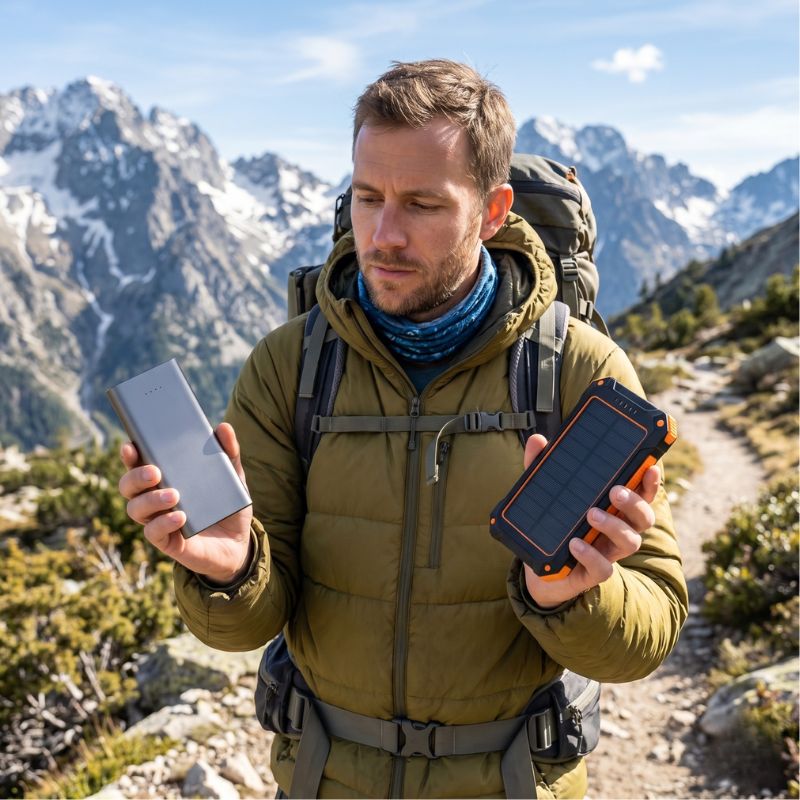
For trips of up to three or four days, many backpackers find that a standard power bank—if sized correctly—still offers the best weight‑to‑energy ratio. A 10,000 mAh unit can usually recharge a modern smartphone two to three times, which may be enough for a long weekend.
Once campers stay more than four or five days, or they carry several devices that need charging, the balance changes. At that point, carrying only a power bank means carrying “dead plastic” once it is empty, unless they reach a power source. A solar power bank for camping can keep adding charge day after day whenever sunlight is available, even if the recharge is slow.
A practical way to position your assortment is to match trip profile to product type:
For these mid‑length and longer trips, products like Hedeli’s 25,000 mAh solar charger power bank with dual USB ports and waterproof housing can provide both capacity and the reassurance of solar top‑ups for smartphones and GPS devices.
Key specifications buyers should check in 2026
Choosing the right models for your catalog or private label range starts with a clear spec sheet. Below are the core parameters that matter most for camping and backpacking use.
Battery capacity (mAh) and real‑world runtimes
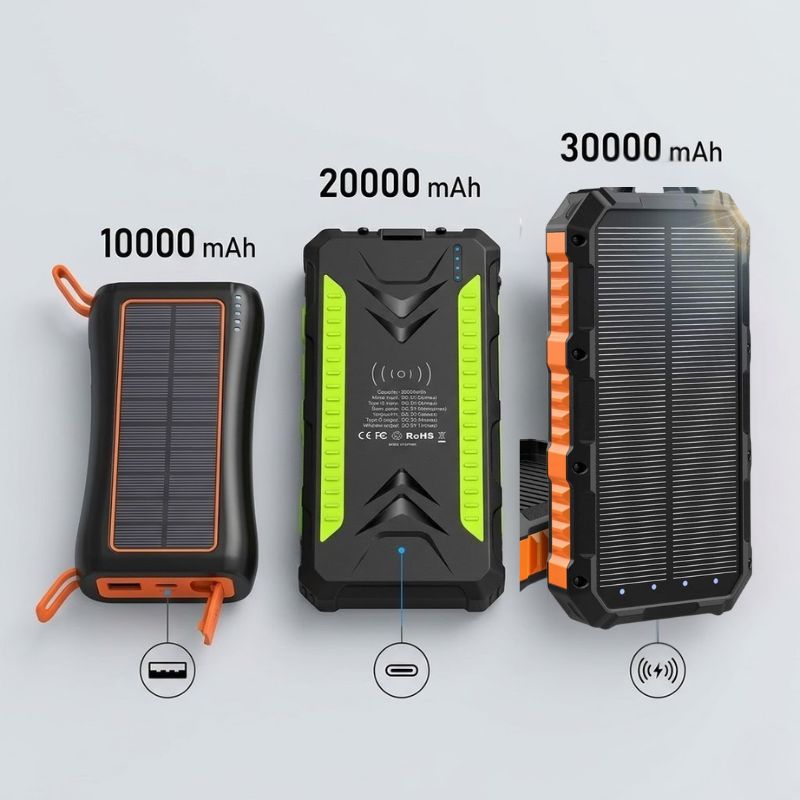
Capacity is usually expressed in milliamp hours (mAh). A 10,000 mAh power bank often charges a typical smartphone two to three times, while 20,000 mAh and above can support multiple devices or longer trips. For camping, most buyers gravitate toward 20,000–30,000 mAh as a balance between weight and usable energy.
Hedeli’s portfolio includes:
-
10,000 mAh solar power bank models for day hikes and overnight trips.
-
20,000 mAh solar power bank battery charger styles (for example HDL‑218 and similar) for mainstream camping users.
-
25,000–30,000 mAh solar charger power bank units for more demanding routes or gear‑heavy groups.
-
36,000–42,000 mAh solar power bank designs with built‑in cables and wireless charging for customers who want a single high‑capacity hub.
Encourage your customers to fully charge devices and the power bank from the grid before trips, then rely on the solar panel to extend that capacity rather than replace it entirely.
Solar panel area and charging behavior
The size and efficiency of the solar panel strongly influence how useful the “solar” part feels in the field. Larger foldable panels on models like Hedeli’s fast‑charging 20,000 mAh foldable outdoor portable solar charger can catch more light and charge the battery faster in clear conditions.
For buying teams, a helpful guideline is:
-
Small single‑surface panel: good as emergency top‑up, not primary charging source.
-
Multi‑panel foldable design: more suitable for daily topping up a larger battery, especially in sunny climates.
Inputs and outputs
In 2026, buyers expect at least one USB‑C port and often still want legacy USB‑A. Higher‑end models include:
-
USB‑C input/output supporting fast charging.
-
Dual or triple USB‑A outputs for charging several phones at once.
-
Wireless charging pads for modern smartphones, available on products like Hedeli’s 30,000 mAh Qi wireless solar charger power bank.
A solar mobile phone charger that can power older phones, newer USB‑C devices, and small accessories at the same time tends to perform better in store or online reviews.
Weight, size, and mounting options
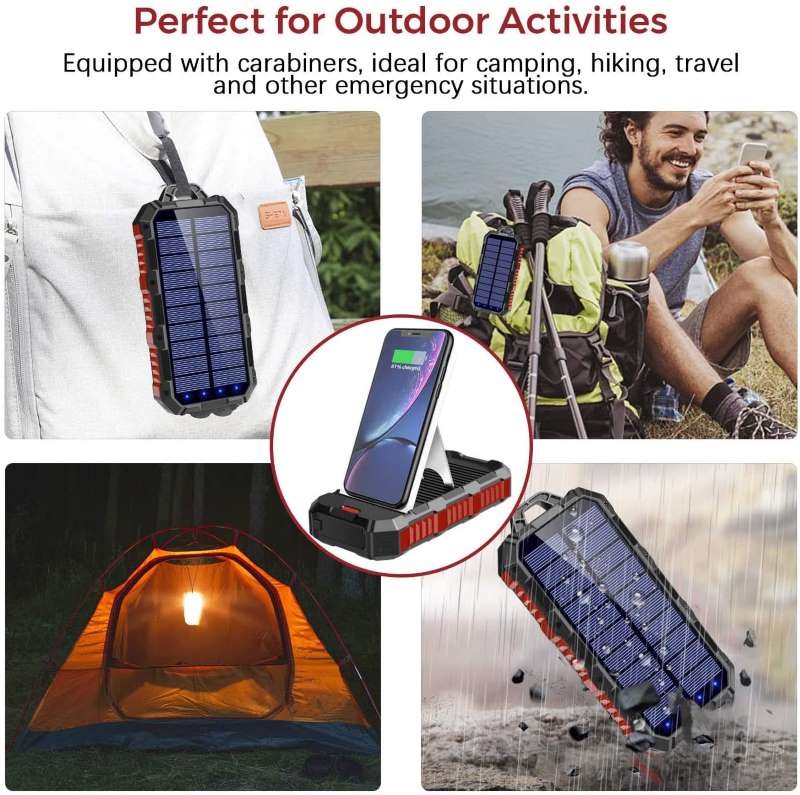
Backpackers watch every gram. A heavy 30,000 mAh solar power bank might still sell well into vehicle‑based camping channels, but not into ultralight trekking. Review weight, thickness, and mounting points like carabiner loops carefully against your target user. Outdoor reviewers stress the value of panels that can attach to a backpack or tent at the correct angle to the sun for hours at a time.
Design and durability features for backpacking and camping
Outdoors, design details move from cosmetic to functional. A product that survives dust, rain, drops, and night‑time use is far more likely to be recommended by experienced campers.
Water resistance and dust protection
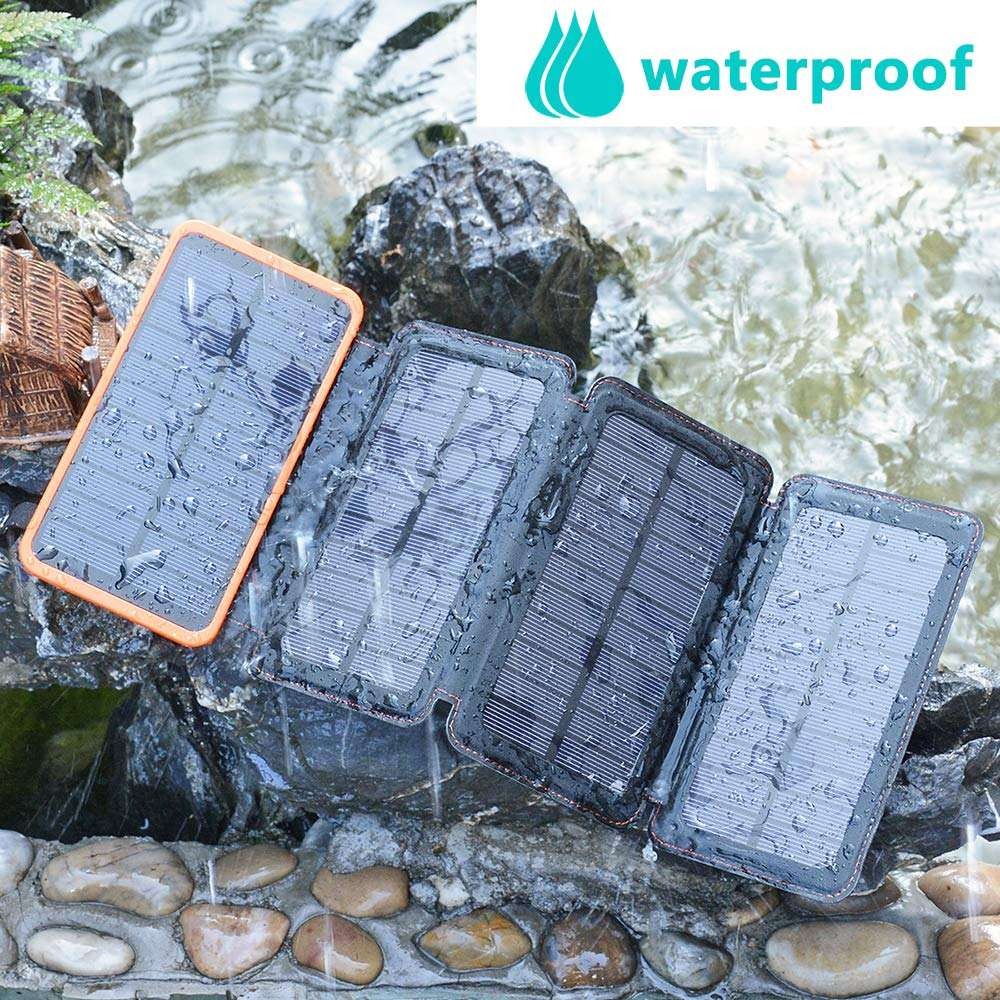
For camping use, IPX4 to IP65 style protection is often used to describe resistance to splashes, rain, and dust. Hedeli’s lineup includes IPX4 and IP65 waterproof solar power bank models with sealed ports and rugged housings, as indicated in several product descriptions. While not designed for submersion, this level of protection helps with:
-
Sudden showers at camp.
-
Humid forest environments.
-
Accidental splashes near rivers or lakes.
Impact resistance and housing materials
Power banks can be dropped on rocks, stepped on in the tent, or crushed in over‑packed backpacks. Safety‑oriented guidance for power banks highlights mechanical damage as a key risk to battery safety. For camping‑oriented SKUs, consider:
-
Rubberized corners or bumpers.
-
Textured shells to improve grip with wet hands.
-
Reinforced port covers.
Integrated lighting and outdoor functions
An integrated LED flashlight is now almost standard in many outdoor solar power bank designs. Several Hedeli models include dual LED flashlights, SOS modes, or wide‑angle flood lights that can replace a small camp lantern. A good example is the outdoor solar power bank with 10,000 mAh capacity and strong light lighting, designed for fast charging and wireless charging in one unit.
These lighting features create extra value because the user already carries the battery anyway. They also make the product feel more like a piece of camping gear than a generic gadget.
Safety, standards, and compliance for portable solar chargers
As capacities increase, safety expectations from retailers, platforms, and regulators also tighten. Power banks are considered higher‑risk products because of lithium batteries, and they fall under a mix of international and national standards.
Relevant standards and guidance
Key references your compliance and sourcing teams should know include:
-
IEC 62368‑1 – Principal international safety standard for audio, video, IT, and communication equipment, covering portable power banks as information technology equipment.
-
UL 2056 – Outline of investigation for the safety of power banks, including mechanical damage testing, battery safety, temperature cycling, overload tests, and more.
-
Battery safety standards – Including UL 1642 and UL 2054 for lithium and household/commercial batteries.
Major platforms like Amazon expect power banks to comply with combinations of these standards plus UN 38.3 transport testing and may request formal test reports from accredited labs.
For international buyers, it is also helpful to note limits like the common 100 Wh cap for power banks in airlines and some safety frameworks, which equates to roughly 27,000 mAh at 3.7 V nominal cell voltage.
Practical safety design choices
Beyond certificates, field‑ready solar power banks for camping should integrate:
-
Over‑charge, over‑discharge, and short‑circuit protection.
-
Temperature monitoring to avoid overheating in direct sun.
-
Clear labelling for capacity (mAh and Wh), input/output ratings, and warnings.
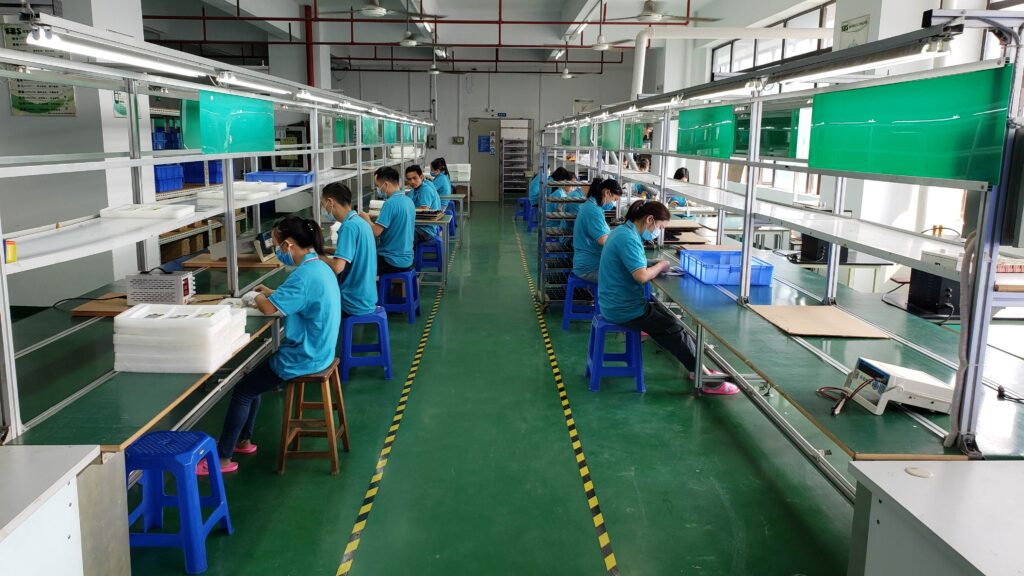
Hedeli has long experience manufacturing power banks and solar power bank battery charger models for importers, distributors, and wholesalers, supported by a Dongguan factory with monthly capacity of around 50,000 units. Buyers can work with our team to match target markets’ testing requirements and documentation.
For deeper background, compliance teams may want to review this guide to US power bank regulations and standards:
-
ComplianceGate – Guide to US Power Bank Regulations and Standards:
How to size and position your solar camping range
Different camping users want different balances of weight, capacity, and features. A simple framework helps you build a range plan that makes sense on the shelf and online.
Capacity and feature mix by user segment
You can link to specific Hedeli product pages using descriptive anchor text such as:
Including several capacity points in your catalog helps buyers move users up or down the ladder based on their real trip patterns.
Positioning solar versus non‑solar options
Outdoor education sites and gear reviewers often recommend a mix: standard power banks for shorter, predictable trips, and solar chargers or solar power banks for longer or more flexible routes. Your range can reflect this by offering:
-
A classic power bank line for general electronics.
-
A solar mobile phone charger and solar cell phone charger line targeted specifically at camping and hiking.
-
Bundles that pair a larger panel with a separate power bank for car‑camping or basecamps.
This makes the choice easy to explain in marketing copy and in‑store conversations.
How to brief your manufacturer on camping‑ready solar power banks
A clear technical and commercial brief shortens sampling cycles and reduces surprises during production. Below are key topics to align with your manufacturer.
Usage scenario and target markets
Share how your customers actually camp:
-
Weekend car‑camping or multi‑day backpacking.
-
Typical climate (humid forests, dry mountains, coastal areas).
-
Main sales channels (outdoor specialty, mass retail, online).
Outdoor‑focused resources emphasize how weather, travel style, and terrain affect solar performance, from open desert to shaded forests. The more context your manufacturer has, the more they can tune panel sizing, housing, and accessory choices.
Capacity, panel type, and charging behavior
Agree early on:
-
Target capacity in mAh and Wh (for airline and safety documentation).
-
Panel style: integrated single panel versus foldable multi‑panel.
-
Expected charging pattern (mostly grid‑charged with solar top‑up, or heavier reliance on solar).
You can use Hedeli’s existing range as a reference point. For example, combining:
-
A 24,000 mAh standard 36,000 mAh solar power bank with built‑in cables (HDL‑529) for feature‑rich use.
-
A simpler 20,000 mAh dual‑USB solar power bank battery charger (HDL‑519X) for cost‑sensitive lines.
Safety, testing, and documentation
Ask your manufacturing partner to outline:
-
Which standards they design and test against (IEC 62368‑1, UL 2056, UN 38.3, and relevant battery standards).
-
Available third‑party test reports and lab partners.
-
Typical lead times for new certification if you need country‑specific marks.
Shenzhen Hedeli’s experience in mobile accessories and consumer electronics gives your team direct access to an established factory and engineering team that already understands these requirements for power banks and related products.
Why choose a solar power bank for camping from Shenzhen Hedeli
Shenzhen Hedeli Technology Co., Ltd. has focused on mobile accessories and consumer electronics for around a decade, with solar power banks as a key product category. More than 100 employees support development, production, and sales from a head office in Shenzhen, a factory in Dongguan, and an office and showroom in Guangzhou.
For camping and backpacking buyers, this structure offers several advantages:
-
Stable production capacity: Around 50,000 units per month from the Dongguan factory backed by established workflows.
-
Category depth: A wide range of solar power bank, solar charger power bank, and solar phone charger designs with different capacities, panel layouts, and housings.
-
OEM and customization: Options to tailor colors, logos, packaging, and in many cases feature sets (wireless charging, built‑in cables, LED flashlights) for your label.
Because Hedeli is the original manufacturer, procurement teams can work directly with engineers and sales to fine‑tune designs for real‑world camping and backpacking use while also aligning with local safety expectations.
How to source the right solar power bank for camping projects in 2026
To close, it helps to bring the buyer journey into a simple decision flow you can use internally:
-
Define target users and trip length. Are you serving mostly weekend family campers, backpacking enthusiasts, or long‑distance trekkers? Outdoor advice often proposes higher capacities and solar solutions for longer trips and heavier device loads.
-
Select capacity tiers and panel style. Choose one or more of 10,000, 20,000, 25,000, 30,000, or 42,000 mAh levels and match them to integrated or foldable panels.
-
Lock in ports and interfaces. Decide how many USB‑A, USB‑C, and wireless charging pads you need in your line‑up to cover phones, tablets, and accessories.
-
Agree on durability and lighting. For camping, prioritize splash resistance, reinforced housings, and LED flashlights; consider dual LEDs or floodlight modes for higher‑end SKUs.
-
Align on safety and compliance. Confirm which markets you will ship to and which standards and test reports are required.
-
Plan packaging and messaging. Clearly communicate capacity, expected number of phone charges, and usage examples (for example: “ideal solar power bank for camping weekends” or “designed for 5+ day treks with multiple devices”).
Shenzhen Hedeli can support you at each stage, from early sampling to full‑scale production, drawing on its experience across solar power bank battery charger products and broader mobile accessories. Working directly with the manufacturer means you can align capacity planning, design updates, and compliance work without extra layers in the middle.
When you are ready to expand or refresh your camping power range, reach out to discuss concepts, request solar power bank samples tailored to your target user profiles, or review existing designs in our solar power bank lineup. That way, your customers head into the 2026 outdoor season with solar chargers that genuinely match how they camp, hike, and travel.
Frequently Asked Questions
1. What capacity solar power bank do camping buyers usually choose?
Most camping buyers focus on 20,000–30,000 mAh because it can recharge a smartphone several times and still support a second device like a headlamp or GPS unit. Outdoor advice often notes that higher‑capacity banks make more sense for longer trips or heavier device use.
2. How can we verify a solar power bank meets safety standards?
Ask your supplier for test reports against standards relevant to power banks, including IEC 62368‑1, UL 2056, UN 38.3, and appropriate lithium battery standards, as outlined in specialist regulatory guides. If you sell on major platforms, confirm their specific combinations of standards and documentation requirements in advance.
3. What customization options are common for solar camping power banks?
Buyers often customize housing color, logo printing, packaging, and sometimes cable configuration or LED light patterns. Many manufacturers, including Shenzhen Hedeli, can adjust details such as casing texture, flashlight layout, or included cables to match brand guidelines and target users. Contact us to discuss OEM options and sample timelines.
4. Do solar power banks still need to be charged from the grid?
Yes. Experts recommend fully charging the solar powered power bank from a wall outlet before each trip, then using the solar panel to keep topping up the battery while outdoors. Treat the solar panel as a free energy extension, especially on longer trips or in sunny climates.
5. What are typical lead times and MOQs for solar camping power banks?
Lead times vary with customization level, test requirements, and seasonal demand, but many projects move from confirmed order to shipment in several weeks. Minimum order quantities depend on the model and level of customization; Shenzhen Hedeli can advise realistic MOQs and schedules once you share capacity needs, feature sets, and target markets. Reach out to request detailed specifications and sample availability.