

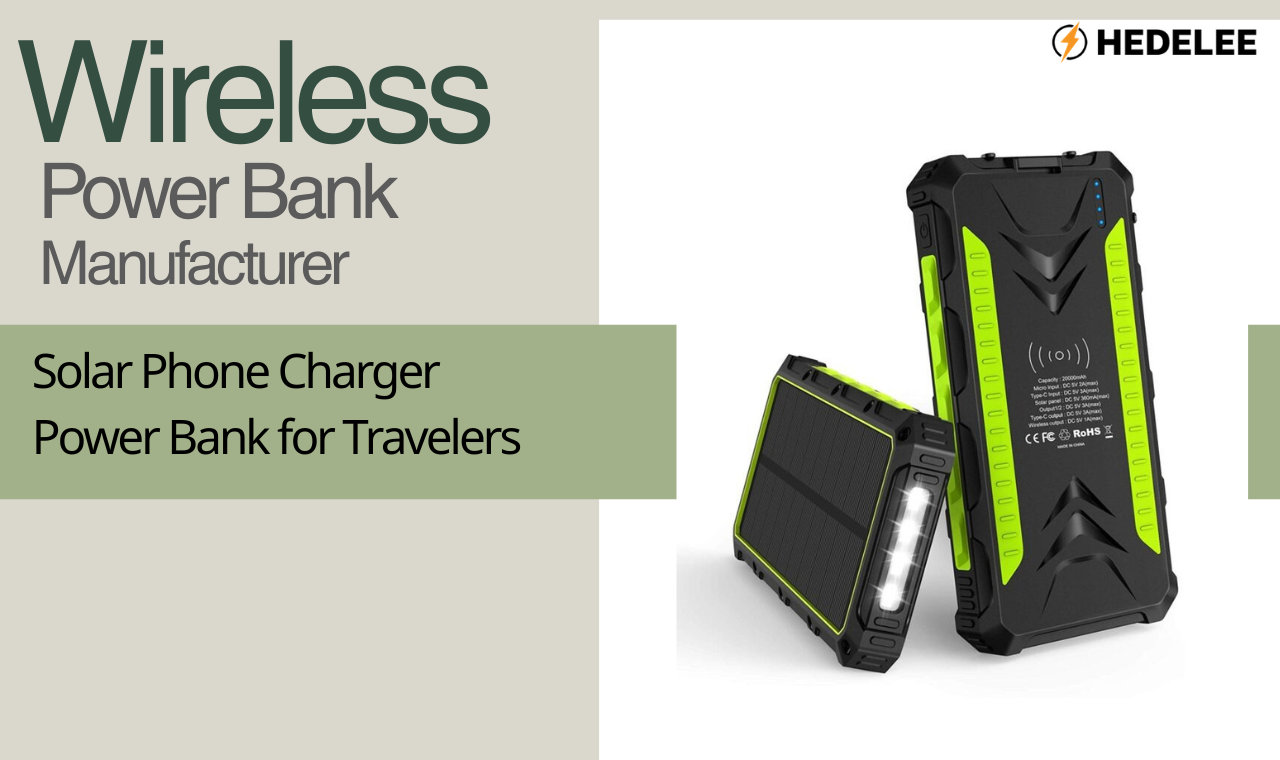
A solar phone charger power bank can be useful when travelers spend long hours away from wall outlets. Phones, earbuds, cameras, GPS devices, and small lights all need backup power during flights, road trips, camping, field work, and outdoor travel.
For importers, distributors, and wholesale buyers, the real question is not only “Which model looks good?” The better question is: which solar charger is practical, safe, easy to explain, and suitable for the travel customers you serve?
This guide explains how to compare capacity, solar input, charging ports, waterproof design, travel rules, packaging, and sourcing support before placing an order.
Why a solar phone charger power bank fits traveler demand
Travelers often carry more electronics than before. A phone is no longer only a phone. It is a boarding pass, map, camera, translator, payment tool, flashlight, and emergency contact device. When the battery runs low, the whole trip feels harder.
That is why a solar phone charger power bank has strong value for travel-related product lines. It gives users stored battery power first, then adds solar charging as a backup option when sunlight is available.
For buyers, this point is worth explaining clearly. A solar power bank is not meant to replace a wall charger. Instead, it gives users another way to extend use time when they are outside, moving between locations, or away from stable electricity.
A traveler may use it during:
- Camping trips
- Hiking routes
- Beach days
- Road travel
- Outdoor work
- Long airport layovers
- Emergency kits
- Group tours
- Overlanding and van travel
The product is also easy for customers to understand. A power bank stores energy. A solar panel helps recharge it under sunlight. This simple value makes it suitable for retail shelves, online stores, travel gear kits, outdoor bundles, and seasonal promotions.
For sourcing teams, the main task is matching the product design to the travel use case. A compact model may suit casual travelers. A foldable design may suit campers and field workers. A higher-capacity model may suit customers who carry several devices.
Professional buyers can review a broader product range through the solar power bank product category when comparing capacity, structure, and design options.
How a solar phone charger power bank works in real sunlight
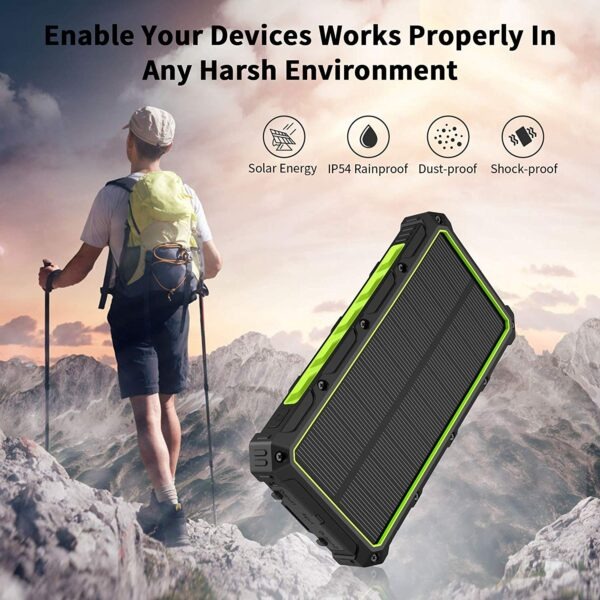
A solar powered power bank has two main parts: a rechargeable battery and a solar panel. The battery stores power for later use. The solar panel collects sunlight and converts it into electricity through photovoltaic cells. The U.S. Department of Energy explains that photovoltaic cells convert sunlight into electricity, and silicon is commonly used as the semiconductor material in solar cells.
For travelers, this means solar input depends on sunlight strength, panel size, angle, weather, shade, and time of day. The built-in solar panel on a compact power bank is helpful for emergency backup, but it usually charges slower than a wall adapter or USB-C input.
This is where expectation setting becomes valuable. When sellers describe a solar phone charger as a “backup solar charging option,” customers usually understand the product better. If the product is described as a full replacement for daily wall charging, disappointment may follow.
Fixed panel vs foldable solar design
| Design type | Main advantage | Better for | Buyer note |
|---|---|---|---|
| Fixed solar panel | Compact and easy to carry | Short trips, casual outdoor use, emergency kits | Smaller panel area means slower solar input |
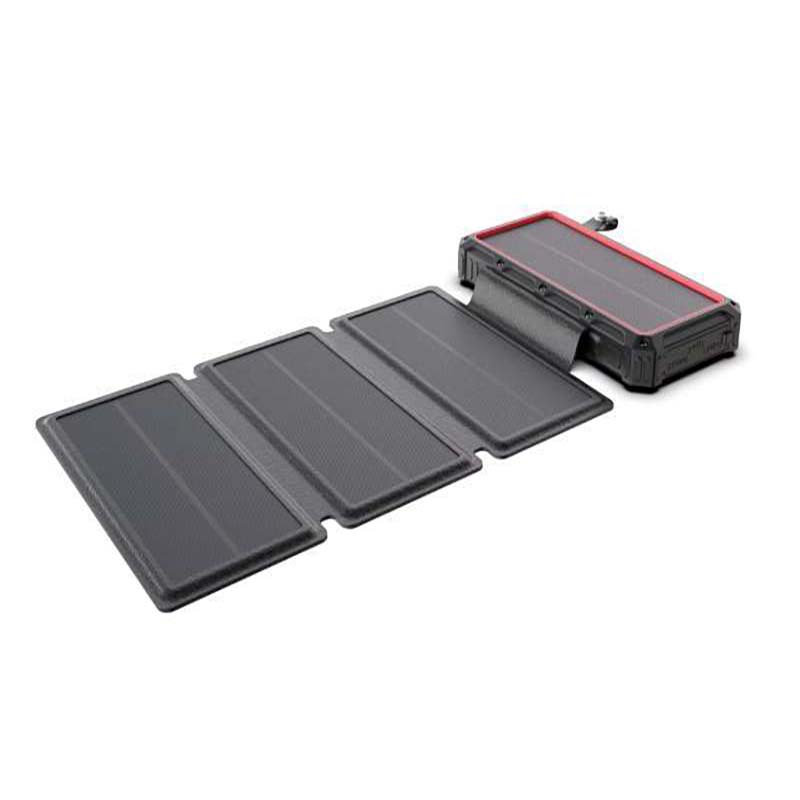
| Foldable solar panel | More sunlight collection area | Camping, hiking, road travel, field use | Larger packed size but better solar support |
| Built-in cable design | Less need to carry extra cables | Retail travel kits, family users | Check cable types before ordering |
| Wireless charging design | Convenient surface charging | Travelers with wireless charging phones | Still needs cable output for wider device support |
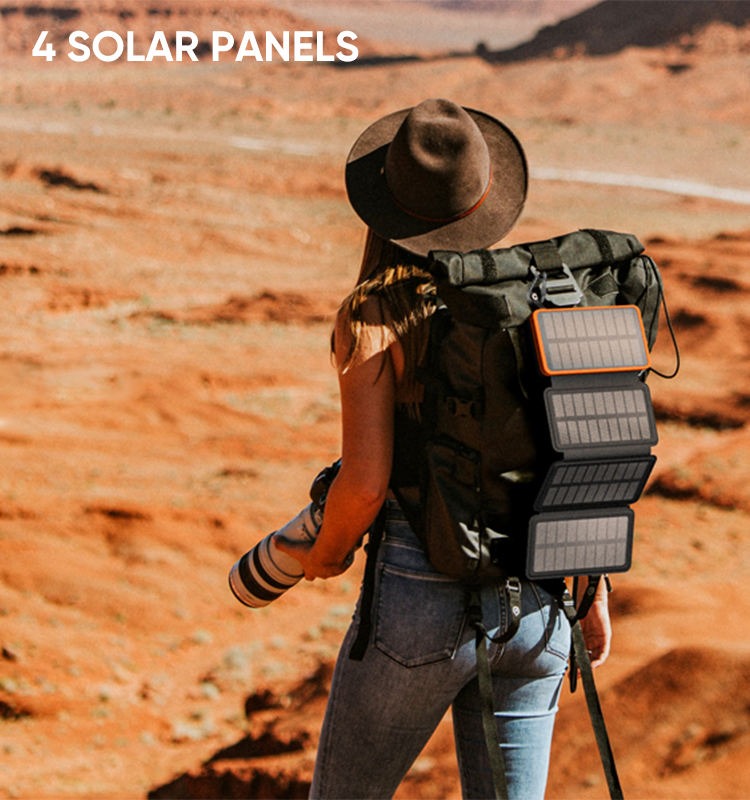
A fixed-panel solar mobile phone charger is simple and portable. A foldable solar charger gives more panel area, which helps when the user has longer exposure to sunlight. For product lines aimed at serious outdoor users, a foldable model can be a stronger fit.
For example, buyers can compare a compact 20000mAh solar power bank portable wireless charger with a foldable 20000mAh outdoor portable solar charger to see how structure changes the product story.
The key is not only capacity. It is also how the solar panel supports the travel scenario.
Travel safety rules buyers should check before ordering
Power banks use lithium batteries, so travel safety rules must be part of product planning. The FAA states that spare lithium batteries, including power banks and phone battery charging cases, must be carried in carry-on baggage only, and terminals should be protected from short circuit.
The TSA also states that portable chargers or power banks with lithium-ion batteries must be packed in carry-on bags. For international travel, IATA guidance says spare batteries and power banks should not be placed in checked baggage, and batteries up to 100Wh are generally allowed in carry-on baggage.
For procurement teams, this affects product labeling, user manuals, packaging, and sales descriptions. A power bank for solar travel should clearly show battery capacity, rated energy where needed, input/output details, and safety warnings.
Common battery travel checks
| Item to check | Why it helps buyers | Practical note |
|---|---|---|
| Capacity rating | Helps compare models and travel limits | Check mAh and Wh information |
| Carry-on guidance | Helps end users travel correctly | Add clear packaging or manual wording |
| Short-circuit protection | Reduces safety risk during storage | Protect ports and battery terminals |
| Certifications | Supports customs and market entry | Confirm required test reports before shipment |
| Airline rules | Some airlines apply extra limits | Buyers should advise customers to check airline rules |
For many travel-focused ranges, 10000mAh, 20000mAh, 24000mAh, and 30000mAh models are common. However, higher capacity is not always better for every channel. A larger unit may appeal to campers, while a smaller unit may sell better for daily travel and airline use.
A solar cell phone charger should also include protective features, clear port marking, and stable housing. If the target customers include outdoor travelers, water resistance and shock-resistant housing may also be useful.
Capacity and charging features in a solar phone charger power bank
Capacity is one of the first details buyers compare, but it should not be reviewed alone. A solar phone charger power bank should also be judged by output speed, input options, cable design, lighting function, waterproof level, and user comfort.
A 10000mAh model may be enough for short trips. A 20000mAh model is often more balanced for travel retail because it gives useful backup power without becoming too large. A 30000mAh or 42000mAh model may fit outdoor, emergency, and multi-device users.
Capacity planning by travel use
| Capacity range | Typical use | Suitable product direction |
|---|---|---|
| 10000mAh | Daily travel, short outdoor use | Compact, light, easy to pack |
| 20000mAh | General travel, camping, road trips | Balanced size and backup power |
| 24000mAh–30000mAh | Longer outdoor use, group travel | More battery reserve and more functions |
| 42000mAh | Emergency kits, outdoor work, extended trips | Higher-capacity model with multiple outputs |
Charging features also shape the customer experience. A solar power bank battery charger with USB-A, USB-C, built-in cables, and wireless charging may support more device types. This is useful for mixed phone markets where users may carry iPhone, Android, earbuds, lamps, or small cameras.
Product managers should also check:
- USB-C input and output
- Total output rating
- Wireless charging support
- Built-in cable quality
- LED flashlight strength
- Button design
- Battery indicator style
- Charging protection
- Housing material
- Waterproof rating
For example, a 30000mAh Qi wireless solar charger power bank may suit outdoor buyers who want wireless charging, Type-C input, LED light, and IP65 housing. A 42000mAh built-in cable solar power bank may fit channels focused on longer outdoor use and emergency charging.
The right choice depends on customer habits, price range, packing size, and market rules.
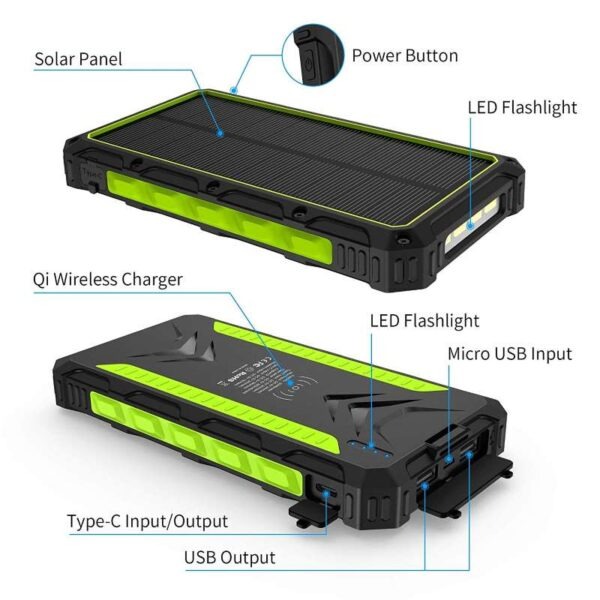
Which solar power bank design fits each travel scenario?
Not every traveler needs the same design. A weekend traveler may prefer a compact shape. A camper may want a foldable panel and stronger light. A tour group buyer may prefer built-in cables because users are less likely to lose accessories.
This is why the product range should not rely on one model only. A balanced travel line may include entry-level compact units, waterproof outdoor units, foldable solar chargers, and higher-capacity models for emergency use.
Travel scenario comparison
| Travel scenario | Suggested design | Useful features |
|---|---|---|
| City travel | Compact solar power bank | Slim body, USB-C, wireless charging |
| Hiking | Waterproof solar power bank | Rugged housing, LED light, hook or strap |
| Camping | Foldable solar charger | Larger solar area, dual outputs, strong light |
| Family travel | Built-in cable model | Multiple cable types, simple charging |
| Road trips | High-capacity unit | 24000mAh–42000mAh, multiple outputs |
| Emergency kit | Durable solar charger | Flashlight, water resistance, battery indicator |
A power bank for solar travel should match the buyer’s sales channel. Online stores need clear images and detailed specifications so buyers can understand the product easily. For distributors, packaging and cartons must support safe shipment and smooth stock handling. Retailers also need products that explain themselves quickly on the shelf.
Several product styles can support different positioning:
- 25000mAh portable solar charger with dual USB ports
- Waterproof 20000mAh solar panel power bank
- 24000mAh standard 36000 built-in cable wireless solar power bank
- Outdoor solar power bank with 10000mAh capacity
A solar phone charger can serve many travel needs, but the sales message should stay honest. Solar charging is a support feature. Battery capacity and wired charging remain the main daily power source.
Materials, waterproof ratings, and outdoor details
Travel products often face rough handling. They may be placed in backpacks, dropped on tables, carried in humid weather, or used near sand and dust. For that reason, housing design and surface finish deserve careful review before bulk orders.
A solar mobile phone charger for travelers should feel durable without becoming too heavy. Common housing choices may include ABS, PC, rubberized coating, silicone corner protection, or textured outer shells. The exact structure depends on the product model and cost target.
Water resistance is another detail buyers should check. Some products may support splash resistance, while others may be marked with stronger ratings. For outdoor travel, buyers should confirm the rating, test report, and exact use limits. “Waterproof” should be used carefully in sales copy, because customers may assume the product can be submerged.
Details worth checking during sample review
- Does the solar panel sit firmly in the housing?
- Are the charging ports covered?
- Are port covers easy to open and close?
- Does the flashlight feel useful in dark outdoor settings?
- Is the body comfortable to hold?
- Does the surface scratch easily?
- Are cable ends protected when not in use?
- Is the battery indicator easy to read?
- Does the product include a hanging hook or strap point?
- Does the packaging explain water resistance clearly?
A solar power bank with flashlight can be useful for camping and emergency kits. Still, brightness, beam style, button placement, and battery drain should be checked during sample testing.
Buyers may also want different surface colors, logo printing, private label packaging, barcode labels, instruction manuals, or gift box designs. These choices affect lead time and cost, so it is better to confirm them early.
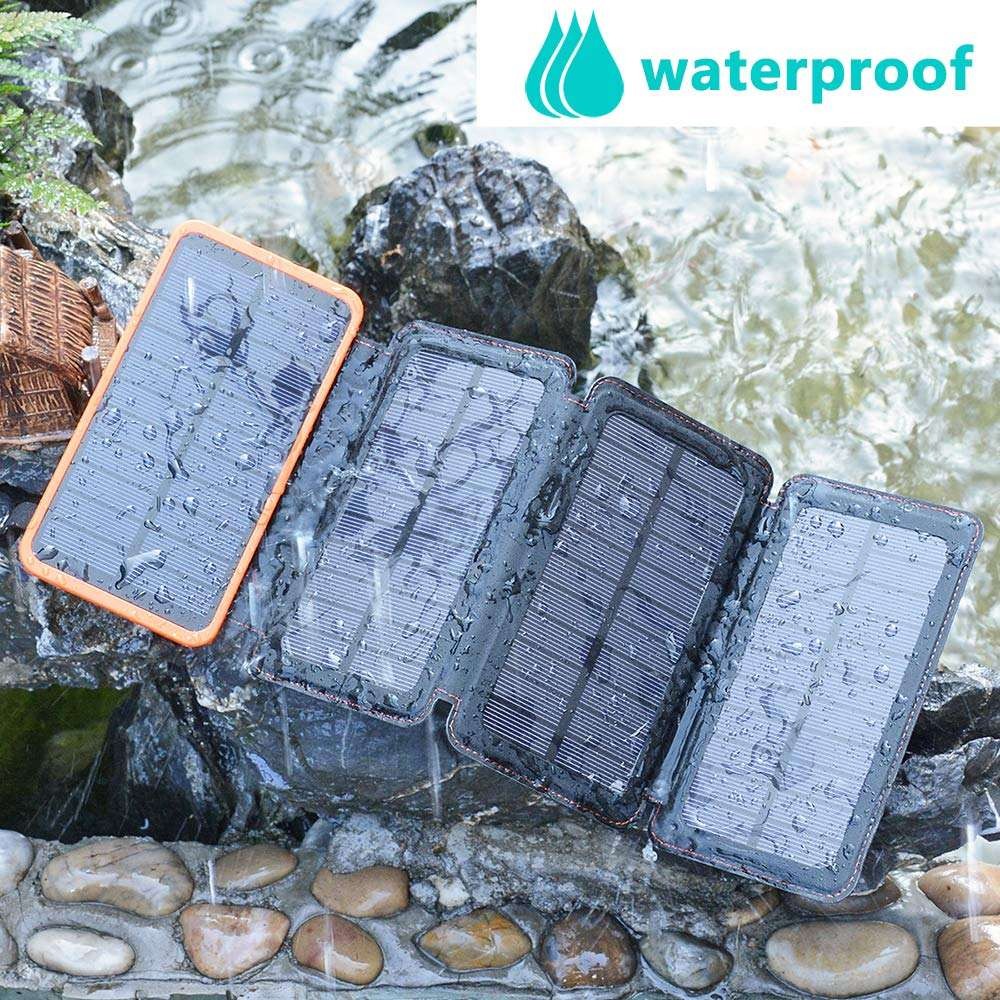
Packaging, compliance, and customization for wholesale orders
For professional sourcing, the product itself is only part of the order. Packaging, labeling, manuals, certificates, carton strength, and shipping documents can affect how smoothly the goods move from factory to market.
A solar power bank order may require different compliance documents based on destination market and sales channel. Buyers should ask early about available test reports, battery transport documents, product labels, user manual wording, and carton marks.
For lithium battery products, transport documents are especially important. Since power banks are treated as spare batteries during passenger travel, the product label and manual should make battery details easy to identify. The FAA and IATA both highlight carry-on handling for power banks, which makes clear customer-facing safety information useful for travel products.
Customization options buyers often request
| Custom item | Why buyers request it | Review point |
|---|---|---|
| Logo printing | Brand recognition | Confirm color, size, and position |
| Gift box | Retail shelf display | Check artwork, barcode, and claims |
| User manual | Customer support | Match language and safety wording |
| Carton label | Warehouse handling | Include model, quantity, and marks |
| Cable set | Market fit | Match local phone user demand |
| Color option | Product line planning | Confirm MOQ and lead time |
For product managers, the sample stage should include both product and packaging review. A beautiful unit can still create problems if the manual is unclear, the box overclaims charging speed, or the carton mark does not match the purchase order.
Good sourcing communication reduces rework. Before confirming bulk production, buyers should align on:
- Model number
- Battery capacity
- Color
- Logo file
- Packaging artwork
- Manual language
- Certification needs
- Sample approval
- Carton quantity
- Delivery schedule
- Payment terms
This helps both sides reduce delays and gives the buyer a cleaner path from sample to shipment.
Working directly with Hedelee for travel solar chargers
Shenzhen Hedeli Technology Co., Ltd. has worked in mobile accessories and consumer electronics for about 10 years. Hedelee focuses on solar power banks and related portable charging products for importers, distributors, wholesalers, procurement teams, and product managers.
The company has more than 100 employees, with headquarters in Shenzhen, China. It also has an office and showroom in Guangzhou. The factory in Dongguan has a monthly capacity of 50,000 units, helping buyers plan regular supply for travel, outdoor, and mobile accessories channels.
Working directly with the original manufacturer gives buyers clearer access to product information, sampling, packaging discussion, order planning, and production updates. It also helps reduce confusion when comparing models, because the buyer can ask about capacity, housing, charging function, waterproof rating, and customization in one place.
For example, a buyer building a travel range may request:
- One compact model for daily travelers
- One 20000mAh model for outdoor retail
- One foldable model for camping stores
- One 30000mAh model for emergency kits
- One built-in cable model for family travel
- One wireless charging model for higher function demand
This kind of product mix can help distributors serve different price points and user needs without overloading the catalog.
A solar cell phone charger can look simple from the outside, but sourcing decisions need care. The battery, solar panel, ports, housing, cable design, box, manual, and test documents all affect the final customer experience.
If your team is preparing a new travel charging range, Hedelee can support model comparison, sample review, logo options, packaging planning, and bulk order discussion. Direct communication with the source helps you ask clearer questions and receive practical answers before production begins.
Source travel-ready solar chargers from the manufacturer
A good travel charging product should be easy to carry, safe to explain, practical outdoors, and clear in its specifications. For buyers, the strongest choice is usually not the largest battery or the most functions. It is the model that fits the real customer, the sales channel, and the target price.
Hedelee supports solar power bank sourcing from product selection to sample review, packaging planning, and bulk production. As the original manufacturer, we help buyers compare models directly at the source instead of guessing from limited catalog details.
Share your target capacity, market, order plan, logo needs, and packaging style with our team. We will help you review suitable solar phone charger options and prepare a quotation that matches your travel product range with confidence.
Frequently Asked Questions
1. What MOQ is available for orders?
MOQ depends on the selected model, logo needs, and packaging requirements. Contact us with your target solar power bank model and market plan so we can confirm the suitable order quantity.
2. How can buyers request samples?
Buyers can request samples before bulk production. Reach out with the model link, capacity choice, and any customization needs so our team can prepare sample details.
3. Do solar chargers support custom packaging?
Yes, many models can support logo printing, gift box design, manuals, barcodes, and carton labels. Share your packaging artwork or brand guide for review.
4. Can products meet travel safety requirements?
Power bank travel rules depend on battery rating, destination market, and airline policy. We can help provide product specifications and available documents for buyer review.
5. Why choose a foldable solar charger?
A foldable solar charger has more panel area than a fixed-panel model. It is better for camping, hiking, and outdoor users who spend more time in direct sunlight.