

You packed everything. Tent, sleeping bag, stove, headlamp — and a phone at 12% battery before you even left the trailhead. For anyone who spends time outdoors, that’s a familiar problem.
The best portable solar charger for camping isn’t necessarily the one with the biggest number on the box. It’s the one that matches how you actually use it — your trip length, your device load, and the conditions you’ll face. This guide walks through what separates a reliable solar power bank from one that leaves you disappointed mid-trip, and helps you source the right product for your customers or inventory.
What Is a Solar Power Bank — and How Does It Work?
A solar power bank combines two things: a rechargeable battery pack and a photovoltaic (PV) solar panel. The solar panel converts sunlight into electrical energy, which charges the built-in battery. You then use that stored energy to charge phones, tablets, cameras, and other USB devices.
This is different from a standalone solar panel, which generates power only while the sun is shining and requires a separate battery to store it. A solar powered power bank handles both functions in one unit — which makes it much more practical for camping, hiking, and off-grid travel.
The key limitation is simple physics. The solar panel on most portable units is small. Small panel = limited surface area = slower charge time from solar alone. That’s not a flaw unique to any one brand; it’s the nature of the form factor. Understanding this upfront helps buyers set the right expectations and choose products that genuinely solve the problem.
Why Solar Charging Makes Sense for Outdoor Use
Mains power isn’t available on a hillside. That’s the whole point.
A solar phone charger gives outdoor users a way to keep devices running without relying on grid access or carrying heavy backup batteries for every day of a trip. For longer camping trips, multi-day hikes, overlanding routes, or festival weekends, a solar mobile phone charger removes a real logistical headache.
There’s also a growing demand from procurement teams and product managers sourcing gear for outdoor retail, emergency preparedness kits, and corporate gifting ranges. A rugged, well-specified solar cell phone charger has appeal across multiple categories — which is why it’s worth understanding what separates a solid product from a mediocre one.
Key Specs to Evaluate Before You Source
Not all solar power banks are built to the same standard. Here’s what to look at when evaluating products — whether for your own use or to inform a purchase order.
Battery Capacity (mAh)
Capacity is measured in milliamp-hours (mAh). As a working guide:
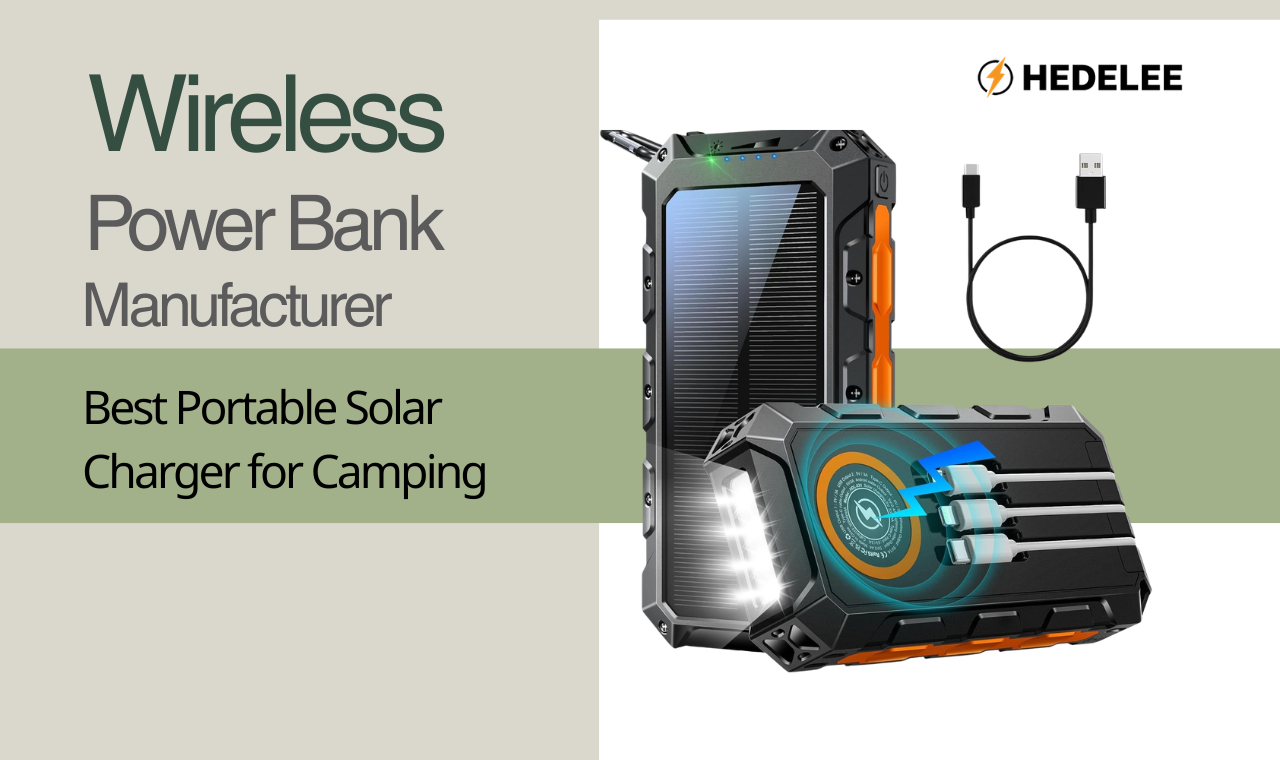
A 10,000 mAh solar power bank is a popular starting point — compact enough to carry comfortably, with enough capacity for a weekend trip. Hedelee’s 10,000 mAh outdoor solar power bank combines wireless charging, fast charging, and a built-in high-output LED light in one unit — a practical combination for outdoor users who want versatility without extra weight.
Solar Panel Wattage
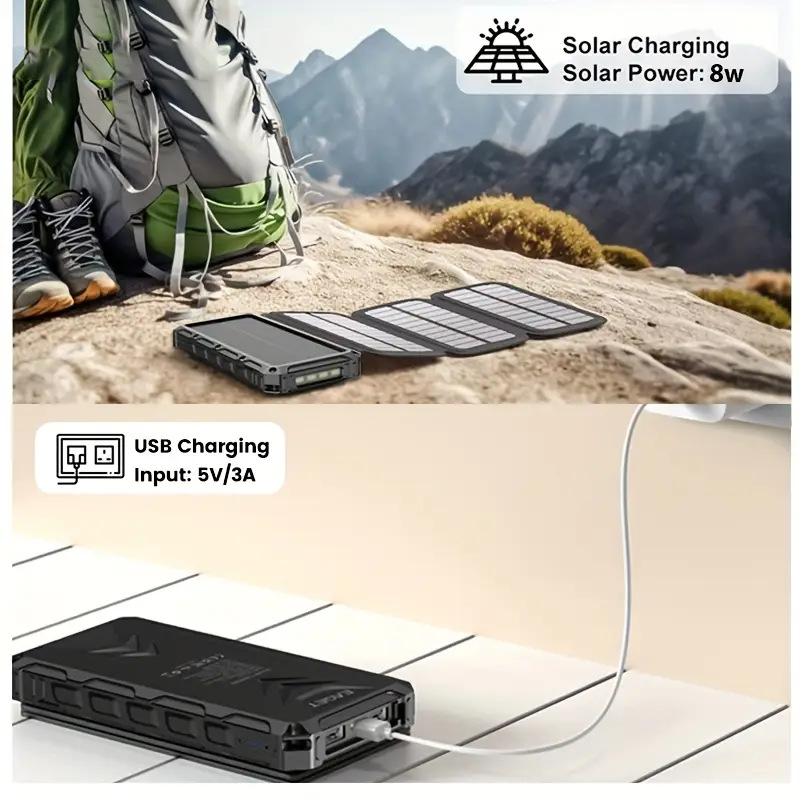
The solar panel wattage tells you how quickly the unit can charge itself via sunlight. On compact solar powered power bank units, the integrated panel typically ranges from 1W to 5W.
-
1W–2W panels: Trickle charge only. Best treated as a supplementary top-up, not a primary charge method.
-
3W–5W panels: Meaningful solar contribution, especially in full sun. Can make a noticeable difference over a full day outdoors.
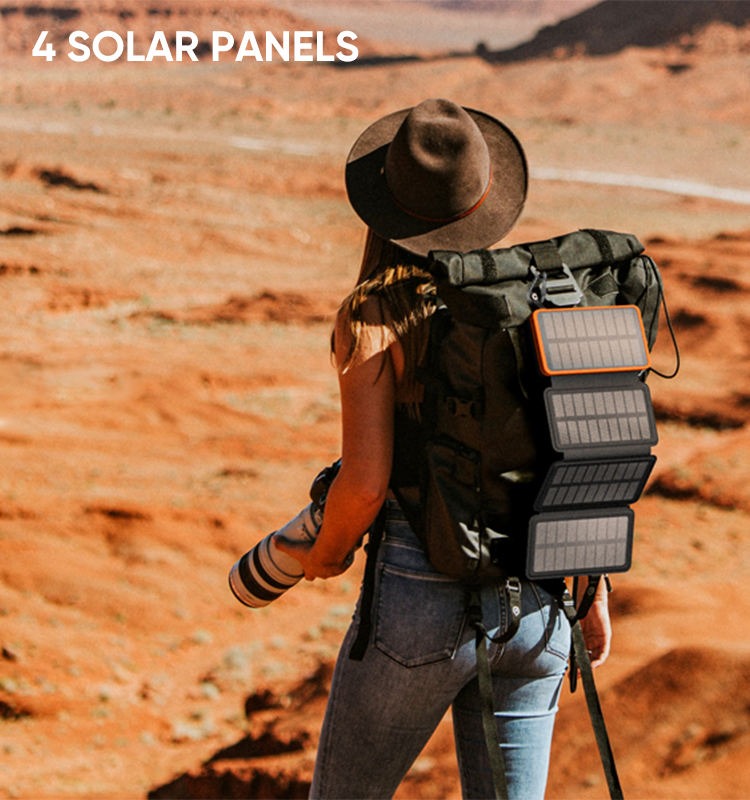
For faster solar recharging, some buyers pair a separate foldable solar panel with a power bank, using the panel to top up the bank throughout the day. This approach makes sense for longer trips or higher device loads.
Output Ports and Charging Speed
Check the output configuration carefully. A solar power bank battery charger that only offers a single 5V/1A USB-A port will charge a modern phone slowly. Look for:
-
USB-C Power Delivery (PD): Faster charging for modern phones, tablets, and accessories
-
Multiple output ports: Allows simultaneous charging of two or more devices
-
Wireless charging (Qi): Increasingly standard on well-specified units; useful for users who want cable-free convenience
-
Fast charging support: Particularly relevant for devices that support protocols like Quick Charge or PD
Durability and IP Rating
Outdoor gear takes a beating. The IP (Ingress Protection) rating tells you how well a unit resists water and dust.
For camping use, IPX4 is a baseline minimum. IPX6 or IP67 is preferable if the product will face rain, mud, or rough handling. Always verify the IP rating refers to the full unit, not just the panel.
Weight and Form Factor
Weight matters when you’re carrying a pack. A compact 10,000 mAh unit typically weighs between 250g and 350g. Units with larger batteries, thicker panels, or additional features like carabiner hooks and LED flashlights will weigh more — but often justify it with added utility.
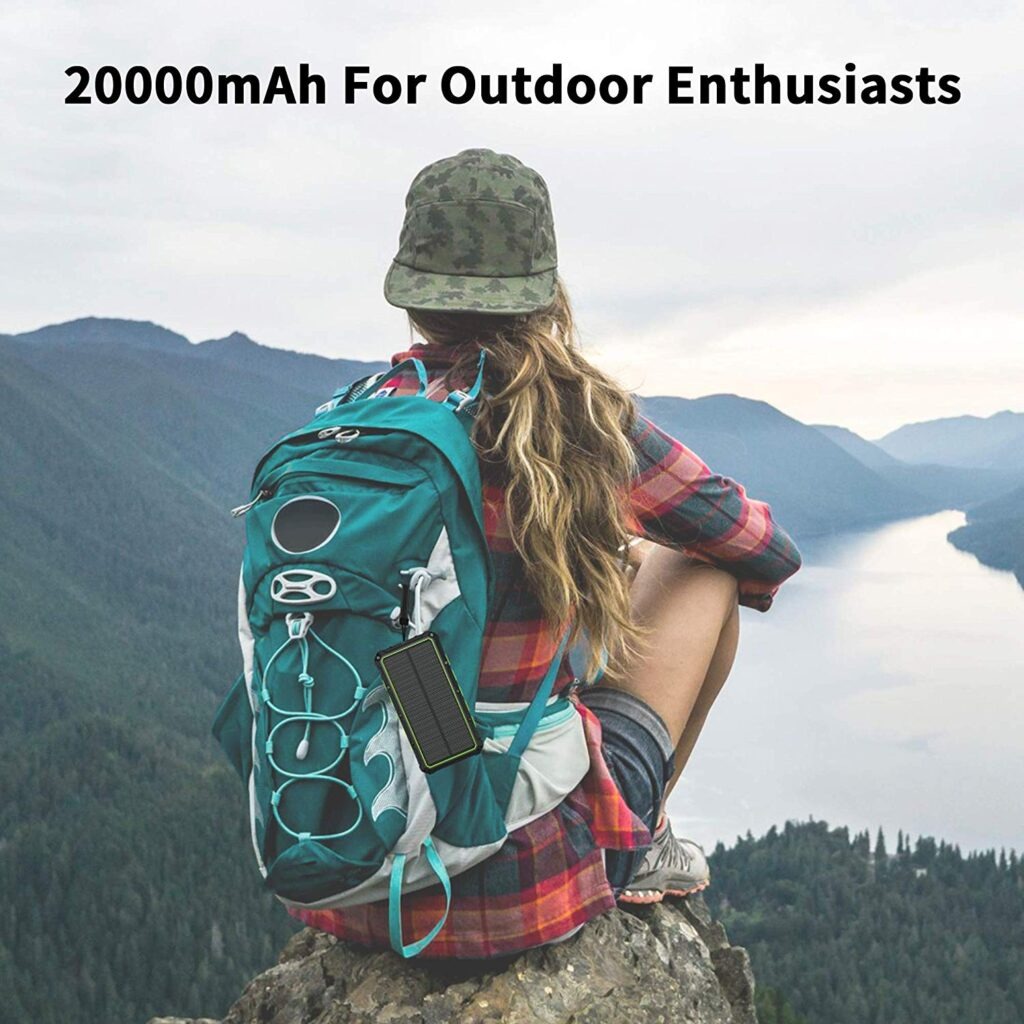
A well-designed outdoor solar power bank should also include attachment points (carabiner loops, mounting hooks, or clip rings) so it can hang from a backpack, tent, or branch during the day while charging passively.
How to Choose the Best Portable Solar Charger for Camping
Choosing the right unit comes down to matching the product to the trip type. Here’s a practical framework:
For Day Hikes and Weekend Camping
A 10,000–20,000 mAh unit with a 3W–5W solar panel, USB-C output, and at least an IPX4 rating covers most solo and duo camping scenarios. Look for units with a built-in LED light — it doubles as a torch and can be a useful emergency signal tool.
For Multi-Day and Group Trips
Step up to 20,000 mAh or higher. Multiple output ports become important here since you may need to charge two or three devices simultaneously. Fast charging support reduces downtime. Consider whether your customers or end users will have USB-C devices (most modern phones) or older Micro-USB devices — or both.
For Overlanding, Expeditions, or Emergency Preparedness
At this level, a standalone solar power bank may not be enough. A separate foldable solar panel paired with a high-capacity power bank provides more flexibility and faster recharging. Units with rugged outer shells, drop resistance, and IP67+ ratings become more important here.
For Retail, Gifting, and Procurement
Product managers sourcing for outdoor retail or corporate gifting ranges should prioritize units that perform consistently across use cases. Look for certifications (CE, RoHS, FCC), verifiable testing data, and suppliers who can provide samples before committing to volume. The solar cell phone charger category has a wide quality range — spec sheets alone don’t always tell the full story.
Solar Power Bank vs. Standalone Solar Panel: Which Is Better?
This is one of the most common points of confusion when sourcing outdoor charging products. Here’s a direct comparison:
For most casual campers and outdoor users, a solar powered power bank is the right choice — it’s one device, easy to carry, and handles the majority of phone charging needs. For serious off-grid setups or longer base camp trips, a dedicated foldable panel paired with a separate battery makes more sense.
You can browse Hedelee’s full range of solar power bank models to compare capacities, feature sets, and output configurations.
Common Features Worth Paying Attention To
Beyond the core specs, a few additional features make a meaningful difference in real-world outdoor use:
LED Flashlight / Torch
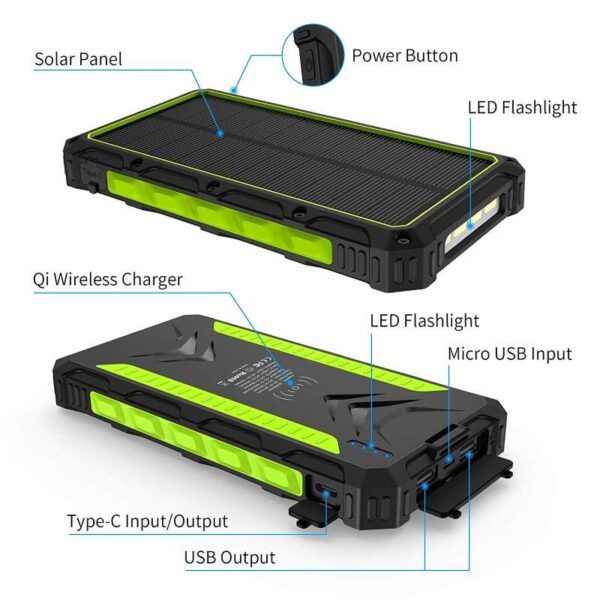
Built-in LED lights are common on outdoor solar mobile phone chargers. A strong-output LED functions as a tent light, trail torch, or emergency signal. Units with variable brightness modes (including a strobe or SOS mode) offer added utility.
Wireless Charging (Qi)
Wireless charging is now standard on mid-range and above solar power bank models. It eliminates cable dependency for compatible devices and reduces port wear on the unit over time. For procurement teams building multi-use product ranges, Qi compatibility is a strong selling point.
Carabiner Hook or Mounting Loop
A unit without a mounting point is harder to use passively during the day. The ability to clip a solar power bank battery charger to a backpack, tent guy-line, or vehicle rack matters enormously in practice.
Indicator Lights and Battery Display
LED-based battery indicators (typically 4 LEDs) are the minimum. Some higher-spec units include a percentage-based digital display, which is more useful for longer trips where precise charge management matters.
Safety Protections
Any reputable solar power bank should include built-in overcharge protection, over-discharge protection, short-circuit protection, and temperature management. These aren’t optional extras — they’re baseline requirements. Buyers should verify these are present in product specs and not just implied by marketing copy. For reference, the IEC 62133 standard covers safety requirements for portable lithium battery products.
What Buyers and Procurement Teams Should Ask Suppliers
When sourcing solar phone chargers for retail, distribution, or wholesale, the relationship with the manufacturer matters as much as the product spec. Here’s what to clarify before placing an order:
-
Minimum Order Quantity (MOQ): Most factory-direct suppliers offer tiered pricing from a defined MOQ. Clarify whether samples are available below MOQ.
-
Customization: Can the unit be branded with your logo, custom color options, or custom packaging? OEM and ODM options vary significantly between suppliers.
-
Certifications: Which markets is the product certified for? CE (Europe), FCC (North America), RoHS (materials), and PSE (Japan) are the most common requirements. Buyers sourcing for specific markets should confirm compliance before finalizing specs.
-
Lead Times: Standard lead times from Chinese manufacturers typically range from 20 to 45 days for bulk orders, depending on customization and production scheduling. Monthly production capacity matters if you’re planning large-volume orders.
-
Sample Availability: Always test a sample before committing to volume. For a solar power bank battery charger, test the solar charge rate in real conditions, verify output speeds, and check physical durability.
Shenzhen Hedeli Technology Co., Ltd. manufactures solar power banks, power banks, TWS earbuds, Bluetooth speakers, USB chargers, cables, and more from its factory in Dongguan, with a monthly production capacity of 50,000 units. With over 10 years in the mobile accessories industry, a headquarters in Shenzhen, and a showroom in Guangzhou, Hedeli serves importers, distributors, and wholesalers directly — which means no intermediary markup and direct access to the production source.
How to Use a Solar Power Bank Effectively — Practical Tips
Getting the most out of a solar powered power bank isn’t complicated, but a few habits make a real difference:
-
Pre-charge before your trip. Always start with a full battery from mains power. Solar charging is a supplement during the trip, not your primary fill-up method.
-
Face the panel toward direct sunlight. Angled towards the sun, not lying flat on the ground. Even a 20–30° difference in panel angle can affect output measurably.
-
Hang it during the day. Clip it to your pack or tent exterior while you’re active or resting. Passive solar charging throughout the day adds up.
-
Avoid extreme heat. Prolonged direct heat in very high temperatures can degrade lithium battery performance. Some shade around the battery portion of the unit, while keeping the panel in sun, is ideal.
-
Keep ports covered when not in use. Dust and moisture in ports is one of the most common causes of long-term device failure in outdoor settings.
-
Charge your phone from the bank, not directly from the panel. Direct solar-to-phone charging is inconsistent when clouds pass. Using the bank as a buffer gives your devices a stable charge.
Ready to Source Direct from the Manufacturer?
If you’re evaluating solar power bank products for wholesale purchasing, retail ranging, or private label development, the most direct path to accurate specifications, real pricing, and sample availability is speaking with the manufacturer.
Shenzhen Hedeli Technology Co., Ltd. has supplied importers, distributors, and wholesalers with mobile accessories for over 10 years. With a factory in Dongguan producing up to 50,000 units per month and a showroom in Guangzhou where you can see and handle products before committing, the process of going from inquiry to order is efficient and transparent.
Whether you’re looking at a specific 10,000 mAh wireless charging model, a higher-capacity unit for outdoor retail, or a custom-branded solar cell phone charger for a corporate or retail program — reach out directly to discuss specifications, MOQ, lead times, and sample requests. Sourcing direct means you get accurate answers from the people who actually make the product.
Explore Hedelee’s solar power bank range or get in touch to start a conversation about your requirements.
Frequently Asked Questions
1. What capacity solar power bank is best for camping?
For most camping trips, a 10,000 mAh unit provides 2–3 full phone charges and balances capacity with portability well. Multi-day or group trips benefit from 20,000 mAh or higher. The right capacity depends on trip length, number of devices, and whether you’ll have regular sun exposure for supplemental solar charging.
2. How long does a solar power bank take to charge via solar?
Solar recharge times vary by panel size and sunlight quality. A typical 3W–5W integrated panel on a 10,000 mAh unit may take 25–50 hours of direct sunlight to fully charge from empty — which is why pre-charging via mains before a trip is always recommended. Solar input should be treated as a top-up during use, not a primary charge source.
3. Can solar power banks be customized with our brand or logo?
Yes. OEM and ODM customization options — including logo printing, custom colors, and branded packaging — are available for qualifying orders. Contact us to discuss minimum order quantities, artwork requirements, and lead times for branded solar power bank battery charger products.
4. What certifications should a solar power bank have for retail distribution?
For most major markets, look for CE (Europe), FCC (North America), and RoHS compliance as a baseline. PSE certification is required for Japan. Certifications should be verifiable with test reports, not just listed on a spec sheet. Reach out to request documentation for specific product models.
5. Do you supply samples before bulk orders?
Yes, samples are available for evaluation before bulk orders. Testing a unit under real outdoor conditions is the best way to verify solar panel performance, output speeds, build quality, and IP rating claims. Contact us with your product requirements to arrange a sample request.