

A dead phone on the trail is not a small problem. It can mean no GPS check, no weather update, no booking record, and no easy contact with your team. That is why a waterproof solar power bank gets so much attention from outdoor buyers. Still, many listings make the product sound better than it performs. A good unit can help during hiking, camping, fishing, trekking, field work, and travel. A weak unit becomes extra weight in the bag.
The source content behind this topic makes one point very clearly: solar charging on a compact bank should be treated as backup support outdoors, not the main way to refill the battery before or during a trip. That practical view is worth keeping because it matches real outdoor use much better than flashy product claims.
For buyers, procurement teams, and product managers, the goal is not just to find a solar power bank. The goal is to choose one that fits trip length, charging demand, safety expectations, packaging needs, and shipping rules. The right product balances battery size, water and dust resistance, charging speed, weight, housing material, and order flexibility.
What a waterproof solar power bank should do on the trail
A waterproof solar power bank should do four jobs well.
First, it should store enough energy for the trip. A short day hike may only need one or two phone top-ups. An overnight trip may need more support for a phone, headlamp, GPS device, earbuds, or watch.
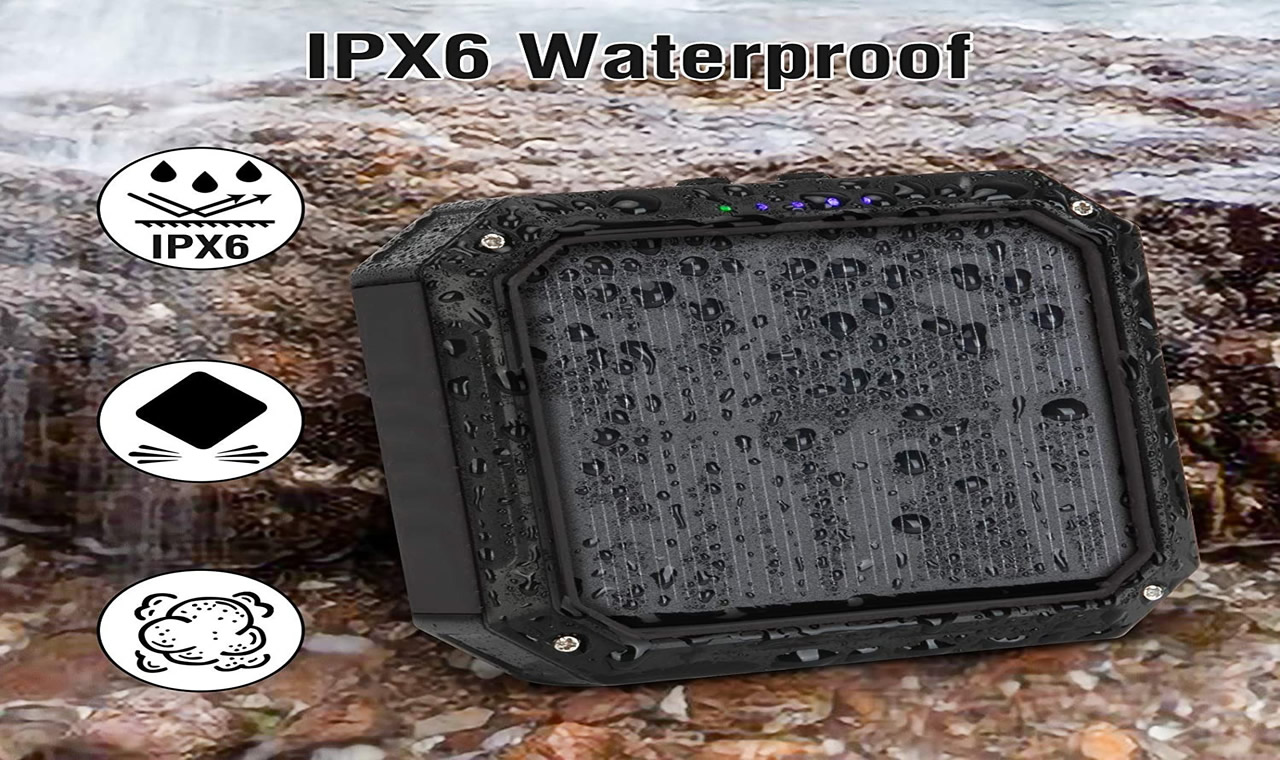
Second, it should survive outdoor handling. That means protection from light rain, dust, splashes, muddy ground, and the small drops that happen during regular use. The IEC explains that IP ratings measure resistance against dust and water entry, which is why buyers should check the rating instead of trusting vague words like “waterproof” alone.
Third, it should charge devices in a useful time frame. Buyers should look at input and output details, not only battery capacity. A large battery with weak input can take too long to recharge before departure. A unit with poor output may not support newer phones well enough for fast use between stops.
Fourth, it should offer dependable backup features. Outdoor users often value LED lighting, SOS mode, hanging loops, carabiners, compact size, and a surface that is easier to grip with wet hands.
The product pages in your range show the kind of details that help buyers assess this properly: monocrystalline silicon solar panel design, Type-C charging, wireless charging on selected models, LED lighting modes, and certifications including CE, FCC, and RoHS on the 10,000mAh model. The category page also shows broader options including 16,000mAh and 20,000mAh formats, LED display, quick charge support, and transport-focused documentation like UN38.3 on selected items.
The difference between “waterproof” and “ready for field use”
Many listings use “waterproof” too loosely. Buyers should separate marketing language from test-based language.
A unit built for field use usually has:
- an enclosure with an IP rating
- covered charging ports
- shock-resistant corners or thicker housing
- a surface that is easier to hold with wet hands
- a secure hanging method for backpacks
A unit that is only meant for casual outdoor use may still be useful, but it should be described more carefully. If a model is “ordinary waterproof” or splash resistant, that is different from a bank built for heavier outdoor exposure.
Why buyers should look beyond battery size
Capacity gets the headline, but it is only one piece of the decision.
A 10,000mAh unit may be perfect for:
- day hikes
- short camping trips
- emergency use in vehicles
- event and field staff kits
A 20,000mAh unit may fit better for:
- multi-day camping
- larger group use
- charging more than one device
- outdoor retail packs aimed at heavier use
A smaller unit with lower weight may sell better in travel and gift channels. A larger unit may fit better in survival, camping, and utility categories.
Why a waterproof solar power bank is backup power first
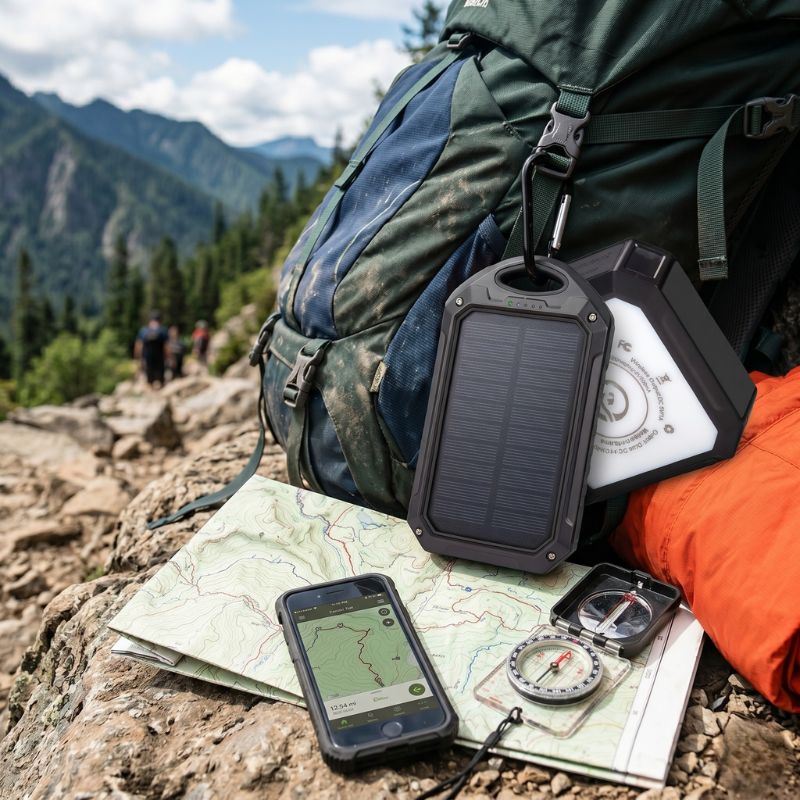
This is where many product pages overpromise. A compact solar panel on a power bank can help in the field, but it is not a fast substitute for wall charging. The source article says clearly that the bank should be charged from an outlet before the trip, while solar input is better treated as support in sunny conditions.
That guidance matters because buyers often assume “solar” means full daily charging from sunlight alone. On a compact device, the panel area is small. Weather changes. Backpack angle changes. Trail shade reduces efficiency. Dust and scratches also affect performance.
Your own product page reflects that same reality. The 10,000mAh model uses a 1W monocrystalline silicon solar panel. That is useful as emergency support or slow top-up exposure, but it is not comparable to charging from an outlet before travel.
What solar support is good for
A solar powered power bank makes sense when users need:
- emergency backup during long daylight exposure
- a little recovery charge while walking
- battery support during slow travel or camping
- an extra value point in outdoor retail packaging
This is also why search terms vary so much. One buyer may search for a solar power bank, another for a solar power bank battery charger, and another for a solar phone charger. Some catalogs even use awkward phrases like bank power solar. The language changes, but the buying question is often the same: how much power can the user actually store, and how quickly can devices recharge when needed?
What solar support is not good for
It is not ideal to depend on a compact solar panel for:
- fast refills before a second full day of heavy phone use
- charging several devices at once only from sunlight
- cloudy or rainy weather
- deep forest or canyon routes with long shade periods
That does not make the product weak. It just means the product should be sold honestly.
Buyers who understand this are easier to retain because return risk drops. When product pages explain that solar input is a backup feature, not the main charge source, the offer feels more credible.
How to explain this in sales copy
A clear way to position the product is:
- pre-charge from wall power before departure
- use solar input for outdoor support when sunlight is available
- rely on battery storage and device output as the main user benefit
That message is more believable than claiming full solar independence from a pocket-sized unit.
How to choose a waterproof solar power bank for backpacking orders
A waterproof solar power bank should match the trip type and buyer channel. One model will not fit every order. The easiest way to choose is to work through use case, battery demand, charging method, protection level, and packing details.
1) Match capacity to trip length
Here is a simple planning table.
| Trip type | Typical device load | Suggested capacity | Buyer note |
|---|---|---|---|
| Day hike | 1 phone, light GPS use | 10,000mAh | Lighter carry, easier impulse purchase |
| Overnight trip | 1 phone + light or watch | 10,000–16,000mAh | Good balance of weight and runtime |
| Weekend camping | 2 devices or heavier use | 16,000–20,000mAh | Better for outdoor stores and gift bundles |
| Group or field kit | Multiple users | 20,000mAh+ | Better for utility-focused channels |
The source article suggests 10,000mAh may be enough for short outings and larger capacities fit longer time outdoors. That general buying logic still holds well.
2) Check input and output before anything else
A large battery with weak input creates frustration. Your 10,000mAh model lists 5V/2A input, Type-C input/output up to 5V/3A, and wireless charging output at 5W. Those details matter more than a big capacity number on its own.
For buyers, the practical checklist is:
- Does it support Type-C?
- Does it support faster output for current phones?
- Does it support wireless charging?
- Can users charge more than one device type easily?
3) Read the protection claim carefully
If outdoor use is central to the product, check:
- water-resistance level
- port cover design
- housing material
- corner protection
- drop and wear tolerance
- dust protection
The IEC’s IP system is the reference point here. Without a rating or test language, a “waterproof” label is less helpful.
4) Decide whether LED and SOS mode add retail value
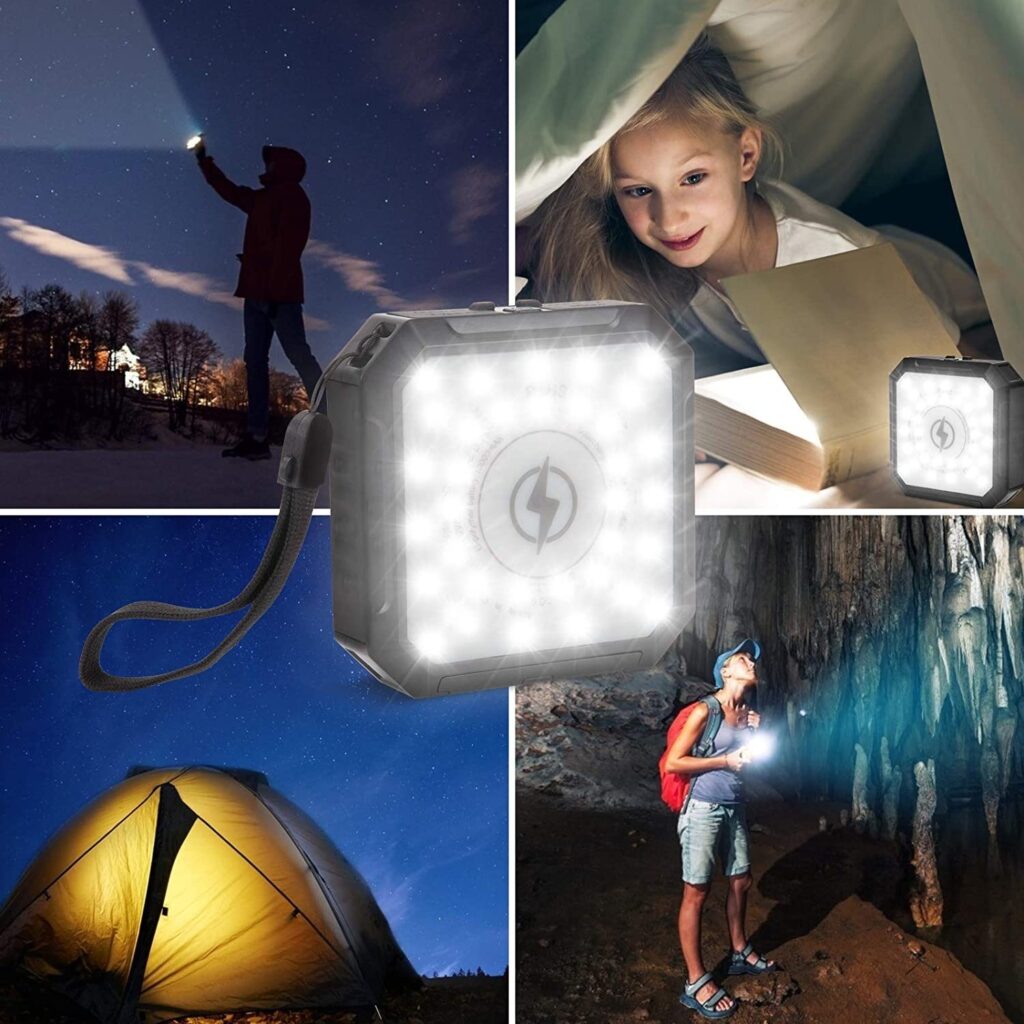
Some buyers see lighting as a small extra. Outdoor buyers often see it as part of the product. Your 10,000mAh model lists three LED modes: constant light, flashing, and SOS emergency signal. That helps position it for camping, roadside use, and emergency kits.
5) Watch size and weight
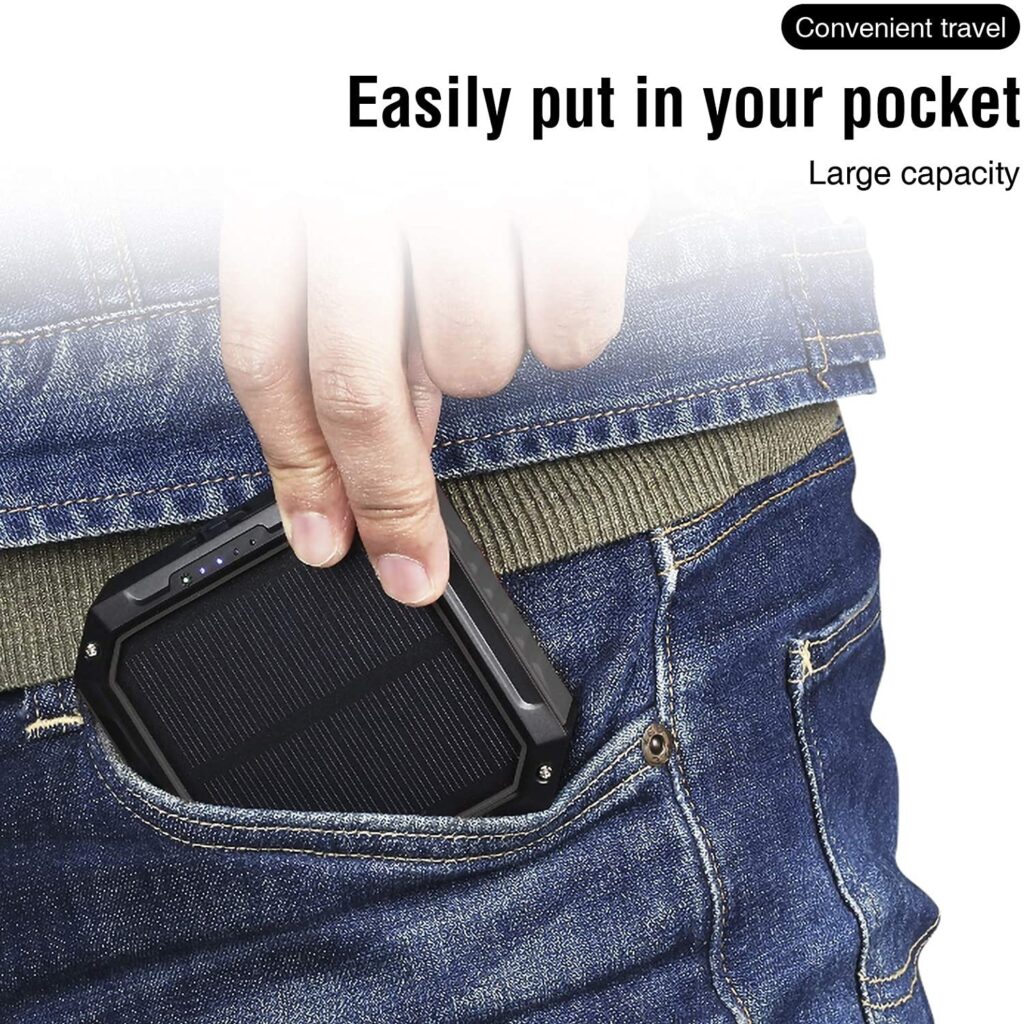
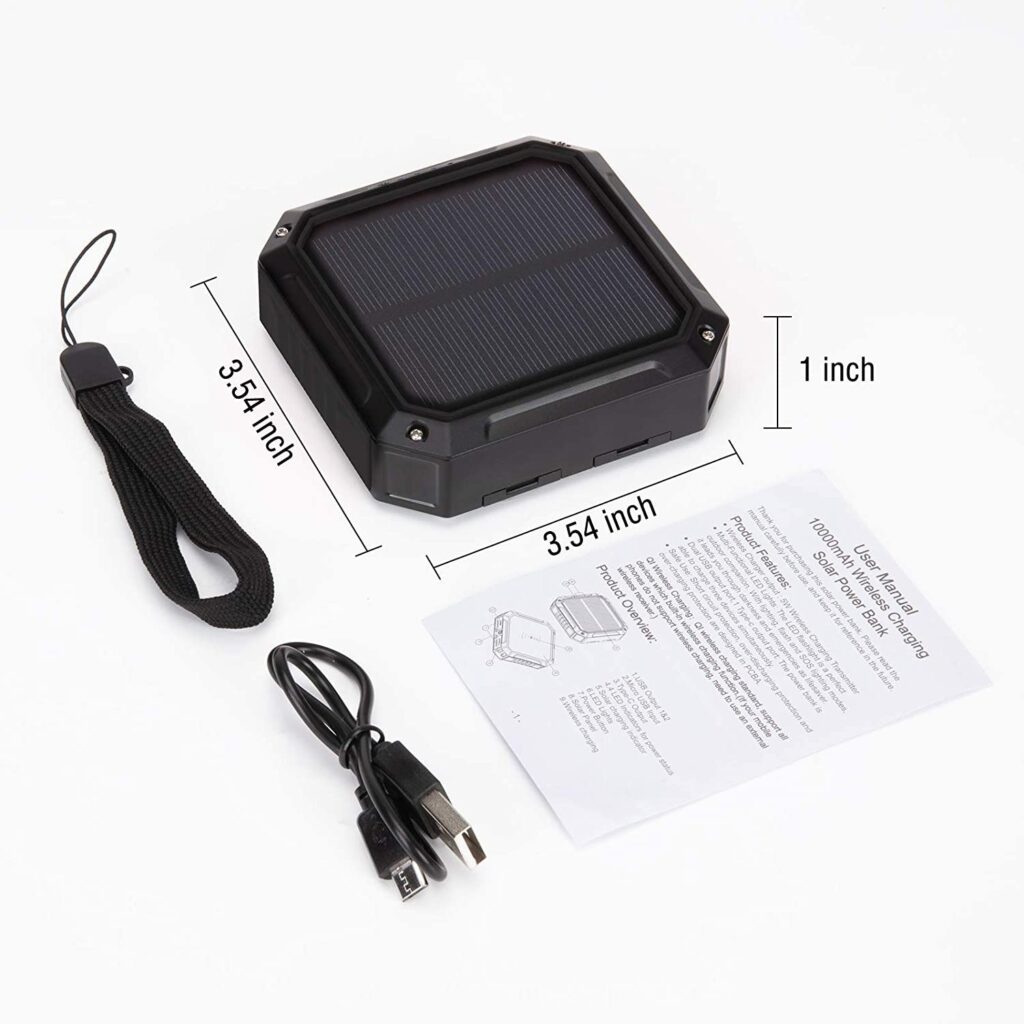
A compact bank usually gets more frequent use. The 10,000mAh unit on your product page lists dimensions of 88×88×27mm and a product weight of 248g, which is compact enough for backpack side pockets, small pouches, and giftable packaging.
6) Think about the end buyer’s search language
Different channels use different names. Product pages should naturally support terms like:
- solar power bank
- solar powered power bank
- solar phone charger
- solar cell phone charger
- solar mobile phone charger
These phrases do not always mean different products. Often they reflect how buyers search by habit, device type, or region.
Waterproof solar power bank comparison: bank type, use case, and value
Buyers often compare three categories at once:
- rugged compact solar power bank
- regular non-solar power bank
- foldable solar charger plus separate battery
Each has a place in the market.
| Product type | Main strength | Main limit | Best use case |
|---|---|---|---|
| Waterproof solar power bank | Battery storage + emergency solar support + portability | Small panel area | Hiking, camping, gift packs, travel backup |
| Regular power bank | Better value on pure charging performance | No solar support, less outdoor story | Urban travel, events, daily carry |
| Foldable solar charger set | Better solar collection in full sun | Bulkier system, more setup | Base camp, long outdoor stays, vehicle travel |
A compact waterproof solar power bank works best when the user needs a battery first and solar support second. A foldable panel setup works better when the user expects more direct solar collection over time.
When regular power banks still make sense
For some channels, regular power banks still win:
- lower entry price
- simpler product story
- lighter housing
- less concern about IP messaging
That is why it helps to offer several choices in one collection. Your category page already supports this wider selection approach with multiple solar and related charging models in different formats.
When the solar feature helps close the sale
The solar feature often helps most when the buyer wants:
- outdoor positioning
- emergency-use appeal
- giftability
- a stronger shelf story
- value-added packaging for camping channels
It is often the combination of battery storage, rugged build, LED light, and solar support that sells the item, not the solar panel alone.
Features buyers should check before placing a bulk order
For wholesale and sourcing work, the product itself is only part of the decision. The rest comes from compliance, logistics, customization, and packaging.
Certifications and transport documents
Battery products need extra attention in shipping. Selected models on your category page list certifications like CE, RoHS, FCC, MSDS, and UN38.3. Those details support importer review and transport planning.
UN38.3 matters because lithium batteries generally need transport testing before shipment. Third-party testing organizations summarize UN38.3 as the transport standard used to verify safer movement of lithium batteries by air, sea, road, or rail.
Air travel and buyer education
If users travel by plane with power banks, product content should explain the rule clearly. The FAA says spare lithium batteries and power banks must be kept in carry-on baggage, not checked baggage. That is a practical FAQ point for retail pages and user manuals.
Customization support
Outdoor power banks often benefit from:
- color selection
- logo printing
- custom packaging
- bundled cable choices
- seasonal gift box formats
- private label carton updates
Your 10,000mAh model page notes bulk order color options and custom sizing language, which is useful for channel adaptation.
Sample evaluation checklist
Before approving a model, buyers should test:
- actual battery performance
- port fit and cover sealing
- housing finish after abrasion
- LED mode function
- cable compatibility
- wireless charging stability
- print quality
- retail packaging drop condition
A sample review sheet can save time later, especially when the product targets outdoor or seasonal channels.
Buyer checklist table
| Check area | What to confirm | Why it matters |
|---|---|---|
| Battery specs | Actual capacity, cell type, output levels | Affects runtime and return rate |
| Housing | Surface finish, grip, corner design | Affects outdoor durability |
| Water resistance | IP claim or tested protection | Helps avoid vague product claims |
| Ports | Type-C, USB output, wireless charging | Affects device compatibility |
| Documents | CE, FCC, RoHS, MSDS, UN38.3 where needed | Supports import and shipment review |
| Packaging | Barcode area, inserts, carton strength | Helps retail readiness |
| Branding | Logo position, color match, artwork proof | Supports private label sales |
A closer look at our solar power bank range
If your goal is to build an outdoor charging line with more than one price tier, a category-based approach works well. Your solar power bank collection shows multiple formats, including wireless charging models, foldable versions, and larger-capacity units aimed at stronger outdoor use.
A useful entry-level hero product in that mix is the 10,000mAh wireless model. Based on the product page, it combines:
- custom molded waterproof design
- monocrystalline silicon panel
- Type-C charging
- wireless charging output
- three LED display modes
- compact 88×88×27mm body
- 248g product weight
- CE, FCC, and RoHS certifications listed on page
That profile suits several sales angles:
- outdoor travel gift item
- emergency kit add-on
- lightweight camping accessory
- entry-level private label product
- seasonal retail bundle
For buyers who want more runtime, the collection also includes 16,000mAh and 20,000mAh class products with quick charge support, LED display, wireless options, and listed certifications that may include UN38.3 on selected models.
How to position the range by customer type
You can segment the range like this:
Compact line
- lighter body
- lower entry price
- easier gifting
- casual outdoor users
Mid-capacity line
- better balance of size and runtime
- wider retail appeal
- stronger camping story
High-capacity line
- field work
- emergency preparation
- heavier outdoor use
- multi-device charging
That structure helps buyers build a clean assortment without mixing every possible feature into one product.
Common mistakes when using a solar powered power bank outdoors
Many user complaints come from mismatch, not product failure. These are the most common issues.
Leaving with an empty bank
A compact solar bank should be charged from the wall before the trip. Solar support should help extend use, not replace the starting charge. That point is clear in the source content and remains one of the best user education messages a seller can offer.
Expecting fast charging from weak sunlight
Even with a monocrystalline panel, a compact surface area collects limited energy. Angle, clouds, heat, and dust all affect performance.
Ignoring port covers
If a model relies on covered ports for water resistance, users need to keep those covers sealed during exposure to rain or splashes. Outdoor pages should mention this clearly when relevant.
Buying only by capacity headline
A 20,000mAh line can sound better than 10,000mAh. Still, if the unit is too heavy for the target user, repeat orders may drop. Buyers should balance capacity against size and carry comfort.
Skipping travel guidance
Retail pages and manuals should remind users about carry-on rules for power banks when flying. The FAA guidance is simple and practical, which makes it useful for FAQs and inserts.
Work with the factory behind the order
Sourcing becomes easier when the product team can discuss specs, finish, packaging, and delivery from the factory side. According to your brief, Shenzhen Hedeli Technology Co., Ltd. has about 10 years in mobile accessories and consumer electronics, more than 100 employees, headquarters in Shenzhen, an office and showroom in Guangzhou, and a Dongguan factory with monthly capacity of 50,000 units.
That background supports a direct-manufacturer message that many buyers want to hear:
- clearer communication on specs
- faster feedback on customization
- better alignment on packaging details
- easier review of sample revisions
- fewer gaps between quotation and production
If you want to build or expand an outdoor charging line, start with the use case first, then match the product to the channel. A compact waterproof model may be the right door opener. A larger-capacity lineup may help you grow repeat orders. When you reach out to the original manufacturer, you can ask for sample comparison, logo options, packaging ideas, and model recommendations based on your target market instead of guessing from catalog photos alone.
Frequently Asked Questions
1. What capacity should buyers order first?
For many outdoor channels, 10,000mAh is a good starting point because it balances carry weight, cost, and useful phone charging support. Add 16,000mAh or 20,000mAh options when your customers want longer runtime or multi-device use.
2. How waterproof should a solar power bank be?
Buyers should look for a clear IP rating or tested protection language, not only a general waterproof claim. The IEC IP system helps explain how dust and water resistance are classified.
3. Can we request logo and packaging customization?
Yes, outdoor charging products are often customized with logo printing, color options, and retail packaging changes. Reach out with your target market and packaging goals so the factory can recommend the best format.
4. Do power banks need transport documents?
In many cases, yes. Importers and shipping teams often review documents like MSDS and UN38.3 for lithium battery products, and selected models in your range already list these on-page. Reach out for detailed specifications before shipment planning.
5. Can buyers request samples before bulk production?
Yes. Sample review helps confirm battery performance, housing finish, print quality, and packaging fit before full production. Contact us to request samples and compare models side by side.