

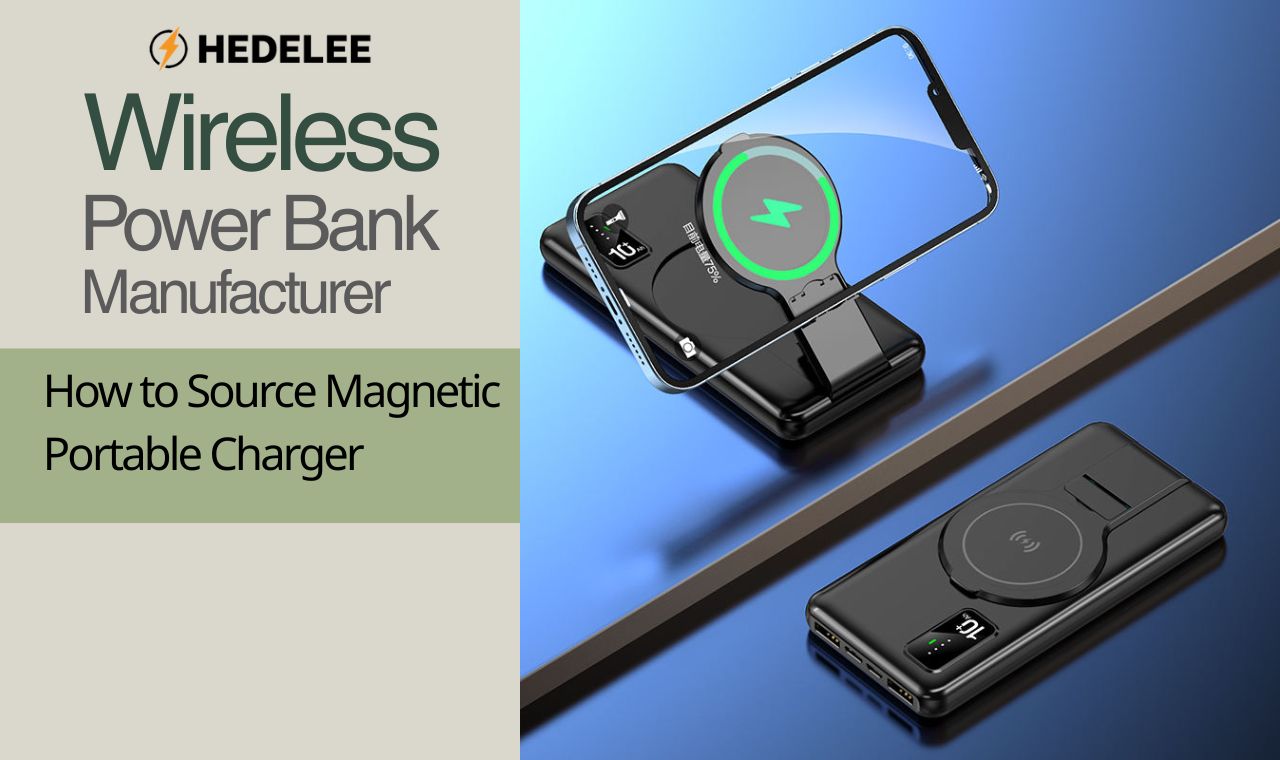
A magnetic portable charger snaps onto the back of a phone with a ring of magnets, lines up the charging coils automatically, and starts delivering power the moment it clicks into place. That single design change has turned a commodity accessory into one of the fastest-moving categories in the power bank market. For distributors, the shift means new sourcing questions: which certifications matter, which capacities sell, and which supplier can actually back up their spec sheet.
This guide is written for buyers, not end consumers. It breaks down what separates a well-built magnetic portable charger from a cheap knockoff, what compliance paperwork to demand before you place a purchase order, and how to compare capacity and output across product lines. You will also find a comparison table, sourcing red flags, and answers to the questions distributors ask most often before signing off on a bulk order.
By the end, you will know exactly what to check before your next container leaves the factory.
Quick Answer: A magnetic portable charger is a battery pack with a built-in magnetic ring that aligns automatically with MagSafe or Qi2-enabled phones for wireless charging. Distributors should prioritize CE, FCC, and RoHS certification, confirmed output wattage, and battery capacities between 5,000mAh and 20,000mAh, since this range covers the widest share of retail demand.
What Is a Magnetic Portable Charger, and Why Does It Matter for Distributors?
A magnetic portable charger is a rechargeable battery pack built around a Magnetic Power Profile: a ring of magnets, usually matching the roughly 56mm MagSafe layout, that pulls the charger into perfect alignment with a phone’s internal coil. This removes the guesswork of standard wireless charging, where a few millimeters of misalignment can slow the charge or stop it entirely.
The category grew out of two overlapping standards. Apple introduced MagSafe with the iPhone 12, pairing magnets with wireless charging for the first time on a mainstream device. The Wireless Power Consortium then built Qi2 as an open, cross-brand version of that same idea, so Android manufacturers could adopt magnetic alignment too. That matters for sourcing because a magnetic portable charger built to Qi2 specifications will work across both iOS and newer Android devices, widening the market you can sell into with one SKU.
Demand backs this up. The global power bank market is projected to grow from roughly $16.46 billion in 2026 to $27.17 billion by 2034, with the 5,000–19,999mAh capacity segment holding the largest share. Magnetic and wireless features are a major part of that growth curve, not a niche add-on.
Qi2 and MagSafe: The Standards Behind the Magnet
Qi2 and MagSafe both use a ring of magnets to snap a charger into the correct position on a phone, but they are not identical standards. MagSafe is Apple’s proprietary system, while Qi2 is an open specification managed by the Wireless Power Consortium. Most magnetic portable chargers sold to distributors today are designed to work with both.
For a buyer, the practical difference shows up in compatibility claims. A charger marketed as “MagSafe charger portable” should snap securely to any iPhone 12 or later. A Qi2-certified unit should also work with newer Android phones carrying the same magnetic ring, including recent Galaxy and Pixel models. Ask your supplier which standard the product was actually tested against, not just which logo appears on the packaging.

Magnet Strength, Alignment, and Real-World Charging Speed
Charging speed on a magnetic portable charger depends on magnet strength, coil alignment, and the power management chip inside the unit — not just the battery capacity printed on the box. A weak magnetic ring lets the phone shift slightly during use, which drops output and generates extra heat.
Most magnetic power banks on the market top out around 5–15W of wireless output, well below the 25W ceiling some flagship wired chargers reach. That is normal for this category. Buyers should treat any listing promising unusually high wireless speeds with some skepticism, since it often signals inflated marketing copy rather than a genuine hardware upgrade.
Sourcing a Magnetic Portable Charger: Certifications and Specs Distributors Should Require
Before approving any purchase order, a distributor should confirm three things in writing: safety certification, real (not marketing) output specs, and battery cell quality. Skipping this step is the single most common reason distributors end up with returns, customs holds, or platform delisting after launch.
Certifications: CE, FCC, RoHS
Any magnetic portable charger entering the EU, US, or most other regulated markets needs, at minimum, CE, FCC, and RoHS documentation. CE confirms the product meets European Union health, safety, and environmental requirements. The FCC mark confirms the device meets US electromagnetic compatibility rules, and you can verify a specific device’s FCC filing directly through the FCC’s equipment authorization database rather than trusting a printed logo alone. RoHS restricts hazardous substances like lead and mercury in electronics.
Request the actual certificates, not just a claim on a product page. A legitimate manufacturer will provide test reports tied to the specific model number you are ordering, since certification does not automatically transfer between product revisions.
Battery Capacity, Output, and Input Ports
Capacity and output determine how a magnetic portable charger performs in real use, and both numbers deserve scrutiny before you commit to a bulk order. A compact 5,000mAh unit, similar to the Magnetic Power Bank 3-in-1 Wireless Charge 5000mAh, typically outputs around 5V/2.4A and suits retail buyers who want a slim, pocket-friendly backup rather than an all-day power source.
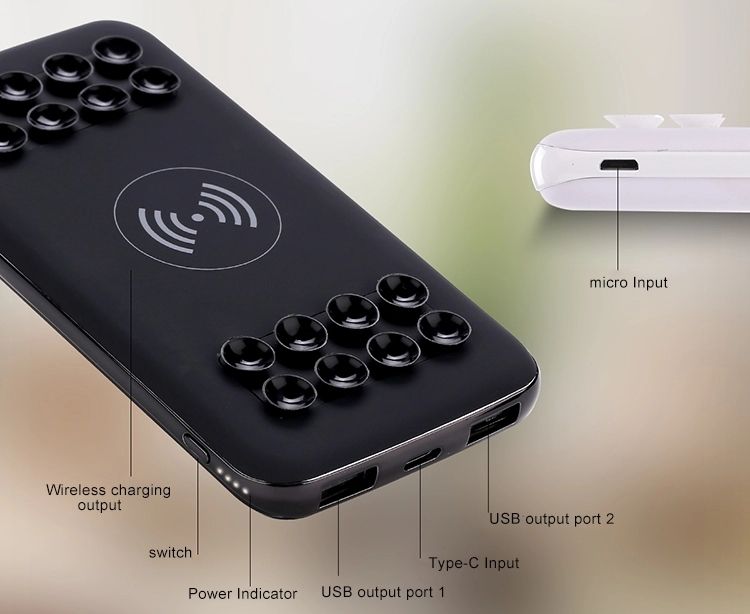
Larger capacities serve different retail segments. A 10,000mAh unit with a built-in phone holder, such as the one in the wireless portable charger with phone holder line, appeals to buyers who want hands-free charging at a desk or in a car. Input ports matter too. Look for both Micro USB and USB-C input, since USB-C has become the standard for most new phones while Micro USB support still matters in some markets with older device inventories.
Comparing Magnetic Portable Charger Types for Different Markets
Not every retail market wants the same magnetic portable charger. A distributor selling into outdoor or off-grid regions needs a different product mix than one selling primarily through urban e-commerce channels, so matching the SKU to the buyer matters as much as the spec sheet itself.
The table below compares three common configurations distributors typically stock side by side.
| Feature | 5,000mAh Compact Magnetic | 10,000mAh with Phone Holder | 20,000mAh Solar-Hybrid Wireless |
|---|---|---|---|
| Best for | Pocket carry, gift/promo items | Desk, car, hands-free use | Outdoor, travel, off-grid buyers |
| Wireless output | 5V/2.4A | 5V/2A | Wired + wireless combo |
| Input ports | Micro USB, USB-C | Micro USB, USB-C | USB-C, solar panel |
| Certification | CE, RoHS, FCC | CE, RoHS, FCC | CE, RoHS, FCC |
| OEM/private label | Available | Available | Available |
For buyers who want the full range side by side, the wireless power bank collection groups these capacities together, including the 20,000mAh solar-hybrid wireless power bank for buyers targeting the outdoor and travel segment specifically.
Private Label and OEM Programs for Magnetic Portable Chargers
Private labeling turns a generic magnetic portable charger into a branded product without the cost of designing hardware from scratch. Most factories that manufacture this category offer OEM options covering custom colors, printed logos, and packaging, often with a minimum order quantity low enough for smaller distributors to test a new SKU before committing to a full container.
Ask specifically what can and cannot be customized. Color and packaging changes are usually simple and inexpensive. Changing the internal circuit board, magnet layout, or battery cell supplier is a bigger request and typically requires a higher minimum order and a longer lead time. A supplier who is upfront about which changes cost more, and which are essentially free, is generally easier to work with long-term than one who quotes a single flat customization fee for everything.
Common Mistakes Distributors Make When Sourcing a Magnetic Portable Phone Charger
Most sourcing mistakes with a magnetic portable phone charger trace back to trusting a product listing instead of verifying it directly. Distributors who skip due diligence tend to discover problems only after the first shipment lands, when returns and complaints start coming in.
The most frequent mistake is accepting a wattage claim without a real-world test. A listing might advertise 15W wireless output when the actual delivered power, measured device-side, is closer to 5W. Second, buyers sometimes skip magnet strength testing, which matters just as much as battery capacity since a weak magnetic ring causes the phone to slip during use. Third, some distributors order without confirming certification is tied to the exact model number, only to find the paperwork covers a slightly different SKU. Finally, treating a portable charger magnetic feature as a marketing checkbox rather than a tested capability tends to backfire once customers start comparing charge times against competing brands.
Frequently Asked Questions
What is the difference between a magnetic portable charger and a regular wireless power bank?
A magnetic portable charger includes a ring of magnets that automatically aligns the charging coil with a compatible phone. A regular wireless power bank still charges without cables but requires the user to manually position the phone correctly, which often results in slower or interrupted charging.
Does a magnetic portable charger work with Android phones?
Yes, as long as the phone supports the Qi2 Magnetic Power Profile. Most recent flagship Android phones released after 2025 include this feature. Older Android devices without a built-in magnetic ring can still use the charger’s wireless pad, but without the automatic snap-alignment benefit.
How long does a magnetic phone charger last on a full battery?
A 5,000mAh magnetic portable phone charger typically delivers close to one full smartphone charge, while a 10,000mAh or 20,000mAh unit can charge a phone two to four times before needing a recharge itself.
What certifications should a distributor require before importing magnetic power banks?
At minimum, distributors should require CE, FCC, and RoHS certification tied to the specific model number being ordered. These confirm compliance with electrical safety, electromagnetic interference, and hazardous substance regulations across major import markets, including the EU and United States.
Can a magsafe charger portable model overheat during use?
Overheating risk drops significantly when magnetic alignment is precise, since proper coil positioning reduces the energy loss that converts to heat. Poorly aligned or low-quality units run hotter. Buyers should request thermal test data from suppliers before approving bulk orders.
A Reliable Magnetic Portable Charger Supplier Makes the Difference
The magnetic portable charger category rewards distributors who verify before they order. Certification paperwork, tested output numbers, and confirmed magnet strength separate a product that reorders itself through repeat sales from one that generates a wave of returns within the first quarter.
Capacity should match the market, not just the price point. A compact 5,000mAh unit suits impulse retail and gift channels, a 10,000mAh model with a phone holder suits desk and car use, and a 20,000mAh solar-hybrid model suits outdoor and travel-focused buyers. Stocking across these tiers, rather than betting on a single SKU, tends to perform better across different retail channels.
If you are ready to compare specs and request samples, browse the full wireless power bank collection or reach out directly to discuss OEM and private label terms for your market.
One thought on “Magnetic Portable Charger for Business: A Sourcing Guide for Distributors”