

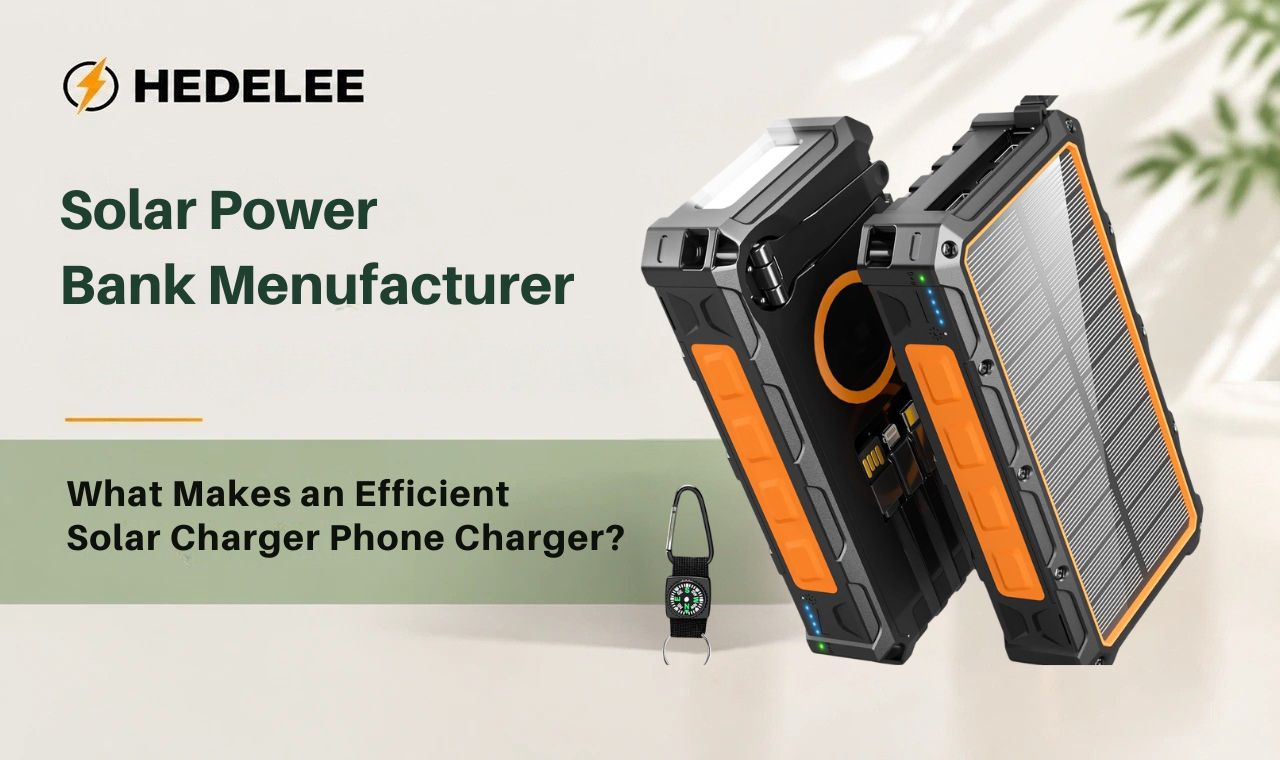
Field teams and outdoor retailers share a familiar frustration: a solar unit that looks strong on paper, then crawls when the sun dips behind clouds. Phones drain faster on maps and radios than most catalogs admit. A well-chosen solar charger phone charger closes that gap by pairing usable panel output with a battery that holds charge overnight and ports that match the devices you actually ship.
This guide walks through how efficiency works in practice, which specs matter for procurement and product teams, and how to match capacity, weather protection, and charging speed to real use. You will also see how Shenzhen Hedeli Technology Co., Ltd. (Hedelee) builds solar power bank lines for importers, distributors, and wholesale partners who need steady supply and clear specs.
Why Efficiency Matters More Than Peak Panel Claims
Peak wattage on a product card rarely equals energy delivered to a phone. Angle, temperature, partial shade, and cable loss all cut real output. Buyers who only compare “highest watts” often end up with stock that underperforms in camping kits, emergency packs, or field sales demos.
Efficiency here means three things working together:
How much energy the solar panel converts under mixed light
How much of that energy the battery stores without large conversion loss
How quickly and safely the unit can pass power to phones, tablets, and small gear
A strong solar phone charger balances those three points instead of chasing one flashy number. For wholesale and retail programs, that balance reduces returns, support tickets, and negative reviews after the first cloudy weekend.
What “efficient” looks like in daily use
Think in use cases, not lab ideal light:
When you brief a supplier, ask for real-world charge times under stated conditions—not only “full sun ideal” claims.
How a Solar Charger Phone Charger Actually Works
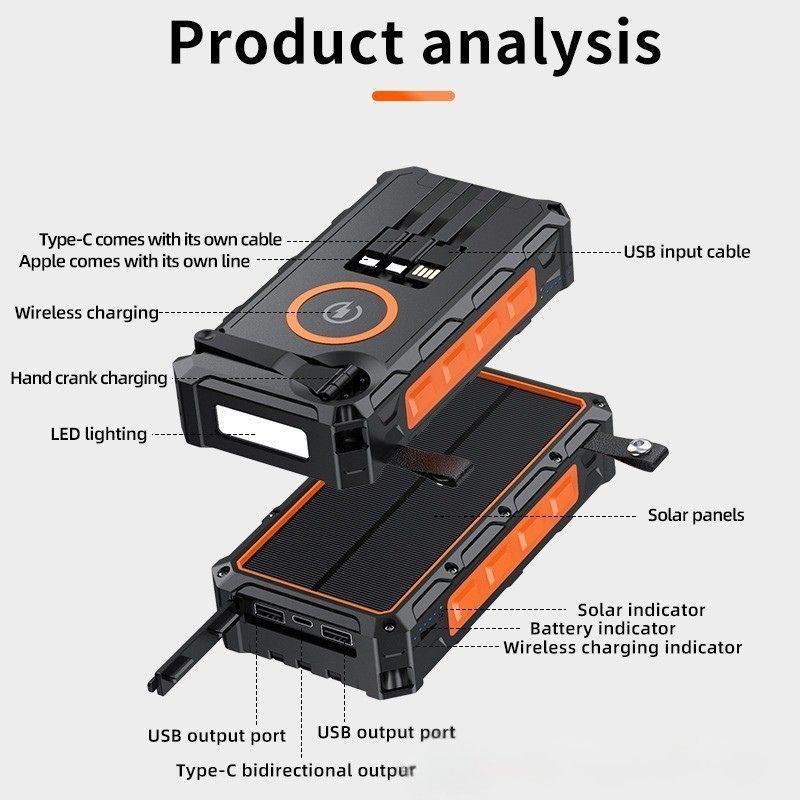
A modern unit is a small energy system: solar cells, charge controller, lithium battery pack, and output circuits (USB-A, USB-C, sometimes wireless). Understanding each layer helps you judge catalogs with less guesswork.
Solar cells and conversion
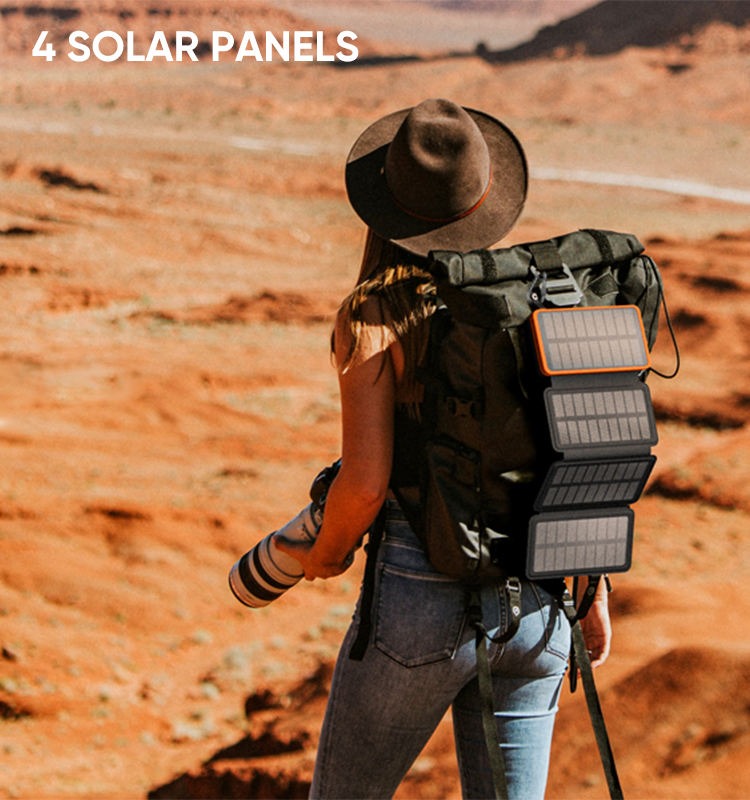
Most portable units use monocrystalline cells because they convert light more efficiently in a smaller area than older polycrystalline layouts. Foldable panels increase surface area without making the packed size huge. Rigid integrated panels keep the form simple for pocket or belt-clip styles.
Output depends on:
Cell quality and active area
Angle toward the sun
Heat (hot panels often produce less than cool ones in strong sun)
Dirt or scratches on the surface
For a solar cell phone charger aimed at outdoor retail, surface hardness and a wipe-clean finish matter as much as cell grade.
Battery storage and the “power bank for solar” role
Solar input is uneven. The internal battery smooths that flow so users can charge at night or under a tent. That is why many buyers search for a power bank for solar setup: the panel feeds the pack; the pack feeds the phone.
Capacity labels (10,000 mAh, 20,000 mAh, 30,000 mAh, and up) describe stored energy at the cell level. Usable energy at 5V USB is lower after conversion. A practical planning rule for phone loads:
~10,000 mAh ≈ 2–3 full charges for many modern phones
~20,000 mAh ≈ 4–6 charges depending on phone size and screen use
~30,000 mAh+ ≈ multi-device or multi-day kits
Always confirm whether marketing capacity is cell capacity or rated output capacity, and request test data when you place larger orders.
Charge control, ports, and wireless
A decent controller protects against overcharge, short circuit, and over-discharge. Dual inputs (USB-C and Micro-USB, or dual USB-C on newer models) let warehouses and end users refill the pack from wall adapters when sun is scarce. Outputs should match your market: USB-A for legacy cables, USB-C for newer phones, and Qi wireless for convenience-focused SKUs.
A solar powered iphone charger workflow often mixes wall top-up before a trip, solar during the day, and USB-C or wireless at camp. Products that only rely on tiny integrated panels without a serious battery frustrate users who expect phone-level recovery after a few hours outside.
Key Specs Buyers Should Compare Before Ordering
Procurement and product managers usually filter catalogs with a short scorecard. Use the list below as a shared language with suppliers and internal stakeholders.
Capacity and form factor
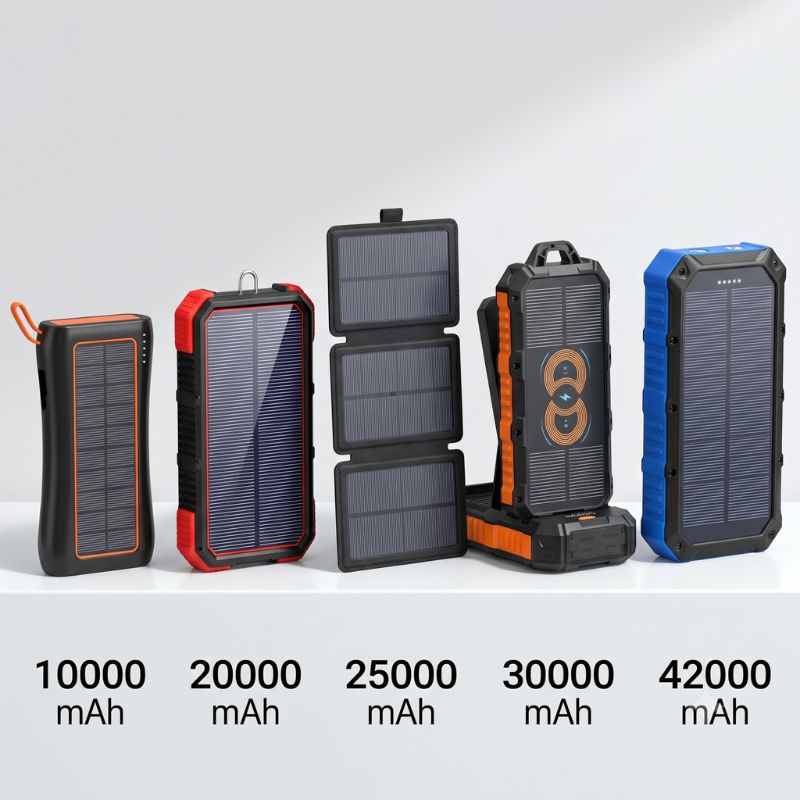
10,000 mAh: lighter SKUs, impulse retail, city outdoor use
20,000 mAh: volume sweet spot for camping and travel kits
24,000–30,000 mAh: multi-day and multi-device
36,000–42,000 mAh: heavy outdoor and backup-oriented lines
Weight and thickness rise with capacity. If your channel sells through outdoor specialty stores, confirm packed dimensions fit standard shelf trays and e-commerce mailers.
Panel layout: fixed vs foldable
Fixed panels suit compact solar mobile phone charger designs. Foldable arrays raise input under good sun and suit buyers who market “fast outdoor recovery.” Foldables need stronger hinges and fabric or hard-shell protection—ask about cycle testing and replacement parts if you plan long catalog life.
Input and output performance
Look for:
USB-C input at useful current (for example 5V/2A or higher where supported)
Dual or triple outputs for family or team kits
Wireless pad rating if Qi is part of the product story
Pass-through behavior (can the unit charge devices while taking solar or wall input?)
A solar power bank battery charger that supports both solar trickle and fast wall refill sells more easily across seasons, because winter buyers still need the battery function indoors.
Durability and weather protection
Outdoor channels expect at least splash resistance. Many Hedelee models target waterproof or water-resistant builds with ratings such as IP65 or IPX4 depending on the SKU. Also review:
Drop resistance of corners and ports
Dust seals around buttons
LED flashlight usefulness (SOS modes help emergency positioning)
Operating temperature range for your shipping regions
Safety and compliance documentation
Request cell type (often lithium-polymer or 18650-style depending on design), protection IC details, and available test reports for your target markets. Align packaging claims with documents you can stand behind in retail and customs checks. For general portable battery safety context, the U.S. CPSC guidance on lithium-ion batteries is a useful reference when you brief compliance teams. For solar performance literacy at a broader energy level, the U.S. Department of Energy solar energy basics help non-technical stakeholders understand why real output varies with conditions.
Solar Power Bank Types That Fit Different Sales Channels
Not every channel needs the same SKU mix. Matching type to channel cuts dead inventory.
Compact integrated solar power bank
These combine a small panel with a mid-size battery in one body. They suit gift sets, convenience outdoor SKUs, and entry price points. Solar input is slower; the story is backup + occasional sun top-up. Explore a range of ready models in the solar power bank category.
Example direction: a 10,000 mAh outdoor unit with wireless charging and strong LED lighting for lighter kits and promotional bundles.
High-capacity sealed packs (20,000–30,000 mAh)
This band drives most outdoor and travel volume. Dual USB, waterproof shells, and flashlights are common. Strong options for catalogs include:
Foldable outdoor solar chargers
Foldable designs raise panel area for faster recovery when users can spread the unit in open sun. They pair well with camping and overland assortments:
Built-in cable and multi-cable wireless models
Fewer lost cables means fewer support complaints. Built-in leads also speed demos at trade counters:
24,000 mAh (standard 36,000 class) with three cables HDL-531
24,000 mAh standard 36,000 with four cables and dual LED HDL529
Quick channel-fit table
How to Choose the Right Solar Powered Power Bank for Your Line
Selection works better as a short process than a long debate. Use these steps with your team.
Step 1: Define the primary user job
Write one sentence: “User needs X full phone charges over Y days without grid power.” That sentence sets capacity and panel expectations. A weekend camper differs from a week-long trek support kit.
Step 2: Map devices and cables
List target devices: Android USB-C, iPhone Lightning or USB-C depending on generation, headlamps, GPS, small tablets. If iPhone share is high in your market, feature a clear solar powered iphone charger path—USB-C to Lightning or built-in cable variants where legal and practical for your region.
Step 3: Set environmental requirements
Rain, dust, heat, and cold change the shortlist. Waterproof claims should match test methods you accept. For desert or tropical routes, ask about temperature cutoffs and casing materials that resist warping.
Step 4: Decide solar role: primary vs assist
Be honest in product copy. For most phone-focused portable units, solar is an assist and emergency path; wall charging remains the fast refill. Units sold as pure “panel only” phone chargers without storage frustrate users who need power after sunset. A solar powered power bank story is clearer: store energy, then deliver on demand.
Step 5: Align MOQ, lead time, and customization
Hedelee operates with more than 100 employees, headquarters in Shenzhen, an office and showroom in Guangzhou, and a Dongguan factory with a monthly capacity around 50,000 units. That scale supports importers and distributors who need repeatable lots. Discuss logo printing, colorways, packaging language, and cable sets early so tooling and carton design do not delay the ship date.
Step 6: Sample under mixed light
Lab sun lamps help, but also test on a real windowsill and outdoors at mid-morning and late afternoon. Record phone charge percentage gained per hour. Share the same protocol with your supplier so comparisons stay fair across SKUs.
Performance Tips That Improve End-User Results
Even a strong hardware choice disappoints if users treat panels like magic. Share simple guidance in manuals and product pages.
Placement and angle
Face the panel straight at the sun when possible. A slight tilt often beats a flat horizontal bag strap. Reposition every hour or two on long hikes. Partial shade from trees can cut input sharply—open ground wins.
Heat and surface care
If the pack feels very hot, move it to brighter but cooler airflow. Wipe dust and pollen; a film of dirt blocks light. Avoid leaving units on dark car dashboards for hours in summer heat.
Battery habits
For storage between seasons, keep a mid-level charge rather than empty or 100% for months. Encourage a full wall top-up before multi-day trips so solar only needs to extend runtime. That habit makes every solar power bank feel more capable.
Cable and port discipline
Use short, adequate-gauge cables. Damaged cables waste power and cause flaky charging. Keep port covers closed on waterproof models when not in use.
Expectation setting in marketing copy
State typical phone top-up times under good sun and note that heavy app use while charging slows net gains. Honest copy lowers return rates more than any slogan.
Manufacturing Quality Signals From a Direct Factory Partner
Shenzhen Hedeli Technology Co., Ltd. has spent about a decade in mobile accessories and consumer electronics. The company’s focus categories include solar power banks under the Hedelee line, with a stated vision to supply innovative products to global partners. For buyers, factory-side signals matter more than brochure adjectives.
What to verify on calls and visits
Cell sourcing consistency across lots
Aging and capacity spot checks before pack-out
Waterproof process (gaskets, ultrasonic welds, coating—as applicable per model)
Drop and button life tests
Packaging drop tests for export cartons
Label accuracy for capacity, input/output, and icons
A Guangzhou showroom and Shenzhen head office give room to review samples before bulk. Dongguan production capacity near 50,000 units per month supports ongoing programs rather than one-off trial cartons only.
Customization paths that stay practical
Common requests include logo print, custom colors, retail box design, barcode placement, and cable kits by region. Keep customization tied to forecast volume so unit cost and tooling stay rational. For private-label programs, lock artwork early and request a pre-production sample signed off by your product manager.
Documentation pack for smoother import
Ask for:
Spec sheet with dimensions, weight, cell configuration
Port and protocol list
Safety protection description
Packaging details and carton counts
Available certificates relevant to your markets
Clear files speed internal approvals and reduce back-and-forth after deposit.
Common Buying Mistakes (And How to Avoid Them)
Chasing capacity alone
A heavy 40,000 mAh-class unit that users leave at home loses to a 20,000 mAh pack they actually carry. Match capacity to the trip profile and the retail price band.
Ignoring refill paths
Solar-only thinking fails in rainy seasons. Dual input wall charging keeps the SKU useful year-round as a standard pack with solar assist.
Weak waterproof assumptions
“Water resistant” without a rating confuses customers. Prefer clear IP or IPX statements tied to the exact model you ship.
Overpromising solar speed
Tiny panels cannot match indoor PD chargers. Position solar as extension and emergency recovery. Your support team will thank you.
Skipping mixed-SKU assortment
Many successful lines carry one light SKU, one core 20,000 mAh seller, and one high-capacity or foldable hero. That ladder covers gift, core outdoor, and enthusiast buyers without endless variants.
Working With Hedelee on Sampling, Orders, and Supply
When you are ready to move from research to assortment planning, treat the relationship like any serious electronics program: sample, test, forecast, then scale.
Sampling
Request the shortlist that matches your channel ladder—for example one 10,000–20,000 mAh wireless model, one waterproof 20,000–25,000 mAh core seller, one foldable, and one high-capacity cable model. Run the same charge protocol on each. Involve someone from customer support early; they spot UI and label issues marketing might miss.
Forecasting and capacity
With roughly 50,000 units monthly factory capacity, planning horizons stay realistic for distributors who stage inventory ahead of camping season or holiday promotions. Share seasonal peaks early. Align carton markings and pallet plans with your warehouse rules.
Why direct manufacturing access helps
Working with the original manufacturer shortens the chain for spec changes, replacement parts questions, and packaging fixes. You speak with the team that owns the molds, fixtures, and test jigs rather than guessing through multiple middle layers. Hedelee’s Shenzhen base, Guangzhou showroom, and Dongguan production footprint give you both commercial contact points and factory depth.
If you need detailed specifications, quotations, or sample arrangements across the full solar power bank range, reach out with your target capacity band, port requirements, and destination market. Direct factory access keeps requirements clear from the first carton to repeat orders.
Frequently Asked Questions
1. What order quantities can you support?
Monthly factory capacity is about 50,000 units, with flexible planning for trial lots and repeat wholesale runs. Share your forecast and destination ports so production slots and carton plans match your calendar. Reach out for detailed specifications and quantity options on your shortlisted models.
2. How long do samples usually take?
Sample timing depends on model stock and customization (logo, color, packaging). Standard models move faster than fully custom kits. Contact us to request samples and current lead estimates for the SKUs you need to test.
3. Can packaging and logos be customized?
Yes—logo print, color variants, and retail packaging are common requests for distributors and brand programs. Lock artwork and compliance text early to protect the ship schedule. Reach out for detailed specifications and artwork guidelines.
4. Do units include waterproof ratings?
Many outdoor models carry water-resistant or waterproof designs such as IP65 or IPX4 by SKU. Always confirm the exact rating on the model you order rather than assuming the whole catalog matches. Ask for the spec sheet when you inquire.
5. What capacity suits most phone-focused kits?
20,000 mAh remains a practical core for travel and camping phone use, with 10,000 mAh for lighter kits and 30,000 mAh+ for multi-device loads. Match capacity to trip length and device count. Contact us to request samples across two or three bands before you finalize the assortment.