

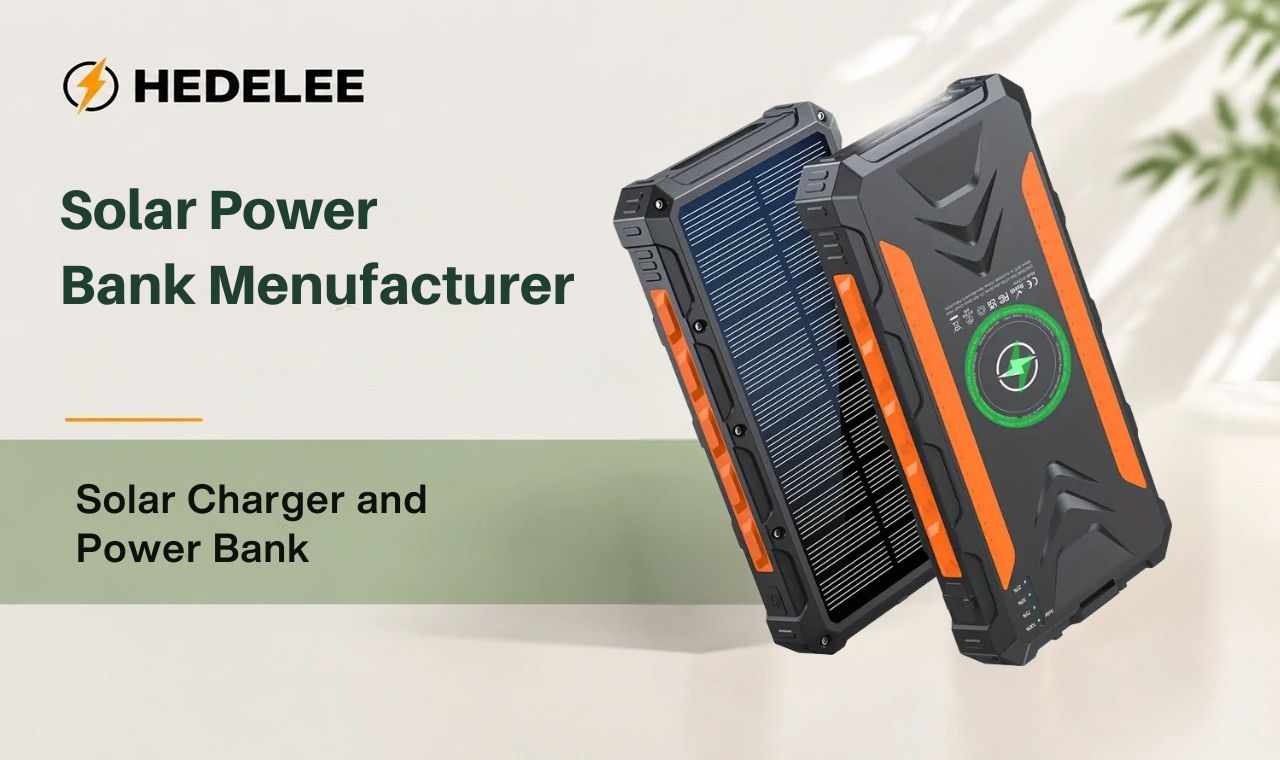
A customer stands at a trailhead with a dead phone and two days of hiking ahead. That single moment sells more portable power than any spec sheet ever will. For buyers and product teams, though, the question is less obvious and a little harder. Should you stock a solar charger and power bank as one combined device, or keep them as two separate products on your shelf?
The answer shapes your margins, your returns rate, and how happy your outdoor and travel customers feel. So let’s break it down in plain terms. Below, you’ll find how these products differ, when each one wins, and how to pick the right units for the people who buy from you.
What Is a Solar Charger and Power Bank?
People use these words loosely, so let’s set them straight first.
A power bank is a battery in a case. You charge it from a wall socket or USB port. Then it charges phones, earbuds, tablets, and small gear later. It stores energy. It does not make energy.
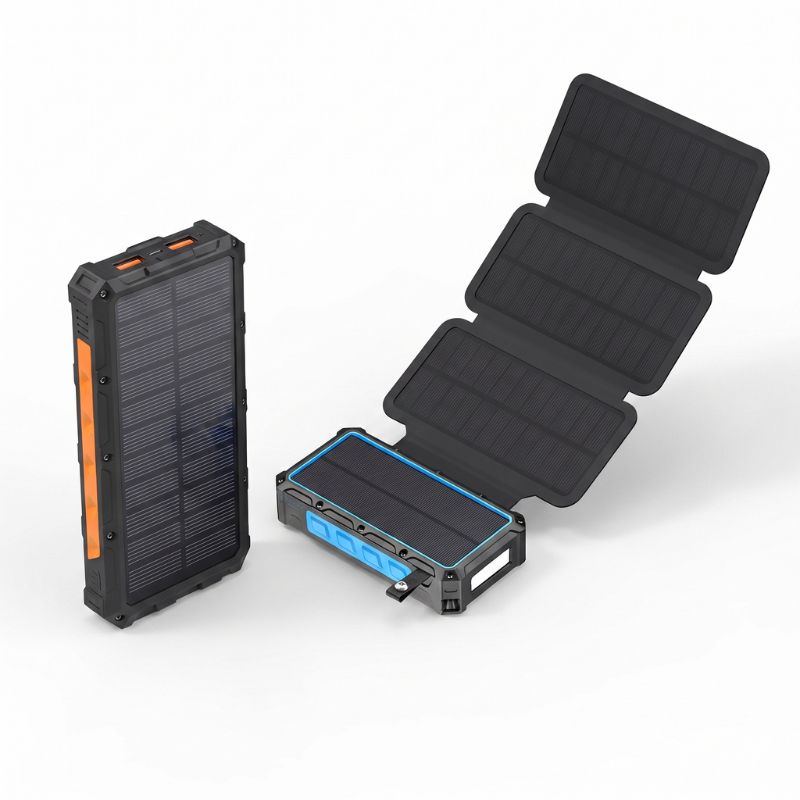
A solar charger uses panels to collect sunlight. Some are folding panels with no battery inside. Others pack a battery and panels together in one shell.
A solar charger and power bank combines both jobs in one unit. It holds a battery, like a normal power bank. It also carries a small solar panel on the outside. When the sun is out, the panel adds a slow trickle of charge. When there is no sun, buyers still get a full battery to rely on.
So the combo device is a safety net, not a main charger. That framing helps set customer expectations and cuts down on returns.
| Term | Battery inside? | Panels? | Main job |
|---|---|---|---|
| Power bank | Yes | No | Store and release energy |
| Solar charger (panel only) | No | Yes | Collect sunlight for other gear |
| Solar powered power bank | Yes | Yes (small) | Store energy, top up in sun |
Solar Charger vs. Power Bank: How They Really Differ
Buyers often ask which one is better. That is the wrong question. They do different jobs. So the better question is: which one fits the customer’s trip?
Here is a simple side-by-side.
| Feature | Power bank | Solar charger and power bank |
|---|---|---|
| Charge speed from source | Fast (wall or USB) | Fast from wall, slow from sun |
| Works with no power grid | No | Yes, in daylight |
| Best trip length | 1 to 2 days | 3 days or more off-grid |
| Weight | Lighter | A bit heavier |
| Weather risk | Low | Needs sun and open sky |
| Typical price | Lower | Higher |
Notice the pattern. A plain power bank wins for short trips and city travel. The solar unit wins when a customer stays out longer, far from any socket.
Still, one myth needs a firm answer. A small panel will not fully charge a large battery in a few hours. Sunlight is real energy, but it is thin. A 5-watt panel adds power slowly. So the solar side is a backup, not a fast refill. Say this clearly in your listings, and your reviews stay kind.
Weight and price shape the choice as well. A solar unit carries panels and often a bigger battery, so it weighs a little more. It also costs more to make. For a city traveler, that extra weight and cost bring no gain. For a hiker three days from a socket, both are worth it. So guide each shopper to the unit that fits the trip, not the one with the biggest number. That advice builds loyalty and cuts the odds of a return.
When Does a Solar Phone Charger Make Sense?
A solar phone charger shines in a few clear settings. Point your product copy at these, and buyers self-select the right unit.
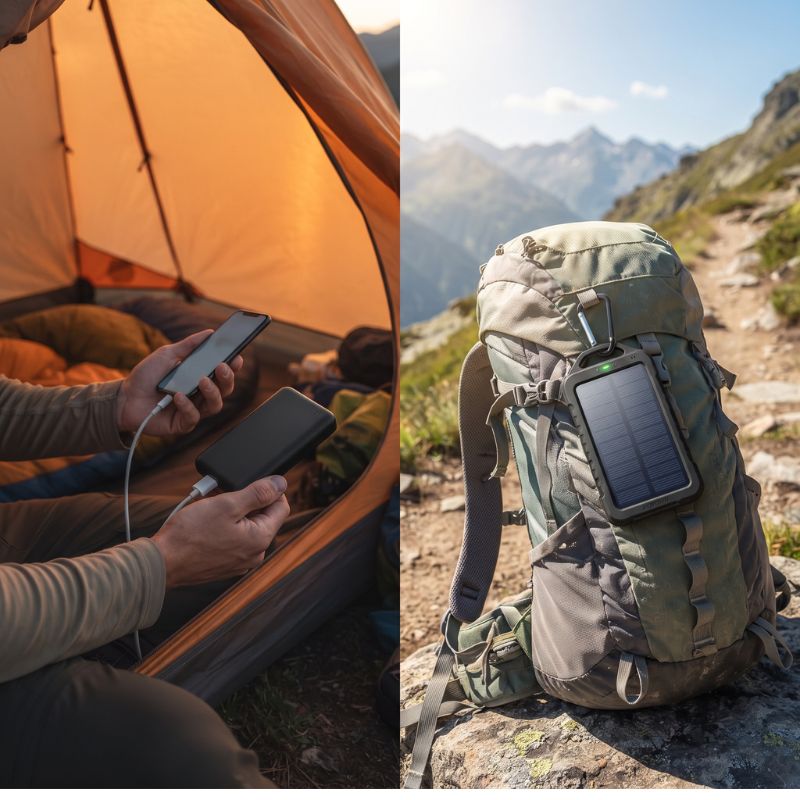
- Multi-day hikes and thru-hiking. No sockets for days. The panel keeps a phone or GPS alive.
- Camping and overlanding. People sit in one spot with open sky. Panels can face the sun all afternoon.
- Disaster kits and outages. When the grid drops, a solar cell phone charger still works if the sun is up.
- Remote work and fieldwork. Guides, farmers, and survey teams often stay far from power.
- Boating and fishing. Salt air and splashes call for a waterproof shell.
A solar mobile phone charger also earns a spot in travel gift sets. Buyers like the story of “free power from the sun.” That story sells, even when real solar output is modest. Just keep the claims honest.
Think about who buys from your store, too. Outdoor retailers move solar units in spring and summer, ahead of hiking season. Travel shops sell them year-round as carry-on gear. Emergency and hardware stores stock them for storm season. So the same product serves several channels, each with its own peak. Plan your orders around these cycles, and you avoid dead stock.
One more tip for product teams. Pair the solar unit with a short use guide. Show customers how to angle the panel and keep it in direct sun. Small guidance like this lifts satisfaction and lowers support tickets. A one-page insert costs little and answers the questions that lead to returns.
How to Choose a Solar Charger and Power Bank for Your Catalog
Now to the buying side. When you pick a solar charger and power bank for your range, weigh a few things that customers notice fast. Below is a quick scoring guide your team can reuse.
| What to check | Why it matters | Good target |
|---|---|---|
| Battery capacity | Sets how many refills a customer gets | 10000 to 42000mAh |
| Output ports | More devices at once | Dual USB plus USB-C |
| Wireless charging | Adds value and appeal | Qi 10W or higher |
| Waterproof rating | Outdoor durability | IP65 or IPX4 and up |
| Panel size | Real solar output | Larger folding panels help |
| Built-in cables | Fewer lost cords | 3 to 4 built-in cables |
| Flashlight | Handy for camping | Single or dual LED |
Let’s turn these into plain advice.
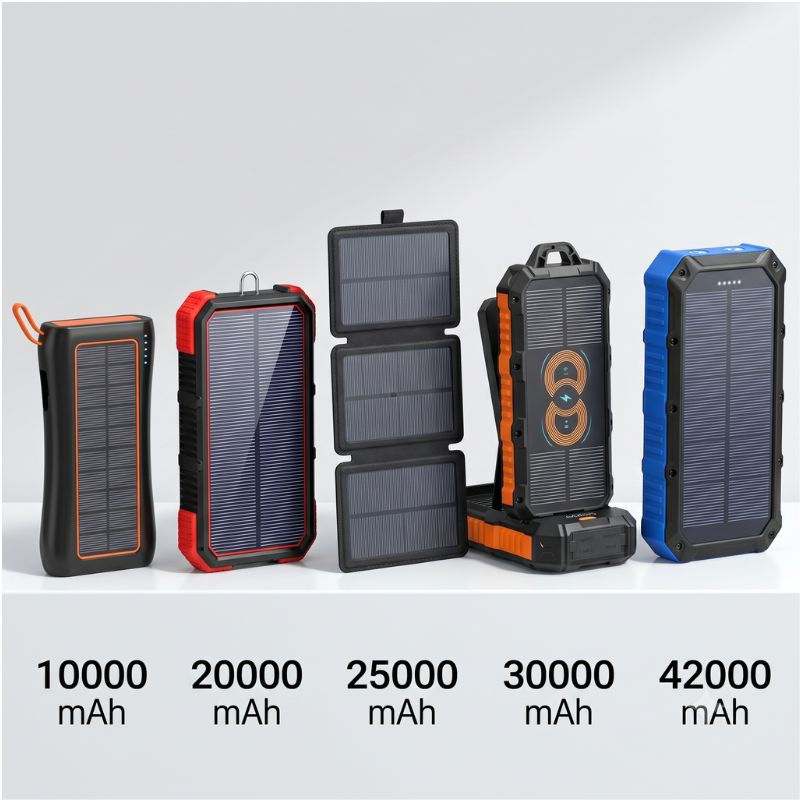
Match capacity to the customer. A 10000mAh unit suits day trips and light users. A 20000mAh model covers weekend hikers well. For longer trips, a 24000mAh or 42000mAh pack gives real breathing room. Our 42000mAh solar power bank with four built-in cables (HDL-628) is built for that heavy-duty group.
Watch the ports. Buyers charge phones, watches, and earbuds together. Dual USB plus USB-C covers most needs. A model like the 24000mAh unit with three built-in cables (HDL-531) keeps everyone charged without a tangle of cords.
Add wireless where you can. A Qi pad on top lets users drop a phone and go. The 30000mAh Qi wireless model with IP65 rating (HDL528) pairs wireless charging with a weather-ready shell.
Do not skip waterproofing. Outdoor gear gets wet. An IP65 or IPX4 shell protects the battery from rain and splashes. This one spec cuts warranty claims a lot.
Browse the full solar power bank range when you plan your assortment. A tiered lineup, from small to large, helps every kind of buyer find a fit.
Wireless Charging, Cables, and Extra Features
Capacity gets the headlines. But small features often close the sale. So look past the battery size and check what else the unit offers.
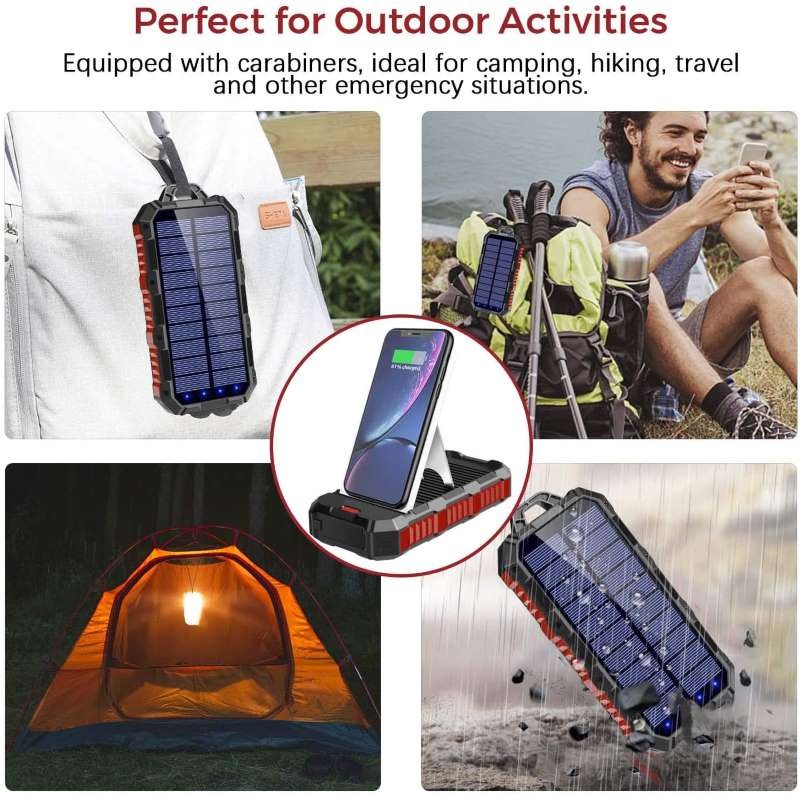
Wireless charging. A Qi pad on top lets a user set a phone down and charge with no cord. Campers love this after a long day. Look for 10W or higher for a useful speed. Many of our models include a Qi pad, such as the 30000mAh Qi wireless power bank (HDL528). Keep in mind that wireless charging draws a bit more power than a cable. So it works best when the battery is full.
Built-in cables. Lost cords are a top complaint on the trail. A unit with cables attached solves this. A model with three or four built-in cables covers phones and small gear at once. The 24000mAh unit with four built-in cables (HDL529) is a strong pick for buyers who value this.
LED flashlight. A bright LED turns the power bank into a camp light. Some units add an SOS flash mode for safety. This is a low-cost feature that adds real appeal for outdoor customers.
Carabiner and compass. Many outdoor models clip to a backpack with a hook. Some add a small compass. These touches help the unit read as trail gear, not just a battery.
Rugged shell and grip. A textured, drop-friendly case protects the battery from knocks. Pair this with a waterproof rating, and the product handles rough trips well.
Here is a quick way to score extras during sourcing:
| Feature | Buyer appeal | Cost to add |
|---|---|---|
| Qi wireless pad | High | Medium |
| Built-in cables | High | Low |
| LED flashlight | Medium | Low |
| Carabiner hook | Medium | Low |
| Rugged grip shell | Medium | Low |
A unit with two or three of these extras often sells better than a bare battery of the same size. So weigh features and capacity together when you plan your range.
Capacity, Panels, and Real Charging Speed
This section clears up the biggest source of bad reviews. So share it with your listing team.
A solar power bank battery charger has two speeds. There is wall speed, and there is sun speed. They are far apart.
Wall speed is fast. Plug into a USB-C wall adapter, and a 20000mAh unit can refill in a few hours. This is how most users should charge the device before a trip.
Sun speed is slow. A small onboard panel makes 3 to 7 watts in strong sun. Under that trickle, a large battery may need many days of full sun to fill from empty. So the panel is there to slow the drain, not to be the main source.
Here is how to guide buyers in plain words:
- Charge the battery full from a wall before leaving home.
- Use the sun to top up during the trip, not to fully refill.
- Keep the panel in direct, open sunlight for a faster charge.
- Fold-out panels collect more than a single small panel.
A solar powered power bank with a bigger folding panel charges faster from the sun than a tiny fixed panel. If your customers stay off-grid for long stretches, steer them to folding-panel models like the foldable 20000mAh solar charger with LED lights.
A quick example helps buyers picture this. Say a phone holds a 4000mAh battery. A 20000mAh pack, after transfer loss, gives roughly 12000 to 14000mAh of real output. So it refills that phone about three full times. A 10000mAh unit gives one to two refills. A 42000mAh pack can top up a phone six or seven times. Share numbers like these in your listings. They set clear expectations and help shoppers pick the right size for their trip.
One honest note on capacity math. A 20000mAh pack does not give 20000mAh to your phone. Some energy is lost in the transfer. Real output often lands near 60 to 70 percent of the label. Say this in an FAQ, and your customers trust your listing more.
Certifications and Safety Buyers Should Check
Lithium batteries carry real safety rules. So compliance protects both your brand and your customers.
Ask suppliers for the right test reports before you place an order. A few to request:
- Battery cell safety. Cells should meet the IEC 62133 standard for portable lithium batteries. You can read the scope on the IEC standards site.
- CE and FCC marks. These cover sale in Europe and the United States.
- RoHS. This limits harmful materials in the product.
- UN38.3. This covers safe transport of lithium batteries by air and sea.
Air travel is a common customer question. Most airlines allow power banks in carry-on bags only, within a size limit. The FAA PackSafe guidance on lithium batteries explains the rules clearly. Linking to this in your store helps travel buyers plan.
A quick buyer checklist keeps your sourcing clean:
- Full test reports on file before shipment
- Correct labels and markings on the unit
- Safe packaging for lithium transport
- Clear capacity stated in mAh and Wh
As a maker with about ten years in mobile accessories, Shenzhen Hedeli Technology holds these documents ready for review. So your compliance checks move faster.
How Long Does a Solar Power Bank Last?
Buyers ask about lifespan often. So a clear answer builds trust and cuts returns.
A lithium battery is rated by charge cycles. One cycle means one full charge and drain. Most quality cells hold up well for 500 cycles or more. After that, the battery still works. It just holds a bit less than when new. For a user who charges once or twice a week, that is years of service.
A few habits stretch the life of a solar powered power bank:
- Avoid full drains. Recharge before the battery hits zero when you can.
- Keep it cool. Heat is the main enemy of lithium cells. So do not leave the unit on a hot car dashboard.
- Store at half charge. For long storage, keep the battery near 50 percent, not full or empty.
- Charge it every few months. A battery left flat for a long time can lose health.
Sun exposure needs a small note too. The battery should sit in shade while only the panel faces the sun. Direct heat on the battery for hours can shorten its life. So the ideal setup is a panel in full sun and the battery kept cool.
For your listings, share these care tips in a short block. Customers who follow them get longer life and leave better reviews. That protects your ratings and your brand.
Here is a simple lifespan snapshot to reuse:
| Factor | Effect on lifespan | Buyer tip |
|---|---|---|
| Charge cycles | Wears slowly over 500+ cycles | Normal, expected |
| Heat | Shortens life fast | Keep cool, avoid dashboards |
| Deep drains | Adds stress over time | Recharge early |
| Long flat storage | Can harm the cell | Store near half charge |
Stocking the Right Mix for Outdoor and Travel Customers
A balanced assortment covers every kind of buyer without overloading your shelf. So think in tiers.
Entry tier: light and travel-ready. A 10000mAh unit with wireless charging suits day hikers and city travelers. The 10000mAh outdoor wireless solar power bank fits this slot well.
Core tier: the weekend workhorse. A 20000mAh waterproof model handles most trips. Options like the 20000mAh wireless waterproof unit with flashlight (HDL-218) and the waterproof 20000mAh fast-charging model (HDL519X) cover this large group.
High tier: the long-haul choice. For thru-hikers and field teams, offer 24000mAh and up. The 24000mAh model with four built-in cables (HDL529) and the 42000mAh unit serve buyers who stay out longest.
You may also see the search term “bank power solar” from customers who phrase it in reverse. It points to the same product family. So tag your listings with these variants to catch every shopper.
Here is a simple tier map for your buyers:
| Tier | Capacity | Best for | Example use |
|---|---|---|---|
| Entry | 10000mAh | Day trips, gifts | Commutes, short hikes |
| Core | 20000mAh | Weekends | 2 to 3 day camping |
| High | 24000 to 42000mAh | Long trips | Thru-hikes, fieldwork |
Stock across all three, and you catch the full market. A shopper looking for a light travel unit and one hunting for a heavy-duty pack both find a home in your store.
We supply these tiers factory-direct from our Dongguan plant, which runs at 50,000 units a month. So distributors, importers, and wholesalers get steady stock without long gaps. When you work with us, you talk to the people who build the product, not a middle layer. That means faster answers on specs, custom logos, and order details. Reach out with your target capacity and volume, and our team will send matched samples and a clear quote so you can plan your season with confidence.
Frequently Asked Questions
1. What is a solar charger and power bank?
It is one device that stores battery energy and adds a slow solar top-up. You charge it fully from a wall, then the sun helps keep it going off-grid.
2. Can a solar phone charger fully power a phone?
Yes, from its stored battery. The solar panel alone charges slowly, so treat sun power as a backup, not the main source.
3. What order quantities do you accept?
We work with distributors, importers, and wholesalers at flexible volumes. Reach out with your target quantity, and we will confirm terms and lead times.
4. Do you offer custom logos and packaging?
Yes. We support custom branding, colors, and retail packaging. Contact us to request samples and share your design files for a quote.
5. Which certifications do your solar power banks carry?
Our units are made to meet CE, FCC, RoHS, and UN38.3 requirements. Reach out for detailed specifications and full test reports.