

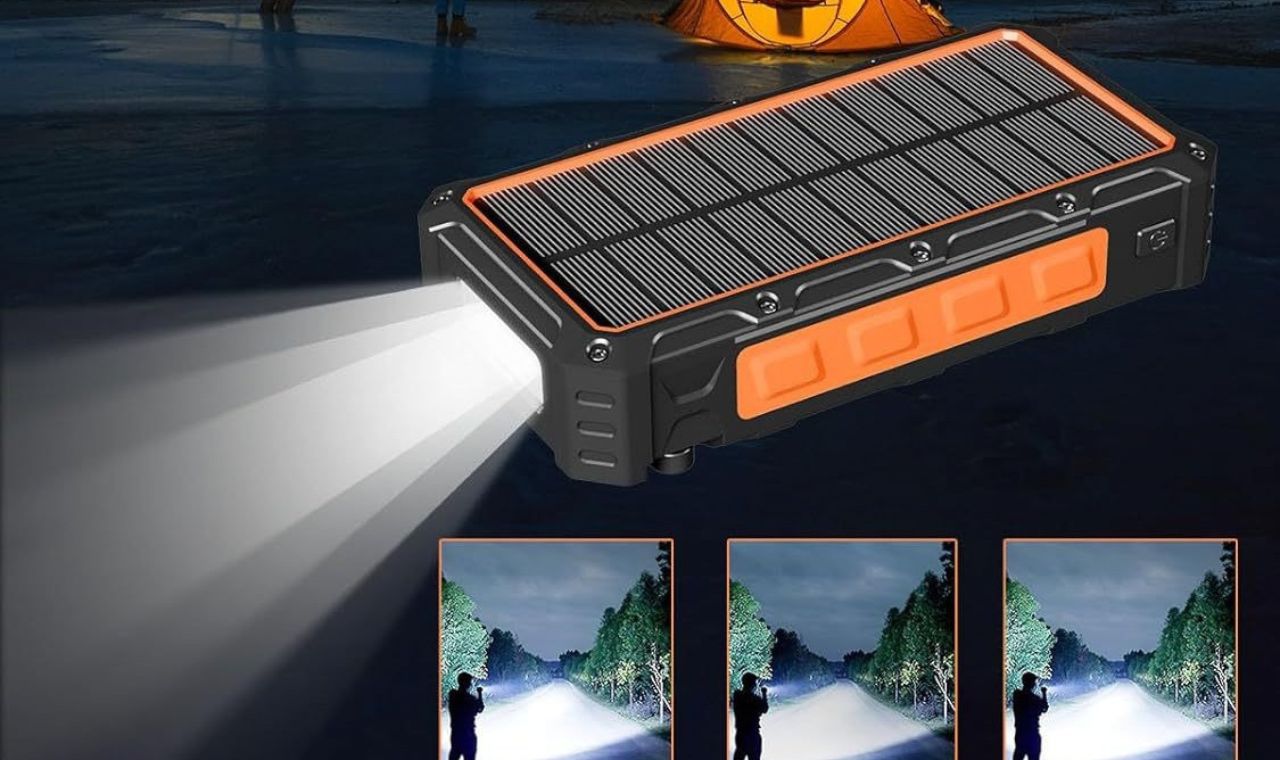
A power bank for solar use can look attractive on a product page and still disappoint in the field if the battery size, panel input, charging speed, and protection level do not match the real job. Buyers serving camping, hiking, emergency gear, travel retail, and outdoor promotions need more than a nice “solar” label. They need clear specs, honest charging expectations, and a supplier that can support repeat orders, customization, and compliance paperwork. Solar power banks are popular with campers because they offer portable backup power, solar top-up capability, and outdoor-focused features like flashlights, multiple outputs, and weather-resistant housings.
For sourcing teams, the appeal is easy to understand. Outdoor users want to keep phones, lights, GPS devices, earbuds, and small accessories running when outlets are not nearby. A well-selected solar model can add value to a product range, especially when it combines wired fast charging with solar support for backup use. The main buying question is not “Does it have a panel?” It is “Will it perform well enough for the use case we are selling into?”
Shenzhen Hedeli Technology Co., Ltd. has worked in mobile accessories and consumer electronics for about 10 years. With more than 100 employees, a headquarters in Shenzhen, an office and showroom in Guangzhou, and a Dongguan factory with monthly capacity of 50,000 units, we support importers, distributors, and wholesale customers with OEM-ready product supply across categories including power banks, chargers, cables, and outdoor charging products.
Why buyers are paying closer attention to solar charging
Campers and outdoor travelers often deal with the same problem: their phones and small electronics run low when power outlets are far away. That is why solar power banks keep showing up in camping lists and travel gear recommendations. The source content you shared highlights the main user reasons clearly: portability, emergency reliability, stored backup energy, compatibility with multiple devices, and outdoor durability. It also notes that direct sunlight gives better charging performance than indirect light, which is an important point for buyers writing product descriptions or training sales teams.
From a commercial view, this demand reaches beyond leisure camping. Outdoor event kits, preparedness packs, giveaway programs, travel accessories, and seasonal retail bundles all benefit from products that offer both daily utility and backup value. A solar powered power bank is often easier to sell when it is positioned as a backup charger with solar assist, not as a full replacement for wall charging. That small change in wording helps buyers set accurate expectations and reduce return risk. The U.S. Department of Energy explains that solar energy output changes with time of day, weather, shadows, dust, and other conditions, so storage and charging behavior always depend on real sunlight exposure.
Another reason buyers keep returning to this category is product variety. HEDELEE’s solar power bank range spans 10,000mAh to 42,000mAh, with wireless charging options, waterproof ratings from IP65 to IP67, and testing documentation for procurement teams that need verification. That gives room to build a line for entry, mid-range, and higher-capacity outdoor use rather than relying on a single model.
Search terms buyers still use
Teams do not always search with the same wording. In sourcing discussions, you may see phrases like solar power bank, solar powered power bank, bank power solar, solar power bank battery charger, solar phone charger, solar cell phone charger, and solar mobile phone charger. These phrases often point to the same product family, but the right decision still comes down to battery capacity, input and output specs, panel size, protection level, and documentation.
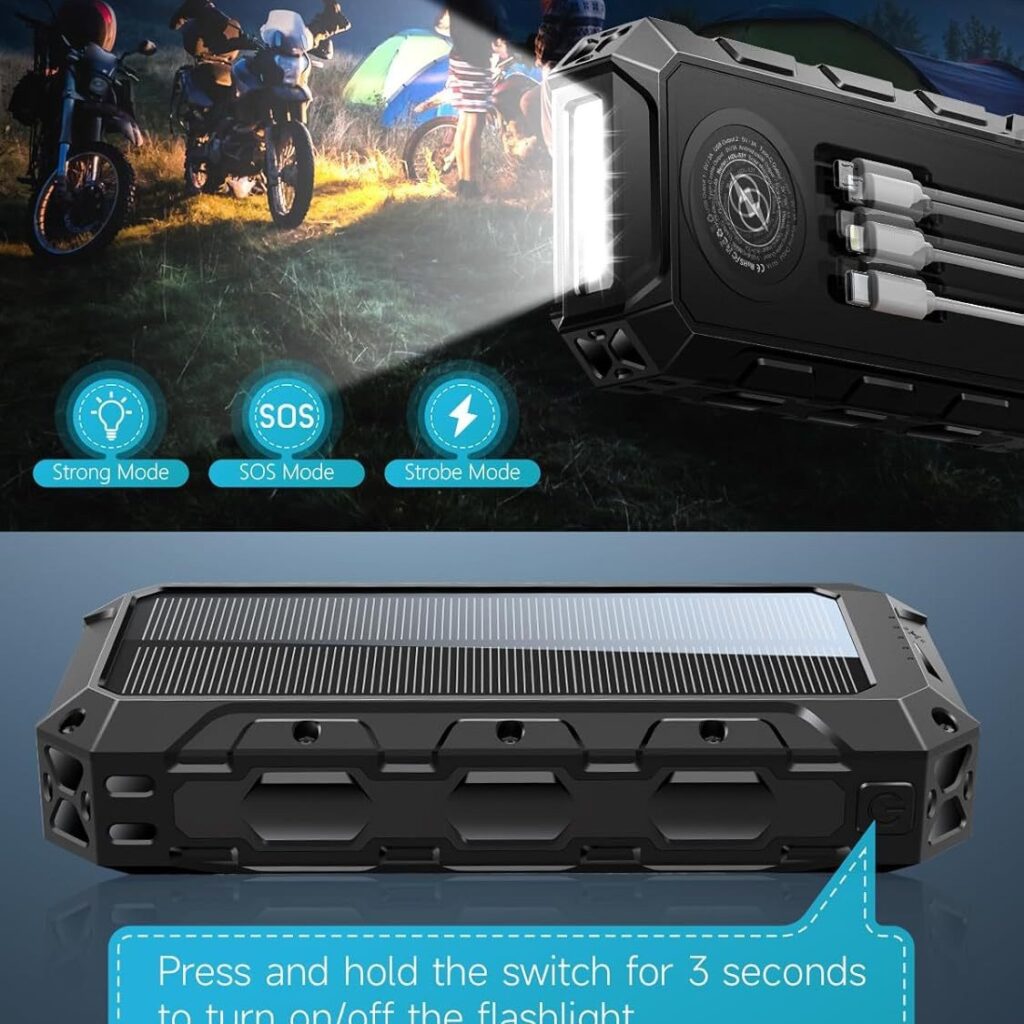
What a power bank for solar charging actually does
A power bank for solar charging combines two systems in one device: a rechargeable battery pack and a small photovoltaic panel. The photovoltaic part matters because solar cells convert sunlight into electricity. The U.S. Department of Energy explains that a PV cell is made from semiconductor material and converts light into usable electrical energy. That energy can then be stored in a battery for later use.
In plain language, the panel collects energy slowly, and the internal battery holds it until the user needs to charge a phone or another device. That means a solar unit should usually be treated as a backup energy source with solar top-up support, especially for compact models. The source page from Ambrane describes the same operating idea: sunlight is captured by photovoltaic cells, converted into electrical energy, and stored in the unit’s internal battery. It also notes that solar charging works best in direct sunlight and slows down when light is weak.
This point is where many product pages get too vague. Buyers should separate solar recharging capability from main charging speed. In most real outdoor scenarios, users still recharge the unit itself by USB before leaving home, then use the solar panel as a backup top-up source during the trip. That is normal. It is not a weakness of the category; it is simply how compact solar hardware works when size and weight must stay practical. Models that add fast wired input, USB-C, wireless charging, or foldable panels often create a better user experience than a tiny solar panel alone.
For that reason, careful product messaging helps. If your listing promises “off-grid backup support with solar recharge assistance,” you are closer to the real user experience than if you imply all-day fast charging from sunlight alone.
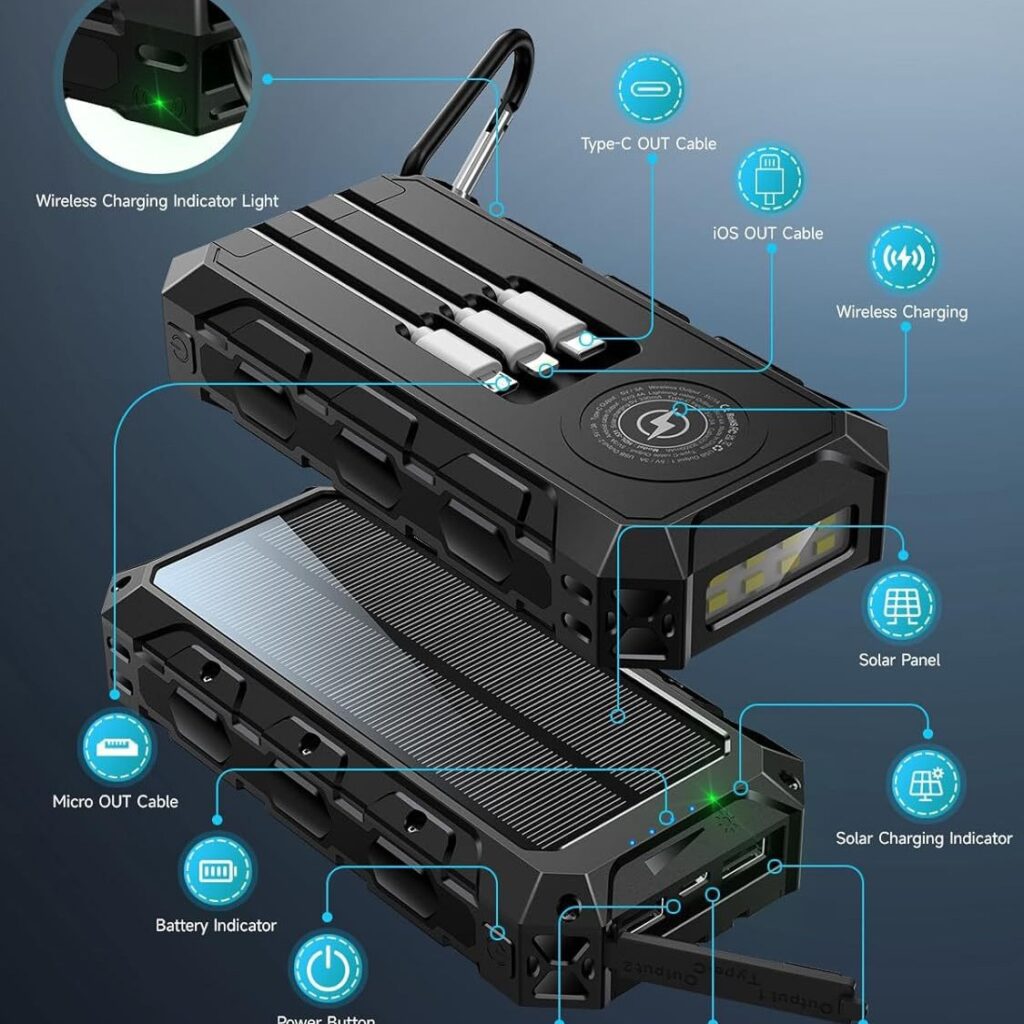
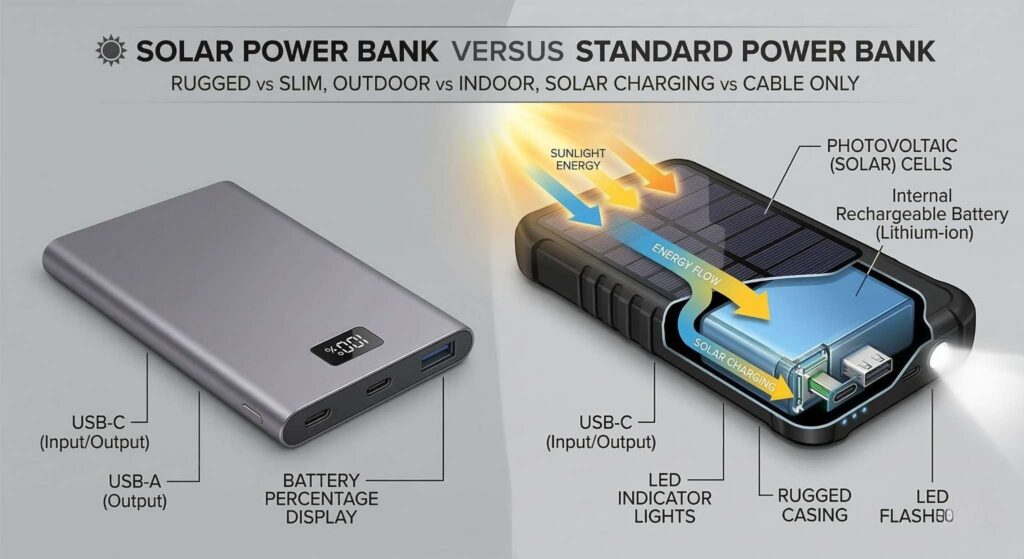
What separates a solar model from a standard power bank
A standard power bank is built mainly for wall charging and later device charging. A solar model adds another input source, usually along with outdoor-friendly features. Those added features often include LED flashlights, waterproof or splash-resistant housings, textured cases, carabiner-friendly designs, multiple outputs, wireless charging, and sometimes built-in cables. The Ambrane source points to the same value set: portability, stored energy, compatibility, durability, and user-facing extras like charge indicators.
That does not mean every outdoor user needs the same build.
A basic city-use power bank usually wins on:
lower weight
slimmer shape
faster indoor recharge focus
lower cost
A solar power bank battery charger usually wins on:
outdoor backup use
survival and emergency appeal
flashlight and signal-light features
weather resistance
broader use in camping, trekking, travel, and prepared-home kits
Here is a quick comparison:
| Feature | Standard Power Bank | Solar Power Bank |
|---|---|---|
| Main recharge source | Wall charger / USB | Wall charger / USB + solar assist |
| Best use | Daily commuting, office, travel | Camping, hiking, emergency kits, outdoor retail |
| Housing | Slim and simple | Often thicker, tougher, outdoor styled |
| Extra features | Fast charging, compact size | Flashlight, waterproofing, solar panel, wireless options |
| User expectation | Daily convenience | Backup charging plus off-grid support |
The strongest products in this segment do not try to do only one thing. They combine everyday charging value with outdoor readiness. That is why 20,000mAh and 24,000mAh options often sell well: they are big enough for repeated phone charging, yet still portable enough for regular carry. HEDELEE’s own buying content calls 20,000mAh a “core SKU” balance for multi-device day use and emergency kits.
How to choose a power bank for solar field use
When you compare models for bulk buying, five areas deserve close attention: capacity, charging input and output, solar panel design, protection level, and documentation. Those five points shape user satisfaction more than packaging language ever will.
1. Battery capacity should match the user scenario
Not every outdoor buyer needs the largest unit. HEDELEE’s range runs from 10,000mAh to 42,000mAh, which covers light-use travel packs through multi-day outdoor kits. The 10,000mAh class works when size and weight matter most. The 20,000mAh class is often the middle ground. The 24,000mAh to 30,000mAh range fits longer outdoor use, and the 42,000mAh class suits users who want a heavier backup option with more built-in utility.
2. Wired charging specs still matter more than the solar panel
This is where many buying teams improve their product selection. Solar appeal attracts attention, but the wired charging spec usually determines daily satisfaction. For example, the HDL-531 24,000mAh model lists Type-C input and output up to 5V/3A, wireless charging at 5W, monocrystalline silicon solar panel support, and CE, RoHS, FCC, UN38.3, and MSDS documentation. The HDL529 model shows a similar 5V/3A profile with built-in cables and dual LED flashlight support.
3. Look closely at solar panel design
A solar panel on a power bank is useful, but panel size and input are not all the same. The 25,000mAh waterproof model on your product list states four high-performance solar panels and says solar recharging can reach up to 1A input in direct sunlight. That is a very different proposition from a smaller single-panel housing. For buyers selling the solar story seriously, foldable or multi-panel models can be easier to position because the hardware better matches the promise.
4. Outdoor protection should be verified, not assumed
The product range includes options with IP65 to IP67 ratings, while individual models also mention IPX4 or general waterproof positioning depending on the design. That matters because outdoor users will ask about rain, splashes, dust, and rough handling. If a listing claims outdoor readiness, your team should request the matching test details and make sure the final carton, labeling, and instruction sheet describe the protection level clearly.
5. Ask for compliance and transport paperwork early
For lithium battery products, transport compliance is not a small detail. IATA states that lithium cell and battery types must pass the applicable UN 38.3 tests to be permitted in transport by air. HEDELEE product pages and category content mention certification sets including CE, RoHS, FCC, UN38.3, MSDS, and related documentation, which is exactly the kind of paper trail many importers need before shipment planning begins.
Buyer checklist table
| Buying factor | What to check | Why it affects sell-through |
|---|---|---|
| Capacity | 10,000 / 20,000 / 24,000 / 30,000 / 42,000mAh class | Determines how many charges users expect |
| Input / output | USB-C, dual USB, 5V/3A, wireless charging | Affects recharge speed and device compatibility |
| Solar hardware | Single panel, foldable panel, 4-panel design, monocrystalline silicon | Shapes real solar top-up value |
| Protection | IP rating, splash resistance, dust claims, shock resistance | Reduces mismatch between listing and field use |
| Accessories | Built-in cables, flashlight, SOS light, retail packaging | Adds use-case value and visual appeal |
| Documents | CE, RoHS, FCC, UN38.3, MSDS | Supports import, transport, and buyer trust |
For technical background that helps non-engineering buyers explain the product clearly, you can also reference the U.S. Department of Energy’s solar photovoltaic cell basics in support pages or training content.
Capacity and use-case comparison for outdoor programs
For line planning, it helps to group products by the job they are meant to do rather than by headline capacity alone.
Use-case table
| Capacity class | Best fit | What buyers usually value |
|---|---|---|
| 10,000mAh | Light camping, giveaway sets, travel kits | Lower weight, smaller body, entry price |
| 20,000mAh | Camping retail, emergency kits, multi-device day use | Balance of size, utility, and repeat phone charging |
| 24,000–30,000mAh | Longer trips, seasonal outdoor promotions, family use | More stored energy, stronger feature bundle |
| 42,000mAh | Preparedness kits, heavy outdoor use, longer backup need | Built-in cables, higher output options, strong utility story |
The source material from your supplied site supports that range structure well. HEDELEE’s category and comparison pages present 20,000mAh as a strong mid-range choice and show broader capacity coverage up to 42,000mAh for higher-demand scenarios.
A good rule for assortment planning is this:
use 10,000mAh to win on portability
use 20,000mAh to cover the widest share of outdoor buyers
use 24,000mAh to 30,000mAh when feature mix matters
use 42,000mAh when the product itself is the selling point
If your channel prefers giftable products, lighter models with wireless charging and flashlight support may work best. If your channel leans toward survival, camping, or utility retail, heavier multi-function products often deserve more space.
Image for this section
Image title: Capacity comparison for camping power banks
Image description: Four solar charging units arranged by battery capacity from 10,000mAh to 42,000mAh
SEO-friendly file name: solar-power-bank-capacity-comparison-camping.jpg
Alt text: Solar power bank capacity comparison from 10000mAh to 42000mAh for outdoor use
AI image generation prompt: Product lineup photo showing four rugged solar power banks arranged from smallest to largest, labels 10000mAh 20000mAh 30000mAh 42000mAh, outdoor gear props nearby, clean white surface, bright studio lighting, realistic catalog style
Product shortlist with internal and product link opportunities
Below is a clean way to work the provided links into the content while keeping the reading flow natural.
Start with your broader collection page for readers who want to compare the full range: solar power bank collection.
Then guide readers by scenario:
Compact and lighter carry options
10,000mAh wireless outdoor solar power bank with strong light works well when the goal is a lighter outdoor SKU with wireless charging and lighting support. HEDELEE’s own comparison content points to this class as a good compact outdoor option.
Mid-range models for the broadest demand
20,000mAh wireless waterproof model with flashlight fits buyers who want the most balanced size-to-utility ratio. The category comparison on your site treats 20,000mAh as a core wholesale capacity for multi-device day use and emergency kits.
Foldable 20,000mAh fast-charging solar charger with LED lights gives you a stronger solar story because the foldable format makes the panel hardware more visible. The search snippet also shows customization options and fast-charging positioning.
20,000mAh waterproof fast-charging solar power bank is a good fit when your audience values conventional charging speed first and solar support second. The official product area lists quick charge support, LED display, and certification coverage.
HDL519X dual-USB 20,000mAh waterproof solar model suits channels that want dual USB output, outdoor styling, and a familiar capacity level.
Higher-capacity outdoor models
25,000mAh dual-USB waterproof solar charger is a strong option when buyers want a clear “bigger backup” story. The official product page says it uses a 25,000mAh Li-polymer battery, dual USB outputs up to 2.1A, and a four-panel solar design that can reach up to 1A input in direct sunlight.
HDL528 30,000mAh IP65 wireless solar charger works for buyers who want USB-C, wireless charging, and stronger outdoor protection claims in one item. Your site positions this model in the higher-capacity, outdoor-heavy range.
HDL531 24,000mAh wireless solar power bank with three cables is useful when built-in utility matters. The product page lists monocrystalline silicon, Type-C input and output, 5V/3A output, 5W wireless charging, ABS+PC housing, and certification support including UN38.3 and MSDS.
HDL529 24,000mAh built-in-cable wireless solar power bank is a practical fit for buyers who want built-in cables and dual LED flashlight features. The product page lists monocrystalline silicon, Type-C input and output, 5V/3A output, and IPX4 waterproof positioning.
HDL-628 42,000mAh multi-cable wireless model serves channels that want a heavier emergency-use story. The official listing highlights built-in cables, torch/caution/SOS lighting, Type-C input and output up to 5V/3A, and a large-format outdoor body.
This type of structure helps readers choose without feeling buried in specs. It also gives search engines and AI systems a clean mapping between user intent and model type.
Compliance, shipping, and sourcing questions worth asking early
A good-looking solar phone charger can still become a difficult item to manage if the documents arrive late. That is why sourcing teams should ask for paperwork before artwork approval, not after.
Start with these questions:
Which certifications apply to this model?
Is UN38.3 documentation ready for shipment planning?
Is MSDS available?
What are the battery type and actual rated capacity?
Is the claimed IP level supported by testing records?
Can the supplier provide carton specs and labeling details?
This matters because lithium battery transport rules are real, and they affect timelines. IATA’s 2026 guidance states that lithium-ion cells and batteries must pass the applicable UN 38.3 tests to be permitted in transport. HEDELEE’s product and category pages mention UN38.3, MSDS, and other compliance documentation across multiple models, which is exactly what buyers should confirm at the quotation stage.
For teams that want an authoritative external reference in sales support or internal training, use the IATA lithium battery guidance document.
Why direct manufacturer access helps buyers move faster
Outdoor charging products often need more coordination than generic accessories. Buyers may want custom logo printing, packaging changes, color selection, cable changes, accessory packs, or private-label retail preparation. Working with the original manufacturer shortens that path because product knowledge, engineering feedback, and production planning are closer together.
For your company, this is where the business story supports the product story. Shenzhen Hedeli Technology Co., Ltd. has around 10 years of experience in mobile accessories and consumer electronics, more than 100 employees, and a Dongguan factory with monthly capacity of 50,000 units. The company also supports OEM work, which matters for wholesale programs, retail customization, and repeat volume planning.
That factory position helps in practical ways:
quicker answers on logo and packaging requests
better visibility on production timing
easier coordination on model changes
clearer communication on testing files and shipping readiness
direct access to the source instead of layered handoffs
For buyers, that usually leads to fewer surprises between sample approval and final shipment.
Ready to compare a power bank for solar programs with factory support
The best-selling outdoor charger is not always the biggest or the cheapest. It is the one that matches the promise on the page with the experience in the field. For some buyers, that means a compact 10,000mAh wireless model. For others, it means a 20,000mAh core SKU, a 25,000mAh four-panel option, or a larger 42,000mAh unit with built-in cables and signal lighting.
If your team is building or updating an outdoor charging range, start with a small comparison set: one compact model, one 20,000mAh mid-range model, and one higher-capacity model for longer-use scenarios. Then review capacity, panel design, ports, waterproofing, and paperwork side by side. That process usually reveals the right mix quickly.
When you reach out to us, you are speaking with the original manufacturer rather than a distant reseller. That gives you direct access to product details, OEM options, production support, and the quotation process from the source. Send your target market, feature list, and expected order volume, and we can recommend suitable models and prepare pricing or samples with a clear factory-backed response.
Frequently Asked Questions
1. What capacity is best for camping buyers?
For most camping and outdoor retail programs, 20,000mAh is the safest middle ground. It gives enough backup power for repeat phone charging without making the product too bulky. If your market prefers lighter carry, start with 10,000mAh; if it prefers longer backup use, compare 24,000mAh to 42,000mAh options.
2. How do buyers check solar charging claims?
Look at panel size, panel count, stated solar input, and wired charging specs together. A solar cell phone charger with a tiny panel may still be useful, but it should be sold as a backup top-up device rather than a fast primary charger. Reach out for detailed specifications and test documents before placing volume orders.
3. Do solar power banks need UN38.3 documents?
Yes, that is usually part of shipment planning for lithium battery products. IATA states that lithium batteries must pass the applicable UN 38.3 tests to be permitted in transport. Ask for UN38.3, MSDS, and related files early in the buying process.
4. Can you customize branding and packaging?
Yes. OEM support is available for logo printing, packaging changes, and other buyer-specific requirements based on the model and order plan. Contact us to request samples and discuss the branding details your market needs.
5. Why is a solar mobile phone charger often thicker than a regular power bank?
Because it usually combines a battery pack, solar panel hardware, and outdoor-oriented housing in one unit. Many models also add features like flashlights, wireless charging, or built-in cables, which increases size but adds use value for camping and emergency scenarios.