


Why BSMI Certification Matters for Taiwan Power Bank Imports
If you are selling or planning to sell power banks, solar power banks, wireless chargers, or hand warmer power banks in Taiwan, you cannot ignore BSMI. Taiwan’s Bureau of Standards, Metrology and Inspection (BSMI) requires certain products to pass testing and registration before they can be imported and sold. Power banks fall under this mandatory scheme. Without a valid BSMI approval, your shipment can be stopped at customs, and resellers may face fines or recalls.
For importers and Amazon sellers expanding into Taiwan, BSMI is not just paperwork. It affects your product design, battery cell selection, marking, and lead time. This guide explains the practical steps and what to check with your China-based factory.
What Products Actually Need BSMI Approval?
BSMI regulates electrical and electronic products that carry safety risks. Power banks containing lithium-ion or lithium-polymer cells are subject to BSMI inspection. This includes:
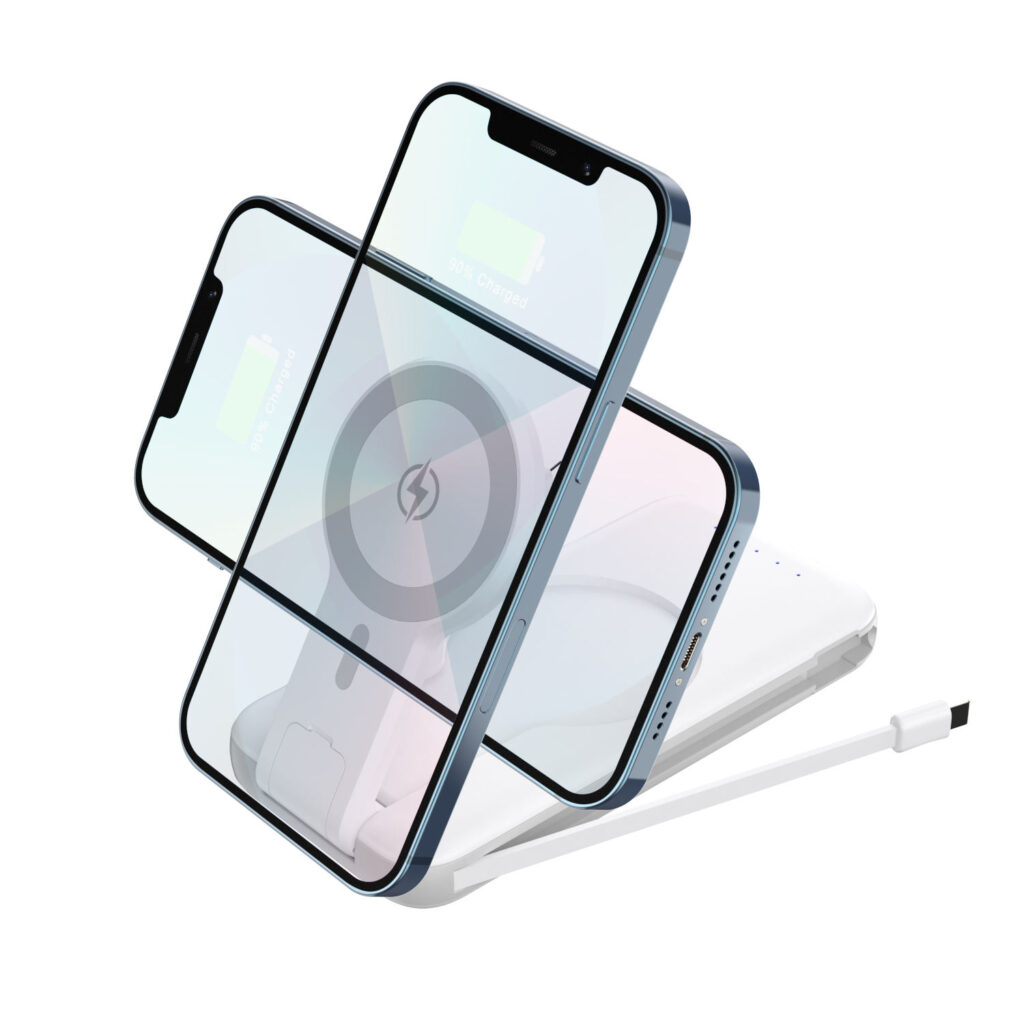
- Standard USB power banks (e.g., 10,000 mAh, 20,000 mAh)
- Solar power banks with integrated solar panels
- Wireless (Qi) power banks
- Hand warmer power banks (if they have a battery and charging function)
- Emergency radios with built-in power bank function
The exact product category and HS code used by Taiwanese customs should be confirmed with your freight forwarder, but in general, any product whose main function is to store electrical energy and charge other devices will be treated as a “power bank” for BSMI purposes.
One point to note: solar power banks are still primarily power banks. The solar panel itself may not need separate BSMI approval unless it is sold as a standalone solar charger with output connectors, but the battery and charging circuitry inside certainly do. Work with your factory to ensure the battery cells and the final assembled product meet the required tests.
The BSMI Process for Power Banks: From Testing to Registration
BSMI certification for power banks typically follows these steps:
- Identify applicable standards. Power banks generally need to comply with applicable battery safety standards (safety of secondary lithium cells and batteries) and applicable EMC standards (electromagnetic compatibility). Some models may also require additional standards or other technical requirements depending on the product features. Confirm current standards with your lab.
- Submit samples to a BSMI-recognized laboratory. The lab must be accredited by BSMI or a recognized body such as TAF (Taiwan Accreditation Foundation). In practice, many importers use labs in Taiwan or internationally accredited labs with ILAC MRA reports that BSMI accepts.
- Appoint a local agent. Foreign manufacturers usually cannot apply directly. You will need a Taiwan-based entity (importer, distributor, or a professional agent) to act as the applicant for BSMI registration. This agent will hold the certificate and manage renewals.
- Prepare technical documentation. This includes circuit diagrams, battery cell specification, user manual in Traditional Chinese, and a declaration of conformity. The factory must provide accurate cell data and component lists.
- Receive test reports and apply for BSMI registration. After testing passes, the agent submits the report and application to BSMI. Once approved, you get a registration identifier that must appear on the product label.
The entire process from sample submission to certificate issuance usually takes time for laboratory testing and registration review, assuming no test failures or documentation errors. If the product fails a test, you will need to modify the design or battery and retest, which adds time and cost.
Marking and Labeling Requirements
Once approved, every unit sold in Taiwan must carry the BSMI mark and the registration number. The mark is a stylized “R” with a circle, followed by the assigned number, for example the identifier shown on your registration certificate. The label must be durable and visible, usually printed on the product, packaging, or both.
In addition to BSMI marking, you will need:
- Brand name or importer name
- Model number
- Rated capacity (mAh) and rated voltage
- Country of origin
- Warnings in Traditional Chinese
Make sure your factory knows the exact label layout before mass production. A missing BSMI mark on the product itself is a common cause of rework and customs delays at Taiwanese ports.
Solar Power Banks: Extra Checks and Common Mistakes
Solar power banks combine a photovoltaic panel, a charge controller, and a lithium battery. For BSMI, the battery and the power bank electrical safety are the main concerns. The solar panel itself is generally not tested separately under BSMI unless it has its own output port and is sold as a standalone charger. However, the integration can affect EMC and thermal performance, so it is wise to have the entire assembled product tested, not just the battery pack.
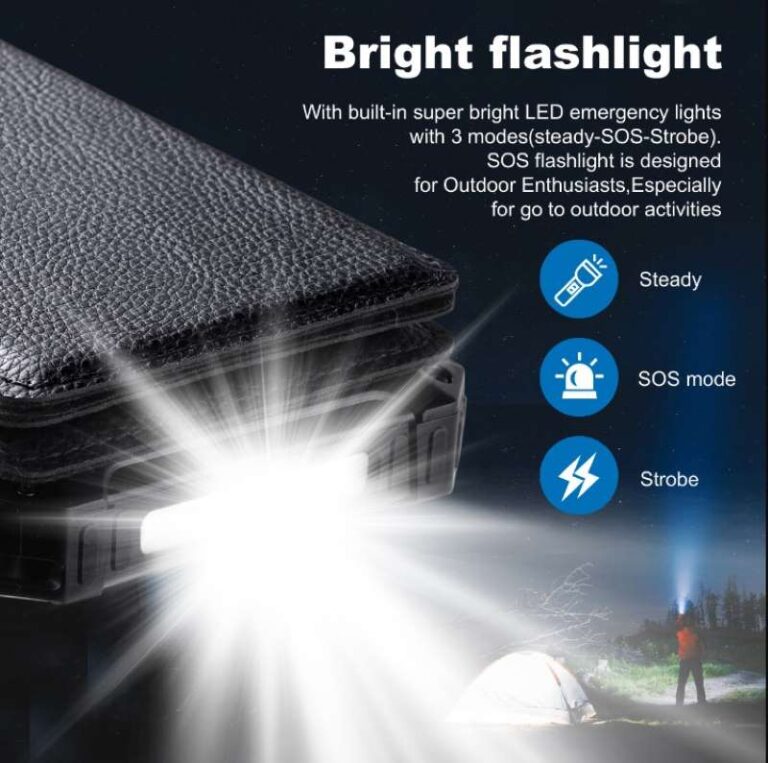
Common mistakes importers make with solar power banks for Taiwan:
- Using non-certified battery cells. The cell inside must meet the applicable battery safety standard or an equivalent accepted standard. If the cell certificate is not in order, the whole product test may be delayed.
- Assuming a CE or FCC report is enough. Taiwan requires BSMI-specific recognition, though an existing IEC 62133 test report can sometimes be used as partial data.
- Not testing the wireless charging function if present. A Qi power bank may need additional EMC testing under the applicable EMC standards to cover the wireless emissions.
Working with Your Factory on BSMI Compliance
As an importer, you should not handle BSMI alone. Your China-based manufacturer should support you with:
- Battery cell certificates (UN38.3, IEC 62133, or CNS 15364 if available)
- Full bill of materials (BOM) and circuit diagrams
- Sample units for testing
- Label artwork that matches the BSMI requirements
If you work with a manufacturer like Hedelee, which produces around 50,000 power banks per month and has about 10 years of OEM/ODM experience, confirm early whether they have experience with Taiwan-bound orders. Not every factory has a BSMI-registered model, so you may need to budget for initial certification. Some factories can recommend a Taiwan agent or a lab they have used before, but the agent must be approved by you to avoid conflicts of interest.
From a sourcing perspective, ask your supplier these questions before placing an order:
- Can you provide the battery cell datasheet and existing certification files for the cell?
- Have you produced a similar model for Taiwan before? If yes, can we use the same certification?
- Will you assist with sample preparation and documentation for BSMI testing?
- What is your process for label changes if BSMI requests a different marking size?
Cost, Timeline, and Ongoing Compliance
BSMI certification involves laboratory fees, agent fees, and sometimes travel or courier costs. Total cost for a single power bank model typically falls in the range of project-specific estimates obtained from laboratories and agents, depending on the lab, the need for retesting, and the number of configurations. If you plan to certify multiple models or a family of products, costs can be reduced by covering variants under one application if they share the same battery cell and similar circuitry.
BSMI registration is valid for the period specified on the registration certificate, after which you must renew. You also need to ensure that production units remain consistent with the tested sample. If you change the battery cell, circuit, or even the casing material in a way that affects safety, you may need to update the certification.
For importers, the best approach is to build BSMI into your product development timeline. Do not wait until the shipment is ready. Start the process when you confirm the final specification, because testing and registration take time.
FAQ
Do I need BSMI certification for a power bank with only a USB output?
Yes. Any product that stores energy in a lithium battery and can charge other devices through USB or wireless output is treated as a power bank under BSMI. The output type does not exempt it.
Can a foreign manufacturer apply for BSMI directly?
No. In practice, BSMI requires a Taiwan-based applicant. You will need an importer, distributor, or a licensed agent in Taiwan to apply on your behalf. The agent holds the registration certificate.
What happens if my power bank arrives in Taiwan without BSMI marking?
Customs may hold the shipment, and the importer may be ordered to re-export or destroy the goods. It is much cheaper to get certification before shipping than to handle a rejected container.
Is BSMI certification the same as UN38.3 or CE?
No. UN38.3 covers transport safety for lithium batteries, and CE covers the EU market. BSMI is a separate mandatory approval for Taiwan. Some test data can be reused, but you still need BSMI registration and marking.
How long does BSMI certification take for a solar power bank?
Allow the time estimated by your laboratory and local agent for testing and registration after the sample and documents are complete. Additional time may be needed if the lab requests modifications or if the agent is slow with paperwork.