

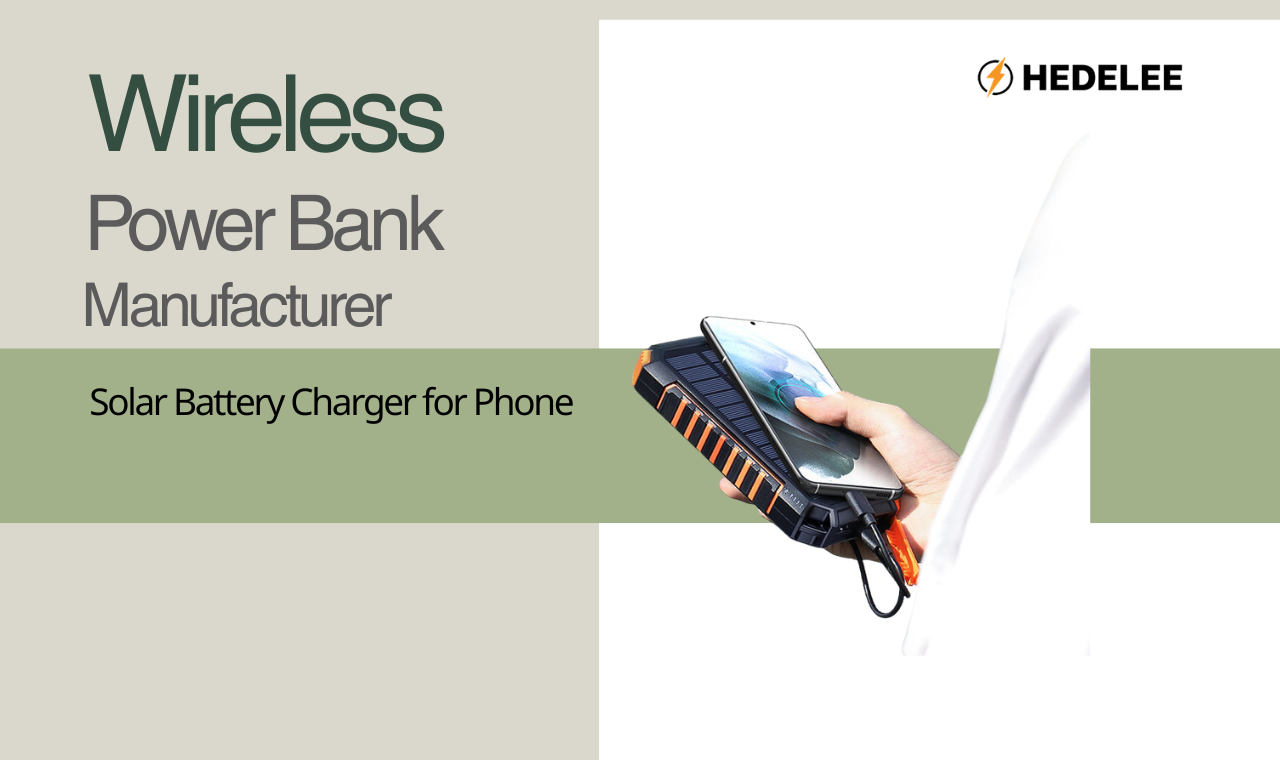
Outdoor environments pose an immediate challenge for mobile device users: limited access to grid electricity. When users map trails, coordinate logistics, or communicate during emergencies, battery depletion occurs rapidly. A solar battery charger for phone provides a practical solution to this physical constraint, capturing ambient light and converting it into usable stored energy.
For buyers, procurement teams, and product managers sourcing portable energy devices, understanding the technical mechanics and material specifications of these chargers forms the foundation of a successful purchasing strategy. Recognizing the internal components, manufacturing standards, and varying capacities helps distinguish a reliable unit from an underperforming one. This guide details the engineering behind these units, explores market applications, and outlines the criteria necessary for selecting dependable outdoor power hardware.
The Core Mechanics of a Solar Battery Charger for Phone
The process of converting sunlight into stored electrical energy relies on established photovoltaic principles. A solar battery charger for phone operates by integrating two distinct systems: the solar panel arrays that capture light, and the internal chemical battery that stores the resulting electrical current.
The Photovoltaic Effect in Action
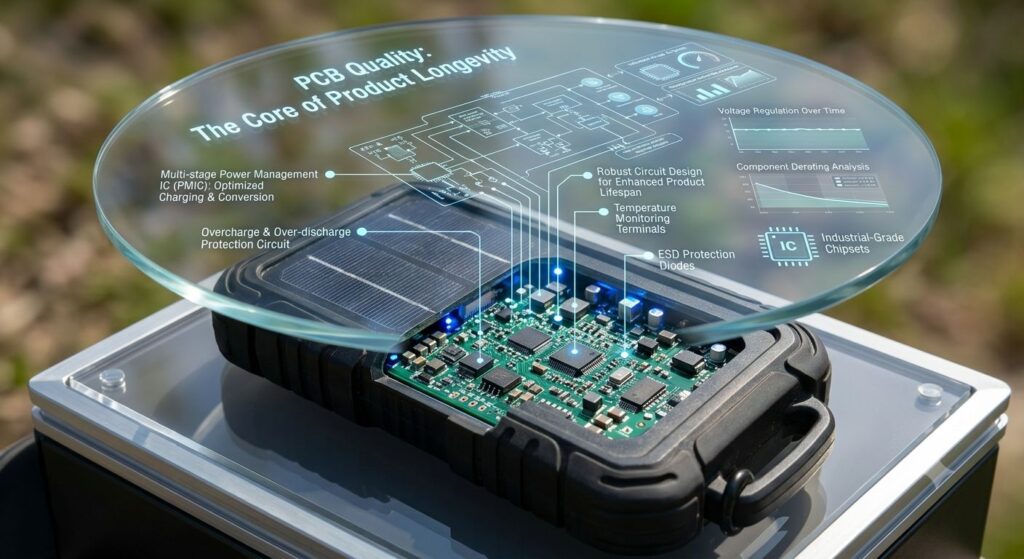
When photons from sunlight hit the surface of the integrated solar panels, they excite electrons within the silicon cells. This excitation creates a flow of direct current (DC) electricity. Because mobile devices require stable voltage, this raw current cannot flow directly into a smartphone. Instead, it passes through an internal printed circuit board (PCB), which regulates the voltage before sending it to the internal battery cells for storage.
Panel Types: Monocrystalline vs. Polycrystalline
The efficiency of a solar powered power bank depends heavily on the type of silicon used in its panels.
Monocrystalline Panels: Manufactured from a single continuous crystal structure. These offer higher efficiency rates, typically between 15% and 22%, meaning they convert more sunlight into energy within a smaller surface area. They generally feature a uniform black appearance.
Polycrystalline Panels: Created by melting multiple silicon fragments together. They typically present lower efficiency rates (around 13% to 16%) and have a distinctive blue hue.
For compact mobile accessories, monocrystalline panels are the standard choice because surface area is highly restricted. The goal is to generate as much trickle-charge current as possible given the small physical footprint of the device.
Internal Components of a Power Bank for Solar Environments
A functioning solar cell phone charger requires more than just an exterior panel. The interior construction determines safety, longevity, and charging speed. Procurement teams evaluating a power bank for solar applications must review the internal specifications thoroughly.
Lithium Polymer (Li-Po) vs. Lithium-Ion (Li-Ion) Batteries
The storage element of a solar power bank battery charger usually consists of either Lithium-Ion or Lithium Polymer cells.
| Feature | Lithium Polymer (Li-Po) | Lithium-Ion (Li-Ion) |
| Form Factor | Flexible, flat, customizable | Rigid, cylindrical (e.g., 18650 cells) |
| Weight | Lighter | Heavier |
| Safety in Heat | More stable under high temperatures | Can be sensitive to extreme heat |
| Cost | Generally higher | Generally lower |
Because a solar mobile phone charger is designed to sit in direct sunlight to absorb rays, internal temperature regulation is a primary concern. Li-Po batteries are frequently utilized in higher-end models due to their stability under thermal stress and their ability to fit into slim, portable designs.
Charge Controllers and Circuit Protection
To prevent damage to both the internal battery and the connected mobile devices, a sophisticated PCB board is installed. This board includes a charge controller that manages the flow of electricity from the solar panels to the battery. It provides necessary safeguards, including:
Overcharge protection
Over-discharge protection
Short-circuit prevention
Thermal regulation
When users connect a device, such as utilizing the unit as a solar powered iphone charger, the PCB ensures that the output voltage matches the exact requirement of the connected hardware.
Evaluating Capacity and Charging Speeds
Selecting the appropriate capacity is a fundamental step when sourcing a solar phone charger. Capacity is measured in milliampere-hours (mAh), which dictates how much total energy the unit can store and subsequently deliver to external devices.
Understanding Realistic mAh Ratings
Buyers will encounter various capacities on the market. Our factory supplies a range of configurations to meet different usage scenarios. For instance, a 20000mAh solar power bank provides a balanced ratio of weight to storage, suitable for weekend camping trips.
For extended off-grid travel, larger capacities are required. Units like the 30000mAh solar charger or the high-end 42000mAh power bank deliver enough stored energy to recharge a standard smartphone multiple times over a prolonged period.
The Role of Solar Trickle Charging
It is necessary to approach solar charging with accurate technical expectations. A standard solar panel on a compact power bank (typically rated around 1W to 2W) serves as an emergency backup rather than a primary charging source. If a battery holds 24000mAh, charging it entirely from zero via a single small solar panel would take several days of continuous direct sunlight.
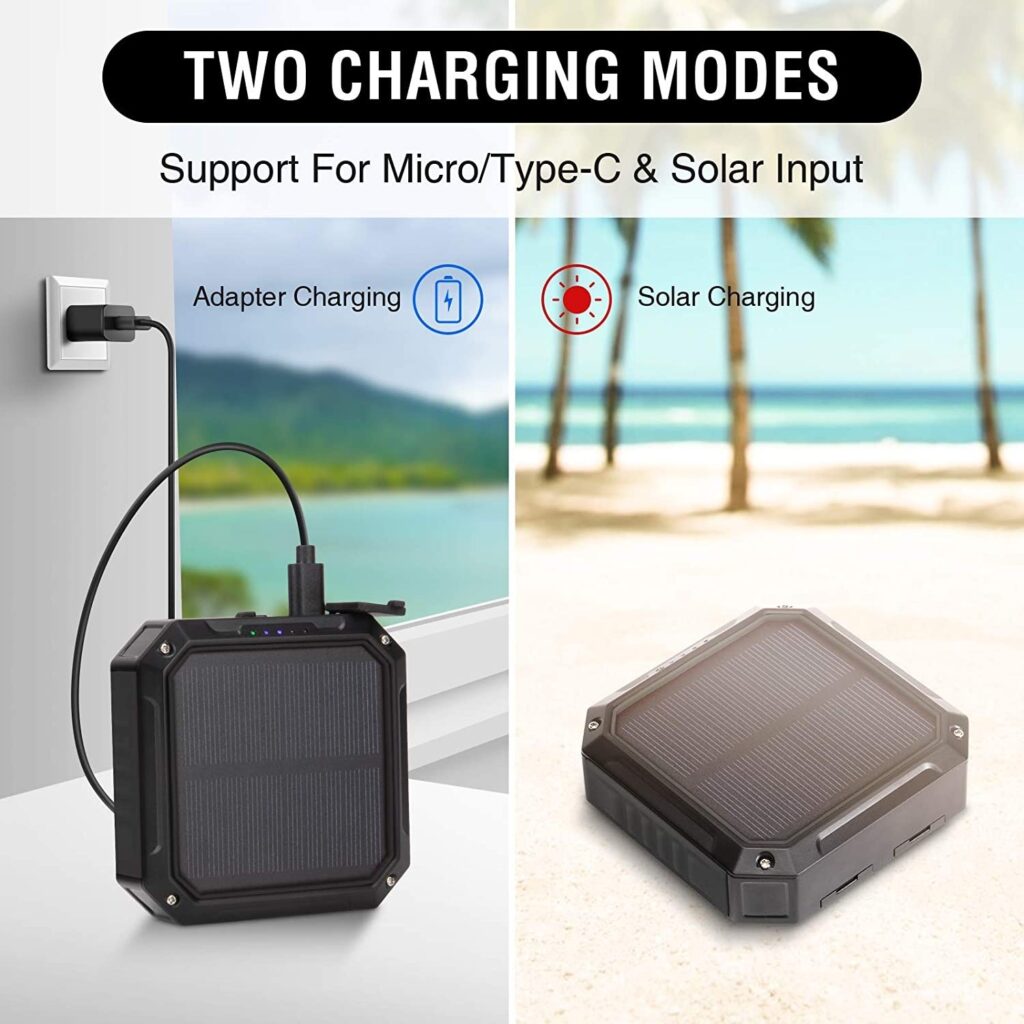
Therefore, users primarily charge the solar powered power bank via a wall outlet using Type-C or Micro-USB inputs before leaving for an outdoor excursion. The solar panels function to top off the battery during the day, offsetting the energy consumed by standby mode or short bursts of charging. To accelerate solar input, some models feature foldable outdoor solar panels, which quadruple the surface area and significantly reduce solar charging time.
Output Options: Cables, Ports, and Wireless
Modern connectivity requires multiple output formats. Procurement teams should look for devices that offer:
Dual or Quad USB Ports: Allowing simultaneous charging of multiple devices.
Built-in Cables: Such as models featuring built-in 4 cables, which eliminate the need for users to carry separate cords.
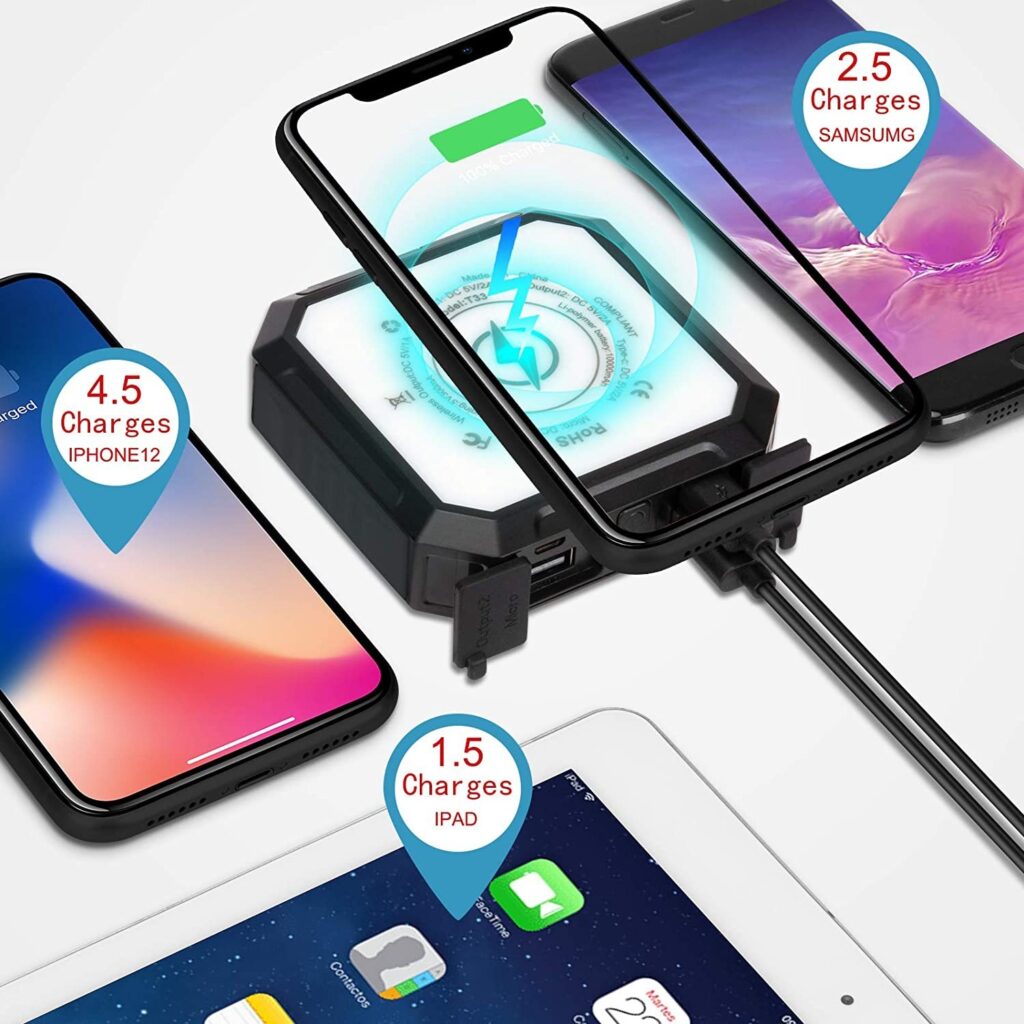
Qi Wireless Charging: Enabling users to place compatible devices directly on the surface of the charger without utilizing physical ports.
Durability and IP Ratings for Outdoor Use
A device intended for outdoor applications must withstand environmental stress. Dust, water, and physical impacts are constant threats to electronic circuitry. Therefore, the casing materials and protective seals are heavily scrutinized during the design phase.
Understanding IP (Ingress Protection) Ratings
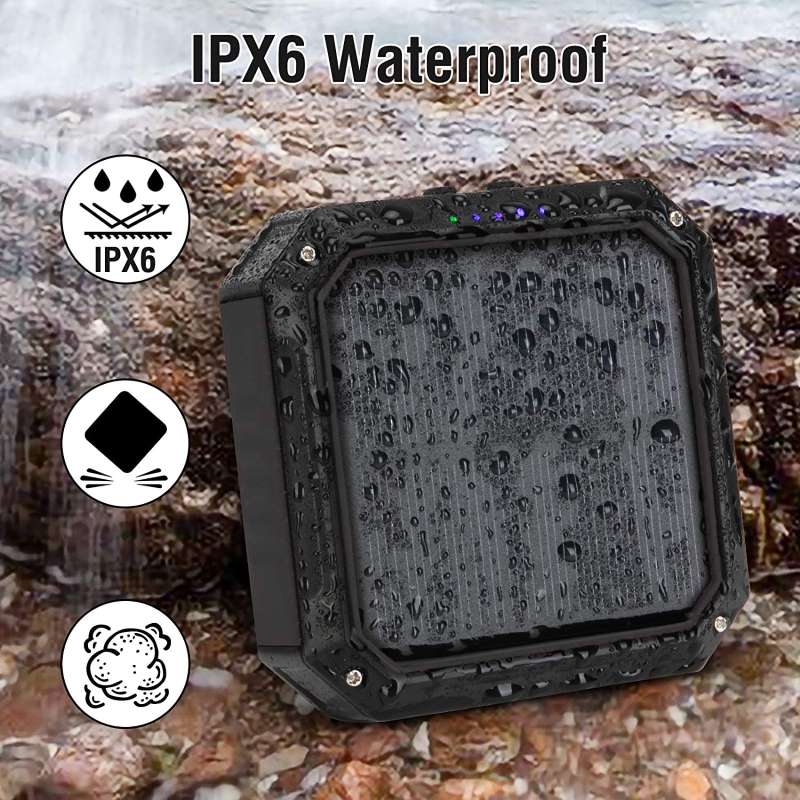
To ensure reliability, many of these devices undergo standardized environmental testing. The International Electrotechnical Commission (IEC) defines the IP rating system, which classifies the degrees of protection provided against the intrusion of solid objects and water.
Common ratings found in a reliable solar power bank include:
IPX4: Offers protection against splashing water from any direction. Suitable for light rain environments.
IP65: The “6” indicates total protection against dust ingress, while the “5” indicates protection against low-pressure water jets from any direction. Models featuring IP65 waterproof ratings are highly recommended for demanding outdoor conditions.
Housing Materials
The exterior shell is typically constructed from high-density ABS plastic mixed with silicone or TPU bumpers. ABS provides rigidity and impact resistance, protecting the delicate internal PCB from drops on hard surfaces like rock or concrete. The silicone bumpers absorb shock and create the watertight seals necessary around the USB ports. Flashlights, utilizing dual LEDs, are also frequently integrated into this housing to provide emergency illumination, as seen in many camping gear solar chargers.
Sourcing and Manufacturing at Shenzhen Hedeli Technology Co., Ltd.
Selecting a supplier requires evaluating their manufacturing capacity, quality control processes, and industry experience. Shenzhen Hedeli Technology Co., Ltd. has operated within the mobile accessories and consumer electronics industry for approximately 10 years.
Our headquarters is situated in Shenzhen, China, an established hub for electronics engineering. We also maintain an office and showroom in Guangzhou, allowing clients to physically inspect our hardware. Production occurs at our factory in Dongguan, which operates with a monthly capacity of 50,000 units. This localized supply chain allows us to source materials efficiently, assemble components under controlled conditions, and supply importers, distributors, and wholesalers within specified lead times.
Quality Control and Customization
Every solar battery charger for phone produced in our Dongguan facility undergoes rigorous quality control. Testing includes:
Capacity Verification: Ensuring the Li-Po cells accurately reflect their stated mAh.
Solar Output Testing: Measuring the conversion efficiency of the integrated panels under simulated lighting.
Durability Checks: Drop testing and water resistance verification to ensure IP standards are met.
For buyers seeking specific inventory configurations, we offer a dedicated solar power bank category detailing various capacities, from 10000mAh models with strong light lighting to massive 42000mAh multi-cable variants.
Direct Purchasing and Partnership Opportunities
Sourcing hardware directly from the manufacturer removes intermediary delays and ensures clear communication regarding specifications, certifications, and volume requirements. We maintain detailed documentation for all models, from standard 25000mAh dual USB chargers to complex standard 30000mAh units with three cables.
Review your inventory needs against our current product capabilities. Reach out to our team in Shenzhen or Guangzhou to request detailed product specifications, arrange sample shipments, and secure pricing schedules for your next procurement cycle.
Frequently Asked Questions
1. What is the minimum order quantity for custom branding?
Our minimum order quantities for branded units depend on the specific model and packaging requirements. Contact our sales team to discuss exact figures based on your preferred customization level.
2. How long does a sample request take to process?
Standard samples from our existing inventory are typically dispatched within a few working days. Reach out for detailed specifications and to confirm current sample availability.
3. Do your power banks have relevant safety certifications?
Yes, our devices undergo testing for standard certifications like CE, FCC, and RoHS, ensuring battery stability and safe operation. Reach out to request the specific documentation for your target market.
4. Can the factory handle urgent volume orders?
With our Dongguan factory’s monthly capacity of 50,000 units, we can accommodate demanding schedules. Speak with our production coordinators to align your required lead times with our manufacturing calendar.