

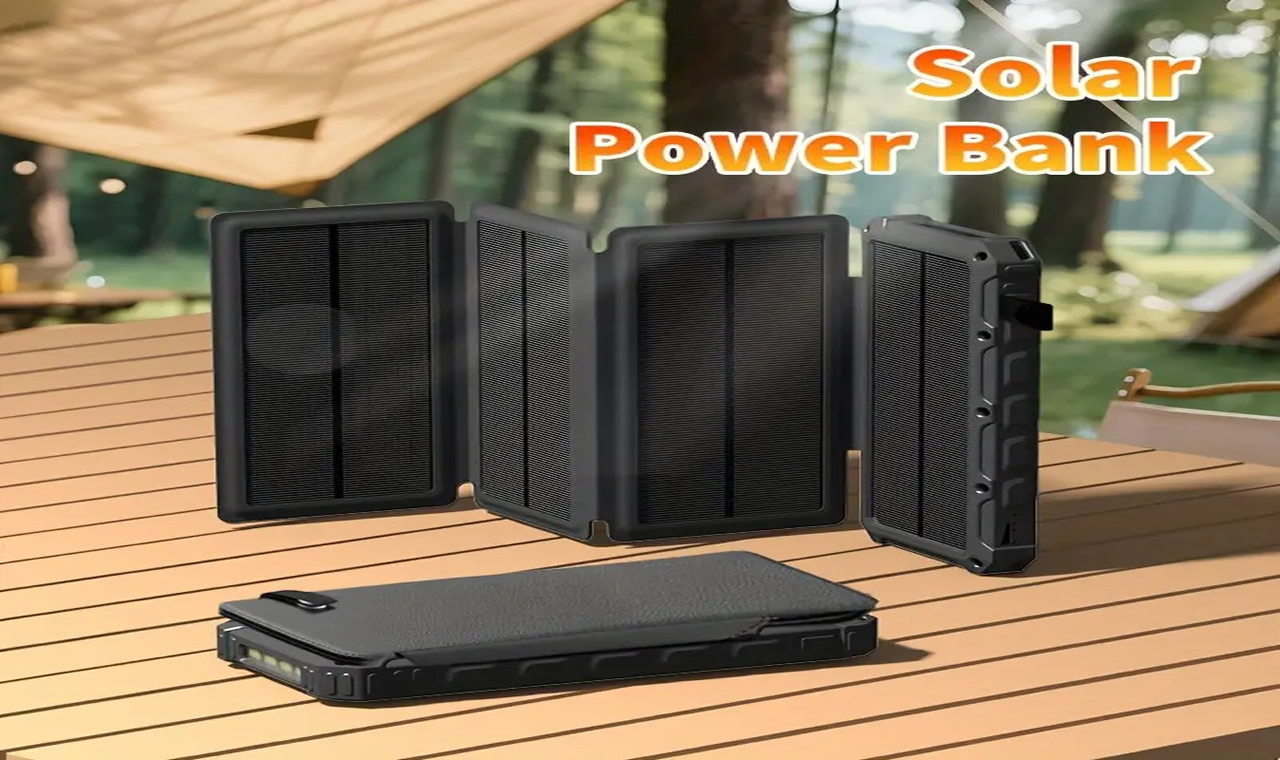
Picture this: your customer is three days into a hiking trip, their phone is dead, and the solar power bank they ordered from you didn’t perform as expected under real-world conditions. That’s not just a product complaint — it’s a broken supply chain decision made weeks earlier at the sourcing stage.
Choosing the right solar charger — whether you’re building a product catalog, fulfilling a large wholesale order, or helping retail buyers make confident choices — comes down to understanding a handful of technical and practical factors. This guide walks through every one of them, from solar panel types and battery capacity to waterproofing ratings and output specs, so you can make decisions backed by real knowledge rather than marketing language.
What Is a Solar Charger and How Does It Work?
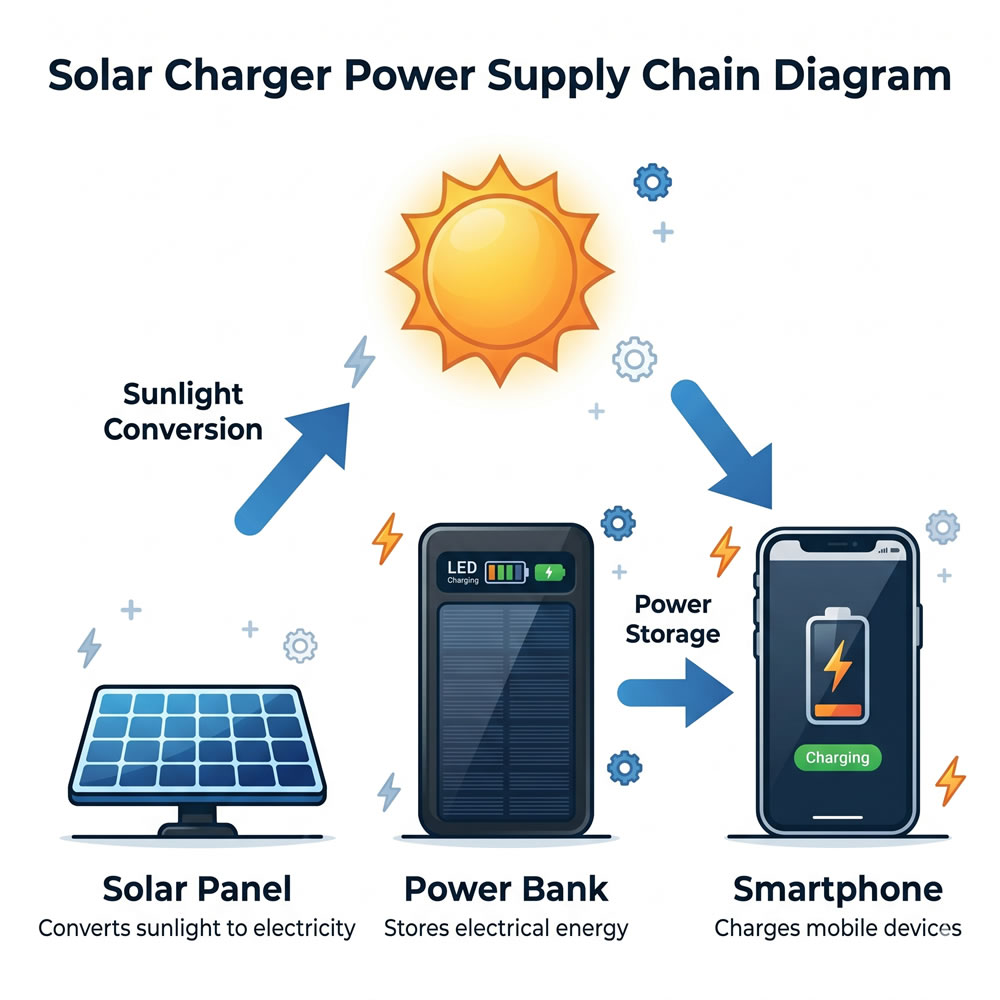
A solar charger is a device that converts sunlight into electrical energy, which is then used to charge a battery or power an electronic device directly. The core technology uses photovoltaic (PV) cells — thin layers of silicon-based material that generate a direct current (DC) when struck by light photons.
In practical terms, the power supply chain works like this:
Sunlight → Solar Panel (conversion) → Battery Storage → Device Charging
For portable consumer products, the solar panel is typically integrated into — or connected to — a lithium-ion power bank. The stored energy is then delivered to smartphones, tablets, Bluetooth earbuds, GPS units, or other USB-powered devices.
Solar chargers are not meant to replace wall charging entirely. They’re designed for supplemental power — giving users the ability to stay charged during outdoor activities, travel, emergencies, or any situation where a wall outlet isn’t available.
Types of Solar Chargers: What Are Your Options?
Not all solar chargers are built the same way. The category includes several different product configurations, each suited to different use cases. Understanding the differences is especially useful when sourcing across product lines or offering tiered options to customers.
On-Device Solar Panels (Integrated)
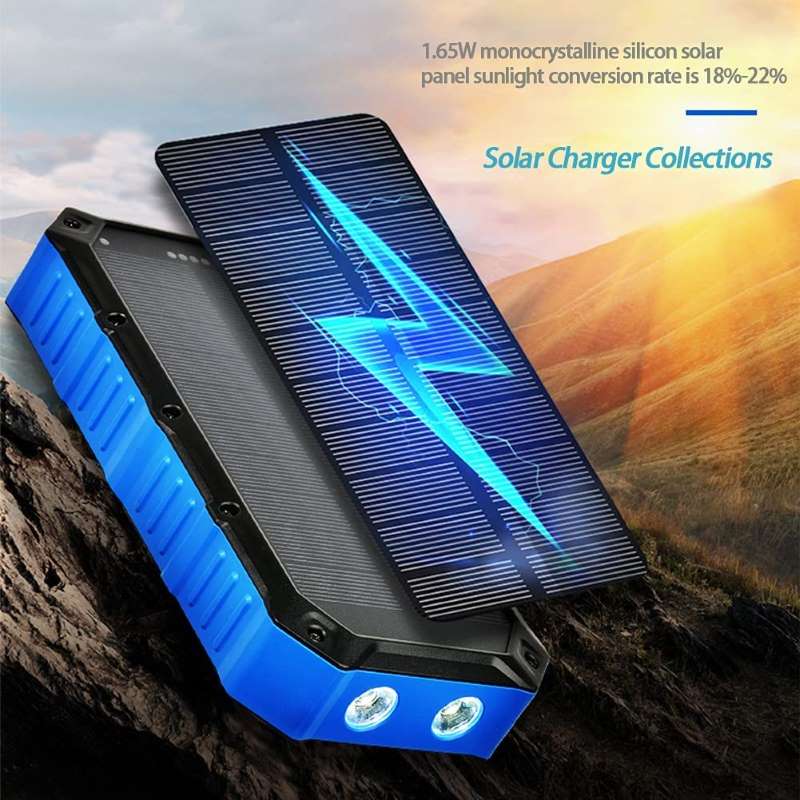
These are small solar panels built directly into a power bank or device. The solar panel and battery are a single unit — which is what most consumer-facing solar power banks use. They’re compact, easy to use, and ideal for everyday portable charging. The trade-off is that integrated panels are typically smaller and charge more slowly from solar alone, so they’re best used alongside USB charging.
Most products in Hedelee’s lineup — including the 10,000mAh wireless fast-charging solar power bank and the 20,000mAh waterproof solar power bank with flashlight (HDL-218) — follow this integrated design. This makes them retail-ready and straightforward for end users.
Panel-Only Solar Chargers
These solar panels come without battery storage. They generate power from sunlight and output it directly via USB — which means a compatible power bank or storage device is required separately. These are more common in outdoor expedition gear and larger overlanding setups.
Foldable Solar Panel Power Banks
A hybrid format that combines a foldable multi-panel solar array with a built-in battery. These products deliver faster solar charging because they expose a larger surface area to sunlight. The foldable 20,000mAh solar power bank with LED lights is a strong example of this format — combining portability with improved solar input.
How to Choose the Right Solar Charger: 7 Key Factors
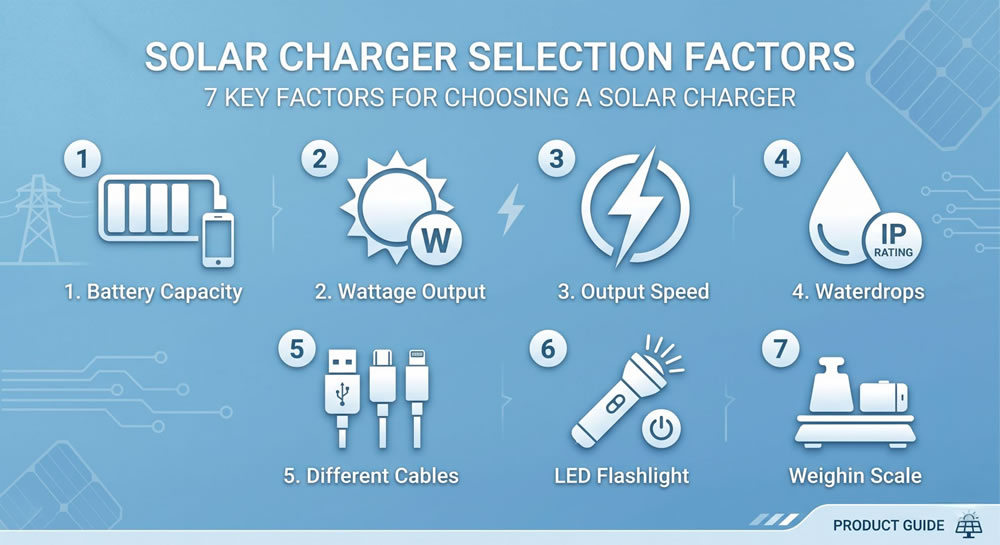
Whether you’re a procurement manager selecting SKUs for a retail buyer or a product team reviewing a new accessory line, these are the seven factors that determine whether a solar charger delivers real value or disappoints in the field.
1. Battery Capacity (mAh)
Capacity is the most talked-about spec — and also the most misunderstood. The mAh (milliamp hours) rating tells you how much energy a power bank can store, but the number on the label doesn’t always reflect real-world usable output due to voltage conversion losses (typically 20–30%).
As a working rule:
-
10,000mAh → roughly 2–2.5 full charges for a modern smartphone
-
20,000mAh → 4–5 full charges; suitable for multi-device use or 2–3 day trips
-
30,000mAh+ → 6–8+ charges; designed for extended outdoor use or group charging
For buyers placing bulk orders across different customer segments, offering capacity tiers — for example, 10K, 20K, and 30K–42K — lets you address casual users, outdoor enthusiasts, and heavy-use buyers with a single product family.
Hedelee’s current range covers 10,000mAh, 20,000mAh, 24,000–30,000mAh, and up to 42,000mAh — a range that covers the full buyer spectrum.
2. Solar Panel Size and Wattage
The wattage of the integrated solar panel determines how fast the battery recharges from sunlight alone. A typical 5W panel on a 10,000mAh power bank may take 20–30 hours of direct sunlight for a full recharge — which is why USB charging should always be the primary input method, with solar serving as a reliable backup.
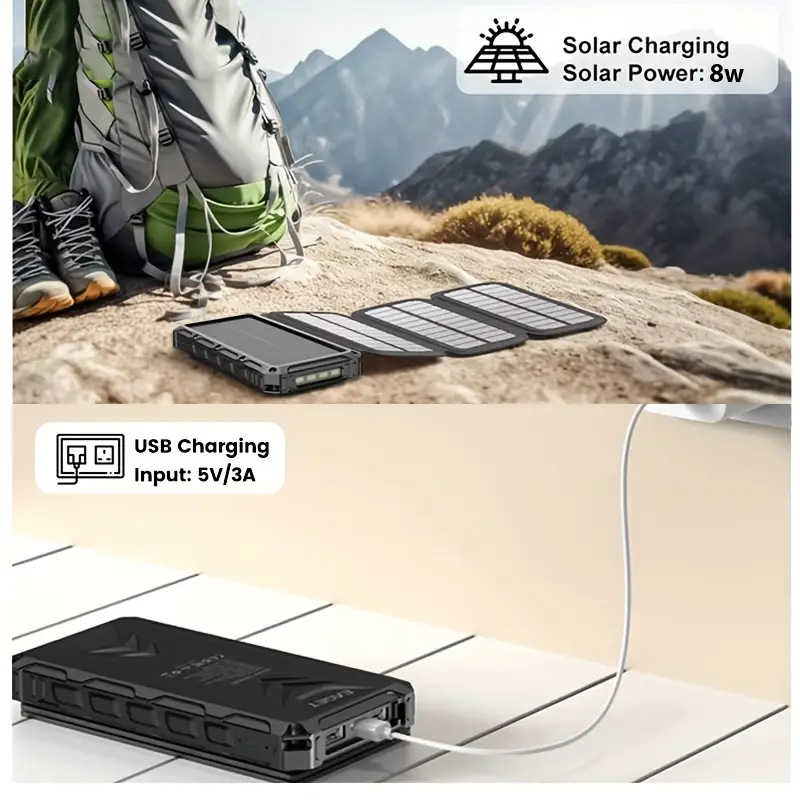
Higher-wattage panels (8W, 10W, or more) on foldable designs close this gap meaningfully. For buyers sourcing solar phone chargers for outdoor markets, the panel wattage is worth including in product spec sheets to set realistic customer expectations.
3. Output Charging Speed
A solar power bank battery charger that supports fast charging is far more useful to today’s consumer than one limited to standard 5V/1A output. Look for:
-
USB-A ports with 5V/2A or higher output for standard devices
-
USB-C ports with Power Delivery (PD) or Quick Charge (QC) support
-
Wireless Qi charging for users who prefer cable-free convenience
The 30,000mAh Qi wireless solar charger (HDL528) offers USB Type-C input, 5V/3A output, and IP65 waterproofing — a combination that works well for buyers targeting users who need both speed and durability.
4. Waterproofing and Durability Ratings
Outdoor use requires weatherproof construction. The standard reference is the IP (Ingress Protection) rating system defined by IEC 60529:
-
IPX4 — splash-resistant; suitable for light rain
-
IPX5/6 — water jet resistant; for active outdoor use
-
IP65/67 — dust-tight and waterproof; for demanding environments
The 24,000mAh IPX4 waterproof solar battery pack (HDL529) and the IP65-rated HDL528 demonstrate that waterproofing can be offered across capacity ranges. When buyers serve outdoor, camping, or hiking retail channels, verifying the IP rating is non-negotiable.
5. Built-in Cables and Connector Compatibility
One of the more practical differentiators in product selection is whether the power bank includes built-in cables. Products with integrated cables — covering Micro-USB, USB-C, and Lightning (or Apple-compatible) connectors — remove the need to carry separate cables, which is a significant convenience in outdoor settings.
The 42,000mAh solar power bank with 4 built-in cables (HDL-628) is an example of this design — particularly useful for retail buyers whose customers use a mix of device types.
6. LED Flashlight and Emergency Features
Many solar power banks intended for outdoor or emergency use include dual LED flashlights. This is not a gimmick — it adds genuine utility for camping, hiking, and emergency preparedness scenarios. When positioning products to buyers in the outdoor retail or emergency kit segment, this feature is worth calling out explicitly in catalog descriptions.
Multiple products in the Hedelee range include dual LED flashlights, including the 24,000mAh HDL529 and the 42,000mAh HDL-628.
7. Weight, Size, and Portability
Higher capacity means more weight. A 10,000mAh unit might weigh around 200–250g; a 42,000mAh unit can reach 600g or more. For hiking and backpacking buyers, weight per mAh is a meaningful metric. For emergency preparedness or vehicle-based use, the priority shifts toward capacity and feature count.
Solar Power Bank Capacity Guide for Wholesale Buyers
When placing bulk orders across multiple SKUs, having a clear capacity-to-use-case framework reduces returns, improves customer satisfaction, and makes your catalog easier to present to buyers.
Here’s a practical reference table:
Note: charge counts are approximate based on a 4,000mAh smartphone battery and account for typical conversion efficiency loss.
What Makes a Solar Phone Charger Good for Outdoor Use?
The outdoor use case is where solar mobile phone chargers differentiate themselves from standard power banks. A product that performs well indoors may fail the outdoor test if it lacks the right combination of build quality, panel efficiency, and rugged design.
Rugged Build Quality
Drop resistance, reinforced casing, and rubberized edges matter in real outdoor environments. While drop-test certifications vary by manufacturer, look for products where the casing material and design clearly indicate outdoor intent — not just a standard power bank with a thin solar strip glued to the back.
Solar Panel Placement and Access
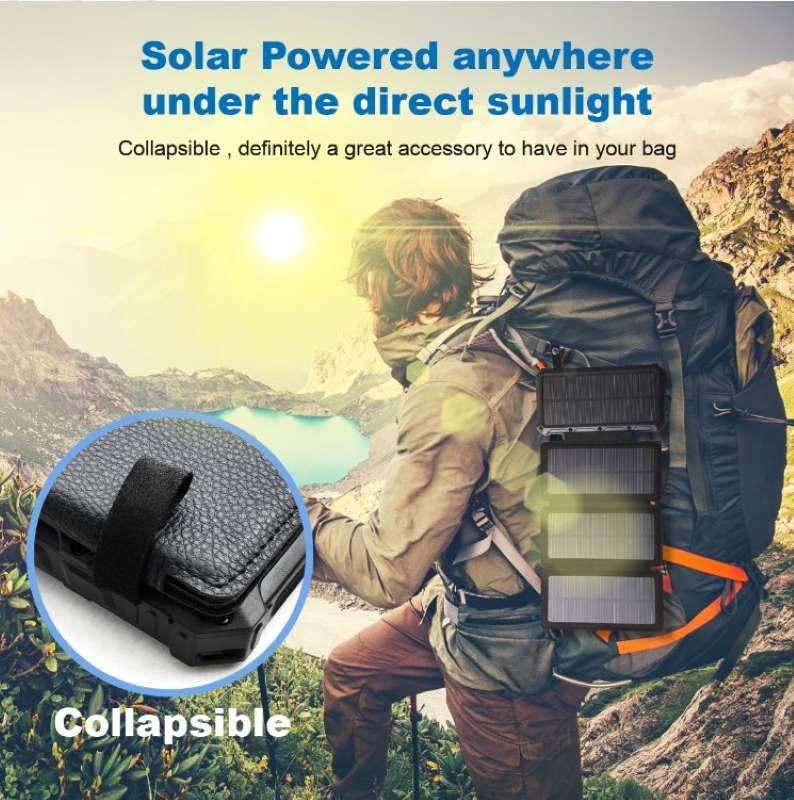
The panel must be accessible to direct sunlight during use. Products where the solar panel is obstructed when the device is in a pocket or bag require the user to position the unit deliberately. Foldable designs help because users can set them up at an angle while devices charge from the output ports. This is worth noting in product descriptions for retail buyers.
Realistic Solar Charging Expectations
Solar panels only operate at maximum efficiency under ideal conditions — clean panels, direct sunlight, no cloud cover. In real-world use, expect 40–60% of the rated solar input. Setting this expectation clearly in your product packaging and marketing copy protects your brand and builds customer trust.
The good news: most solar power bank battery chargers in the current market recharge via USB far faster than via solar. Solar is the backup option — and a valuable one when users are genuinely off the grid for multiple days.
How Wireless Charging Works in a Solar Powered Power Bank
Wireless charging (Qi standard) in a solar powered power bank is increasingly common — and worth understanding before recommending it to buyers.
Qi wireless charging works by electromagnetic induction: the power bank contains a transmitter coil that creates an alternating magnetic field, and a compatible device placed on top uses a receiver coil to convert that field back into electrical current. The IEC 63028 standard governs Qi-compatible wireless charging for consumer electronics.
The key practical notes for buyers:
-
Qi wireless output is typically slower than wired — usually 5W–10W, compared to 18W–25W for fast wired charging
-
Device compatibility requires a Qi-compatible receiver in the user’s phone (most modern smartphones include this)
-
Placement matters — the device must sit centered on the charging area for full power transfer
-
Wireless + solar in one unit adds genuine convenience for end users who prefer fewer cables
Products like the 20,000mAh wireless solar power bank (HDL-218) and the 24,000–36,000mAh wireless solar power bank with built-in cables (HDL529) combine wireless charging with solar input and wired outputs — a feature combination that appeals to buyers serving tech-forward retail customers.
Sourcing Solar Chargers: What Wholesale Buyers Should Check
When sourcing a solar charger at scale, the product spec sheet is only part of the equation. The sourcing relationship, production capacity, and quality consistency matter just as much to long-term buyers.
Here are the sourcing checkpoints that experienced procurement teams use:
-
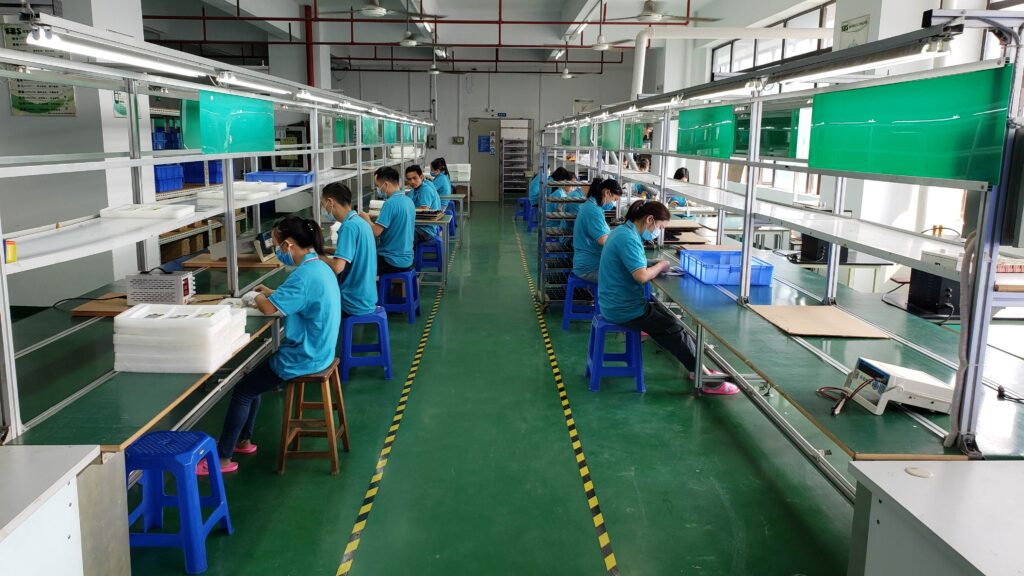
Factory capacity and lead times — Confirm monthly output and confirm whether it aligns with your order schedule. At Hedelee’s Dongguan factory, monthly production capacity is 50,000 units, designed specifically to serve importers, distributors, and wholesalers on a reliable schedule.
-
Sample availability — Request physical samples before confirming bulk quantities. Verify solar panel performance, waterproofing, USB output accuracy, and casing durability in-house.
-
OEM / custom branding options — Many wholesale buyers require private label packaging, custom color schemes, or logo printing. As a direct manufacturer, Hedelee offers OEM and ODM options across its product range.
-
Certifications and compliance — Check for CE, RoHS, FCC, and relevant regional certifications depending on your destination market. Confirm whether products carry UN38.3 certification for lithium battery transport.
-
Warranty and after-sales support — Understand the defect rate policy, replacement process, and whether technical documentation is available for customs and retail compliance needs.
The full range of available solar power bank models is accessible at Hedelee’s solar power bank product catalog.
Common Mistakes When Selecting a Solar Charger
Even experienced buyers sometimes make sourcing decisions based on spec-sheet numbers without accounting for real-world performance. Here are the most common missteps and how to avoid them.
Choosing capacity without considering conversion efficiency. A power bank labeled 20,000mAh at 3.7V internal voltage does not deliver 20,000mAh at 5V output. The actual usable output is typically 60–70% of the labeled capacity. Factor this into your product description and set realistic customer expectations from the start.
Overlooking the solar panel wattage. Buyers sometimes focus entirely on battery capacity and ignore the solar panel output. A 5W panel on a 30,000mAh battery is almost decorative — it would take days of uninterrupted sunlight to make a meaningful contribution. For outdoor-focused products, a higher-wattage panel (or foldable multi-panel design) is worth the additional cost.
Ignoring IP rating for outdoor products. Water resistance isn’t optional for products marketed as outdoor or adventure gear. Sourcing a product without verifying its IP rating — or worse, sourcing one with no rating at all — creates return rate problems and erodes buyer confidence. Always confirm with the manufacturer whether the IP rating is tested and documented.
Assuming all USB-C ports support fast charging. Some power banks include USB-C ports that only support standard charging speeds. Always verify the amperage and protocol (PD, QC 3.0, etc.) against the stated specs.
Ready to Source Solar Chargers Directly from the Manufacturer?
Shenzhen Hedeli Technology Co., Ltd. — operating under the Hedelee brand — has been manufacturing mobile accessories and consumer electronics for over a decade. With a dedicated factory in Dongguan producing up to 50,000 units per month, and a team of more than 100 professionals across Shenzhen and Guangzhou, we’re set up to support importers, distributors, and wholesale buyers from first sample to full production run.
Our solar power bank range covers everything from compact 10,000mAh units with wireless charging to high-capacity 42,000mAh expedition packs with built-in cables and dual LED flashlights. If you have specific requirements — custom capacity, branded packaging, regional certifications, or mixed-SKU orders — we’re the direct source to talk to.
Reach out with your product specifications or request a catalog, and our team will respond with detailed pricing, MOQ information, and sample availability. When you work with a manufacturer directly, there’s no intermediary between your specifications and the product you receive.
Frequently Asked Questions
1. What is the minimum order quantity for solar power banks?
MOQ varies by product model and customization level. Standard off-the-shelf models typically have lower MOQs, while OEM or custom-branded orders require higher quantities. Reach out to request specific MOQ information for the models you’re considering.
2. How long does it take to charge a solar power bank via solar panel?
Charging time via solar panel depends on panel wattage and sunlight conditions. A 5W panel under direct sunlight may take 20–30 hours to fully charge a 20,000mAh unit. USB charging is significantly faster and is recommended as the primary input method for time-sensitive use.
3. Can solar cell phone chargers be branded with our company logo?
Yes. Hedelee offers OEM and ODM services, including custom packaging, logo printing, and color customization. Contact us to discuss your branding requirements and we’ll confirm feasibility and pricing based on your order volume.
4. What certifications do Hedelee solar chargers carry?
Certification availability varies by model and destination market. Common certifications include CE, RoHS, FCC, and UN38.3 for lithium battery transport compliance. Contact us to request the specific certification documentation for the models you’re sourcing.
5. Do solar mobile phone chargers work in cloudy conditions?
Solar panels generate power in diffuse light, but output drops significantly compared to direct sunlight — often by 50–80%. Solar charging